Tree Care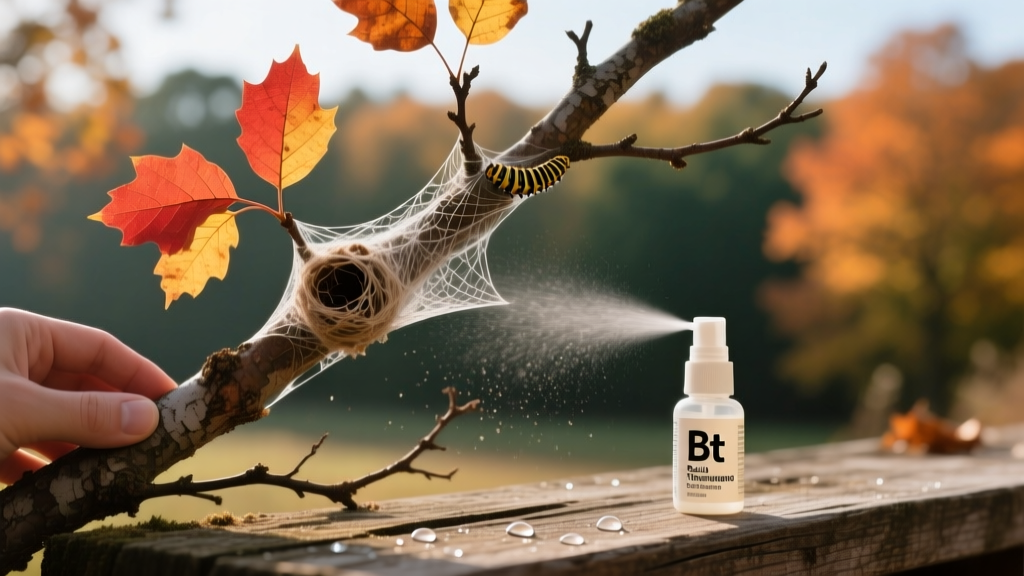
Fall Webworm Control 2026: Pruning & Bt Spray Timing
Emily WatsonPublished
Understanding the Fall Webworm Threat in 2026
The fall webworm (Hyphantria cunea) is a notorious defoliator that affects over 100 species of deciduous trees across North America. As we navigate the 2026 growing season, arborists and home gardeners alike are noting shifts in pest emergence patterns due to fluctuating spring temperatures. These unsightly caterpillars spin large, silken webs at the terminal ends of branches, feeding on the enclosed foliage. While a single generation rarely kills a mature, healthy tree, the aesthetic damage and stress from consecutive generations can weaken trees, making them susceptible to secondary borers and diseases.
Effective management in 2026 relies heavily on Integrated Pest Management (IPM) strategies. Rather than reaching for harsh, broad-spectrum chemical insecticides that harm beneficial pollinators, modern tree care emphasizes a dual approach: strategic pruning methods combined with targeted applications of Bacillus thuringiensis (Bt). This biological insecticide is highly specific to caterpillars and completely safe for humans, pets, and beneficial insects like bees and ladybugs.
The Role of Pruning in Webworm Management
Pruning is the first line of defense against fall webworms, but timing and technique are everything. The goal of pruning for pest control is not to shape the tree, but to physically remove the pest colony before it causes extensive defoliation or spreads to the rest of the canopy.
When to Prune for Webworms
Fall webworms typically have two generations per year in most temperate zones. The first generation emerges in early to mid-summer (June to July), and the second, often more destructive generation, peaks in late summer to early fall (August to September). Pruning should be timed to coincide with the early instar (young) stages of the caterpillars. When webs are small—roughly the size of a tennis ball to a grapefruit—they are easily removed with hand pruners. Waiting until the webs engulf entire branch tips makes pruning impractical and forces you to rely more heavily on biological sprays.
Proper Pruning Techniques
When removing a webworm nest, never simply tear the web out of the tree, as this can damage the bark and create entry points for fungal pathogens. Instead, use sharp, sterilized bypass pruners. Make a clean cut on the branch at least 6 to 12 inches below the visible edge of the silken web. This ensures you remove the entire colony, including any caterpillars that may be wandering down the branch to feed. Immediately dispose of the pruned webs in a sealed bag or burn them; do not leave them on the ground near the tree, as surviving caterpillars can crawl back up the trunk.
Bacillus thuringiensis (Bt): The Biological Solution
When webs are located too high in the canopy for safe pruning, or when an infestation is too widespread to manage with shears alone, Bacillus thuringiensis var. kurstaki (Btk) is the gold standard for 2026 IPM protocols. Bt is a naturally occurring soil bacterium that produces proteins toxic to the alkaline digestive systems of caterpillars.
When a fall webworm ingests foliage treated with Bt, the protein crystals dissolve in its gut, paralyzing the digestive tract. The caterpillar stops feeding within hours and dies within two to three days. Because Bt must be ingested to work, it is entirely harmless to predatory wasps, birds, and parasitic flies that help control webworm populations naturally.
Integrating Pruning and Bt: A Step-by-Step Timeline
To maximize your tree's health and minimize webworm damage, you must synchronize your pruning schedule with your Bt spray applications. Below is the recommended 2026 seasonal timeline for managing fall webworms.
| Season / Month | Webworm Stage | Pruning Action | Bt Application Strategy |
|---|---|---|---|
| Late Spring (May-June) | Egg Hatch / Early Instar | Monitor branch terminals; no pruning needed yet. | N/A |
| Early Summer (July) | Small Webs (1st Generation) | Prune out small, localized webs using hand pruners. | Spot treat the cut edges and surrounding foliage with Bt. |
| Late Summer (Aug-Sept) | Large Webs (2nd Generation) | Avoid heavy canopy pruning; use pole pruners only for accessible edge webs. | Broadcast Bt spray directly onto the web perimeters and surrounding foliage. |
| Fall (Oct-Nov) | Pupation / Overwintering | Rake fallen leaves; perform standard structural pruning. | N/A |
Step 1: Early Detection and Targeted Pruning
Begin inspecting your susceptible trees (such as pecan, walnut, persimmon, and sweetgum) in late June. Look for small, dusty-looking webs forming at the very tips of the branches. If the tree is young or the webs are within arm's reach, prune them out immediately. This physical removal drastically reduces the population that will lay eggs for the second, larger generation.
Step 2: Timing Your Bt Application
For webs that are 15 feet or higher, or for trees where pruning would remove too much photosynthetic tissue, switch to Bt. The timing of the spray is critical. Bt degrades rapidly in sunlight (UV radiation), so it must be applied in the late evening or on an overcast day. Furthermore, you must spray the foliage just outside and around the web. Fall webworms feed outward from the center of the web; as they consume the enclosed leaves, they will eventually crawl out to the adjacent, untreated foliage. By coating the surrounding leaves with Bt, you ensure the caterpillars ingest the bacterium as they expand their feeding zone.
Pro Tip for 2026: Do not attempt to spray Bt directly into the center of a dense, mature web. The silken threads are highly water-resistant and will deflect the spray. Focus your application on the fresh, un-webbed foliage immediately bordering the colony.
Best Bt Products and Pruning Tools for 2026
Choosing the right equipment ensures your IPM strategy is executed efficiently and safely.
Recommended Bt Formulations
- Concentrates (e.g., Bonide Thuricide, Monterey Bt): Ideal for large properties. Mix at a rate of 1 to 2 ounces per gallon of water. Use a pump sprayer with a fine mist nozzle to ensure thorough leaf coverage.
- Ready-to-Spray Hose-End Bottles: Excellent for reaching high canopies (up to 25 feet) without a ladder. These attach directly to your garden hose and provide the necessary pressure to penetrate the outer edges of the web.
Essential Pruning Gear
- Bypass Hand Pruners: Essential for clean cuts on branches up to 3/4 inch thick. Anvil pruners will crush the wood, inviting disease.
- Telescoping Pole Pruners: A 12-to-14-foot fiberglass pole pruner allows you to safely remove mid-canopy webs without climbing a ladder. Look for models with a bypass blade and a built-in rope pulley system for easy cutting.
- Sanitization Spray: Keep a bottle of 70% isopropyl alcohol or a 10% bleach solution nearby to wipe down your pruning blades between cuts. This prevents the accidental transmission of fungal spores or bacterial cankers from one branch to another.
Common Mistakes to Avoid
Even with the best intentions, homeowners often make critical errors when battling fall webworms. Avoid these pitfalls to keep your trees thriving:
- Over-Pruning the Canopy: Removing every branch that has a web can severely defoliate the tree, causing more stress than the caterpillars themselves. If more than 20% of the canopy is infested, rely on Bt rather than mass pruning.
- Spraying Bt Too Late: Bt is most effective on young, early-instar caterpillars. If the caterpillars are fully grown (over 1 inch long) and preparing to pupate, Bt will have minimal impact. At this stage, it is better to let them finish their lifecycle and focus on soil drenches or dormant oils for the following year.
- Using Broad-Spectrum Insecticides: Spraying carbaryl or permethrin will kill the webworms, but it will also decimate the populations of parasitic wasps and predatory stink bugs that naturally keep webworm numbers in check. According to Penn State Extension, preserving these beneficial insects is vital for long-term, sustainable tree health.
Long-Term Tree Health and Canopy Management
Ultimately, fall webworms are a symptom of a larger ecological balance. Trees that are properly mulched, deeply watered during droughts, and structurally pruned during the dormant season are far more resilient to pest pressure. Proper winter pruning opens the tree canopy to better air circulation and sunlight, which makes the environment less hospitable for webworm egg-laying in the spring.
As noted by the University of Minnesota Extension, fall webworm damage is primarily aesthetic late in the season, right before the tree naturally drops its leaves anyway. Therefore, the decision to prune or spray should be weighed against the overall vigor of the tree and the aesthetic requirements of your landscape.
Conclusion
Mastering fall webworm control in 2026 requires a shift away from reactive chemical bombing and toward proactive, integrated management. By combining precise, early-summer pruning methods with strategically timed applications of Bacillus thuringiensis, you can effectively manage webworm populations. This dual approach protects your trees from severe defoliation while safeguarding the beneficial insects that form the backbone of a healthy, thriving garden ecosystem.