Lawn Care
Fall Lawn Winterization Guide For Cool-Season Grass
The Biological Advantage of Autumn Lawn Care
Cool-season turfgrasses, including Kentucky Bluegrass, Tall Fescue, Fine Fescue, and Perennial Ryegrass, experience their most significant root and rhizome growth during the autumn months. While the warm temperatures of spring prompt rapid, lush blade growth, the cooling soils of fall signal the grass plant to shift its energy downward. During this period, the grass stores vital carbohydrates in its root system and crown to survive winter dormancy and fuel the spring green-up.
According to turfgrass researchers at the University of Minnesota Extension, fall fertilization and maintenance are directly responsible for a lawn's overall drought tolerance and disease resistance the following summer. Neglecting your lawn between late August and late November means missing the prime biological window for establishing a deep, resilient root system. A comprehensive seasonal maintenance routine is the single most effective way to ensure a thick, weed-free lawn next year.
The Ultimate Fall Lawn Care Calendar
To maximize your lawn's health, timing is everything. Below is a structured seasonal maintenance chart tailored for cool-season turfgrasses, complete with estimated costs for an average 5,000-square-foot lawn.
| Timeframe | Primary Task | Secondary Task | Estimated Cost (per 5,000 sq ft) |
|---|---|---|---|
| Late Aug - Early Sept | Core Aeration | Overseeding & Starter Fertilizer | $75 (aerator rental) + $120 (seed) |
| Mid September | Broadleaf Weed Control | Soil Testing & pH Adjustment | $30 (herbicide) + $25 (mail-in test) |
| Late Sept - Early Oct | Slow-Release Fertilization | Mowing Height Adjustment | $45 (premium fertilizer) |
| Mid Oct - Late Nov | Winterizer Fertilizer | Leaf Mulching & Irrigation Blowout | $35 (fertilizer) + $100 (blowout service) |
Step 1: Core Aeration and Overseeding (Late August to Mid-September)
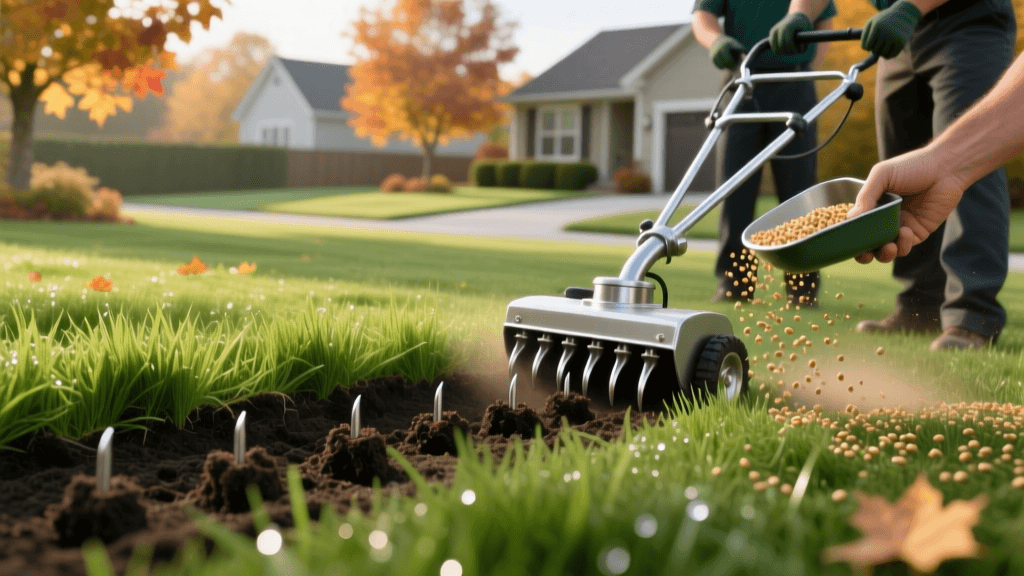
Soil compaction is the enemy of a healthy root system. Over the summer, foot traffic, heavy mowing equipment, and drying clay soils create a hardpan layer that restricts water, oxygen, and nutrient penetration. Core aeration involves pulling 2-to-3-inch plugs of soil from the ground, alleviating compaction and creating micro-environments for new roots to thrive.
Actionable Advice: Rent a walk-behind core aerator from a local hardware store (typically $70 to $100 for a half-day). Ensure the soil is moist but not waterlogged before aerating. Leave the extracted soil plugs on the lawn; they will break down naturally over the next two weeks, returning beneficial microbes to the thatch layer.
Immediately following aeration, overseed bare or thin patches. For Tall Fescue lawns, apply 6 to 8 pounds of high-quality seed per 1,000 square feet. For Kentucky Bluegrass, use 1 to 2 pounds per 1,000 square feet. Follow this with a phosphorus-rich starter fertilizer, such as Lesco 18-24-12, to promote rapid seedling root development. Keep the top inch of soil consistently moist for 14 to 21 days until germination is complete.
Step 2: Soil Testing and pH Adjustment (Mid-September)
Before applying heavy fall fertilizers, you must understand your soil's baseline chemistry. Grass thrives in a soil pH range of 6.0 to 7.0. If your soil is too acidic (below 6.0), essential nutrients like nitrogen and phosphorus become chemically locked up and unavailable to the roots, regardless of how much fertilizer you apply.
Actionable Advice: Purchase a mail-in soil test kit from a university extension office or a reputable lab like Logan Labs (costing around $20 to $30). If the results indicate a low pH, apply pelletized calcitic or dolomitic lime. A general rule of thumb is that it takes approximately 50 pounds of lime per 1,000 square feet to raise the pH by one full point, but always follow the specific recommendations on your soil test report.
Step 3: Strategic Fall Fertilization (September and November)
Fall fertilization is a two-part process designed to build mass and then store energy. Early fall applications focus on steady, sustained growth, while late fall applications focus on carbohydrate storage.
Early Fall: Slow-Release Nitrogen
In September, apply a high-quality, slow-release nitrogen fertilizer. Products containing methylene urea or sulfur-coated urea provide a steady drip of nutrients over 6 to 8 weeks, preventing the excessive top growth that can make the lawn susceptible to early winter snow molds. Aim to apply 1.0 pound of actual nitrogen per 1,000 square feet.
Late Fall: The Winterizer Application
The final fertilizer application of the year, often called a winterizer, should be applied in mid-to-late November, after the grass has stopped growing vertically but is still green and actively photosynthesizing. This application relies on quick-release, water-soluble nitrogen (like urea or ammonium sulfate). Because the blades are no longer growing, the plant immediately converts this nitrogen into stored sugars in the root zone. A product like Scotts Turf Builder WinterGuard (32-0-10) is an excellent choice for this specific physiological window.
Step 4: Targeted Broadleaf Weed Control
Fall is the most effective time to eradicate perennial broadleaf weeds like dandelions, clover, plantain, and creeping charlie. During autumn, these weeds are actively pulling nutrients down into their taproots to prepare for winter. When you apply a liquid herbicide to the foliage, the plant eagerly transports the chemical directly to the root system, ensuring a complete kill rather than just burning off the top leaves.
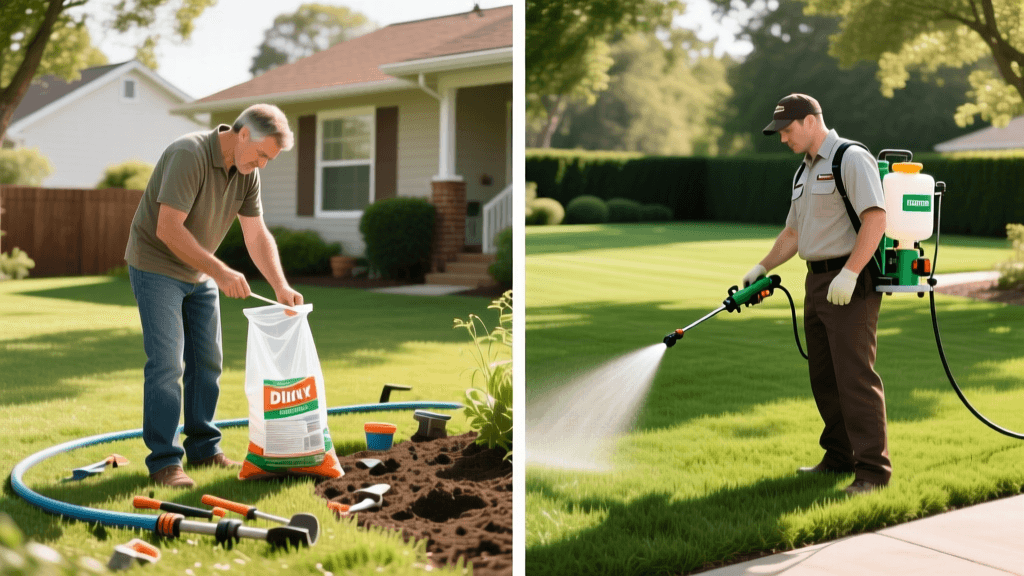
Actionable Advice: Use a selective, post-emergent herbicide containing a three-way blend of active ingredients such as 2,4-D, Dicamba, and MCPP (commonly sold under brand names like Trimec or SpeedZone). Apply on a calm, dry day when temperatures are between 50°F and 75°F. Avoid broadcasting weed-and-feed granules; spot-treating with a pump sprayer is more cost-effective, environmentally responsible, and drastically reduces chemical exposure to your lawn.
Step 5: Mowing Adjustments and Leaf Mulching
As the season progresses, your mowing routine must adapt. During the summer, cool-season grasses should be kept tall (3.5 to 4 inches) to shade the soil and conserve moisture. However, entering winter with excessively long grass invites fungal diseases like snow mold and provides a warm nesting habitat for voles and mice, which can chew through your turf under the snow cover.
Actionable Advice: Gradually lower your mower deck over the final three mows of the season, ending at a height of 2.0 to 2.5 inches. When autumn leaves begin to fall, ditch the rake and the bagger. Instead, use a mulching mower to pulverize the leaves into dime-sized pieces. Research from Michigan State University demonstrates that mulched leaves decompose rapidly, providing a natural source of organic matter and nitrogen to the soil, while effectively smothering emerging winter weeds.
Step 6: Irrigation System Winterization
If you utilize an underground sprinkler system, winterizing it is non-negotiable. Water left inside PVC or polyethylene pipes will freeze, expand, and cause catastrophic cracks, leading to expensive spring repairs.
Actionable Advice: In October or early November (before the first hard freeze), hire a licensed irrigation professional to perform a compressed air blowout. They will use a high-volume, low-pressure air compressor (typically 80 to 100 CFM) to safely evacuate all standing water from the mainlines, lateral pipes, and sprinkler heads. Expect to pay between $80 and $150 for this service, depending on the number of zones in your yard. Never attempt to blow out your own system with a standard home garage compressor, as they lack the necessary volume and can melt internal sprinkler components due to friction heat.
Summary Checklist for Winter Readiness
- Aerate and Overseed: Complete by mid-September using Tall Fescue or Kentucky Bluegrass seed.
- Test Soil pH: Apply lime if pH is below 6.0 based on lab results.
- Fertilize Twice: Use slow-release nitrogen in September and quick-release winterizer in November.
- Spot-Treat Weeds: Use liquid 2,4-D/Trimec blends to kill broadleaf weeds at the root.
- Lower Mower Deck: Drop cutting height to 2.5 inches by the final mow.
- Mulch Leaves: Chop leaves into the turf to feed soil microbes.
- Blow Out Sprinklers: Hire a professional to clear irrigation lines before the first deep freeze.
By following this comprehensive seasonal maintenance schedule, you transition your lawn from a state of summer stress into winter dormancy with maximum energy reserves. The result is a dense, deeply rooted, and vibrant turf that will aggressively green up as soon as soil temperatures rise in the spring.