Lawn Care
Fall Lawn Winterization Guide for Cool-Season Grasses
Fall Lawn Care for Cool-Season Grasses
If you’re growing Kentucky Bluegrass, Tall Fescue, or Perennial Ryegrass, fall isn’t the end of the growing season—it’s when your lawn does most of its important work. Summer heat slows these grasses down, sometimes putting them in a semi-dormant state. But once air cools and soil stays warm in early fall, they shift gears: less energy goes to leaf growth, and more goes underground—to roots, rhizomes, and storing carbohydrates.
What you do from September through November affects how well your lawn handles winter freeze-thaw cycles—and how fast it greens up next spring. Skip fall care, and you risk winter desiccation, snow mold, or a spring full of weeds. This guide walks through practical, research-backed steps to get your cool-season lawn ready for winter.
Fall Lawn Maintenance Timeline
Lawn care timing matters—especially as summer fades into fall. Here’s a step-by-step schedule for cool-season grasses, with estimated costs for a typical 5,000-square-foot lawn.
| Timeframe | Primary Task | Recommended Products / Tools | Estimated Cost |
|---|---|---|---|
| Early Sept | Core Aeration & Overseeding | Walk-behind core aerator, KBG/Fescue seed mix | $75 - $150 |
| Mid-Sept | Broadleaf Weed Control | Trimec or 2,4-D amine herbicide | $20 - $35 |
| Late Sept | Heavy Fall Fertilization | High-nitrogen winterizer (e.g., 32-0-10) | $40 - $60 |
| October | Leaf Mulching & Hydration | Mulching mower blades, sprinkler system | $0 (if owned) |
| November | Final Mow & Equipment Prep | Mower winterization kit, fuel stabilizer | $15 - $30 |
Core Aeration and Overseeding
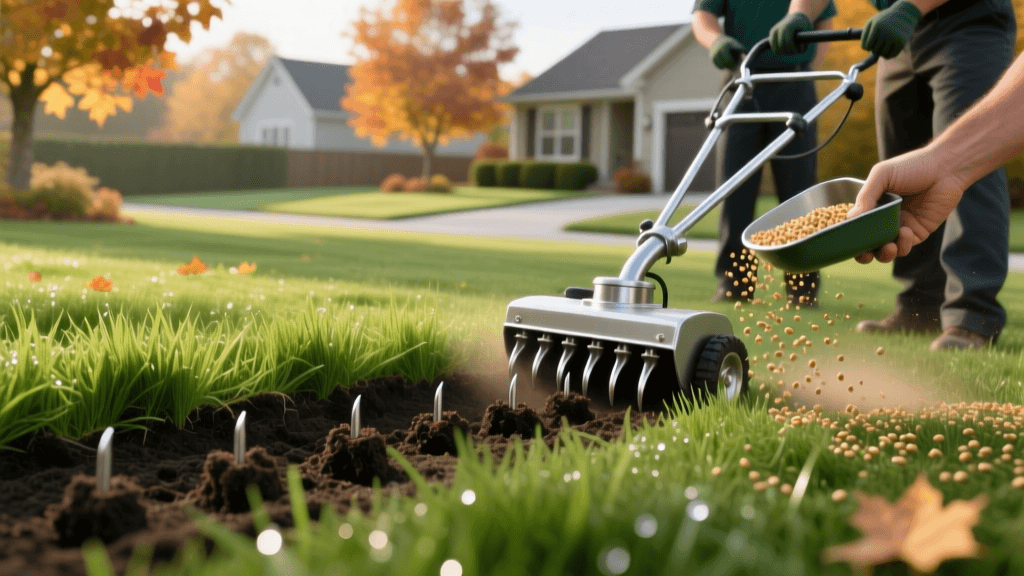
Soil compaction is a common problem in city and suburban lawns. Over summer, foot traffic, mowing, and drying soil can squeeze the ground tight—cutting off oxygen and water to the roots. Early September is usually the best time to aerate.
Aeration Tips
- Depth and Spacing: Use a core aerator that pulls plugs 2 to 3 inches deep and about 2 to 3 inches apart. Avoid spike aerators—they often make compaction worse in clay soils.
- Moisture Levels: Water deeply 24 hours before aerating. The soil should be damp but not soggy, so the tines go in cleanly and pull full cores.
- Leave the Plugs: Don’t rake them up. Let them dry and break down on their own over the next week or two. They’ll add microbes and topsoil back into the thatch layer.
Overseeding for Thicker Grass
Seed right after aerating to fill bare spots and bring in newer, more drought-tolerant grass varieties. For Kentucky Bluegrass, use 1 to 2 pounds of seed per 1,000 square feet. For Tall Fescue, use 4 to 6 pounds per 1,000 square feet. A starter fertilizer like Lesco Professional Starter Fertilizer (18-24-12) helps seedlings root quickly. Keep the top inch of soil moist by watering lightly 2–3 times a day until the new grass grows tall enough to mow.
Fall Fertilization: Feed the Roots
Many people think fertilizing is just for spring. But for cool-season grasses, late-fall feeding is actually the most impactful nutrient application. Once air temps drop below 50°F, leaf growth slows—but the soil stays warm enough for roots to keep absorbing and storing nutrients.
Picking a Winterizer
Look for a fertilizer high in nitrogen and with some potassium to help grass handle cold. Options like Scotts Turf Builder WinterGuard (32-0-10) or SiteOne 25-5-15 fit the bill. Potassium—the third number on the bag—helps grass cells resist freezing, protecting the crown from winter kill.
How Much and When to Apply
Apply 1.0 to 1.5 pounds of actual nitrogen per 1,000 square feet between late September and mid-October. To figure out how much product to use, divide 100 by the first number on the bag. With a 32-0-10 fertilizer, that’s about 3.1 pounds per 1,000 square feet. Use a broadcast spreader with an edge guard to keep fertilizer off driveways and sidewalks—many towns regulate runoff like this.
Weed Control in Fall
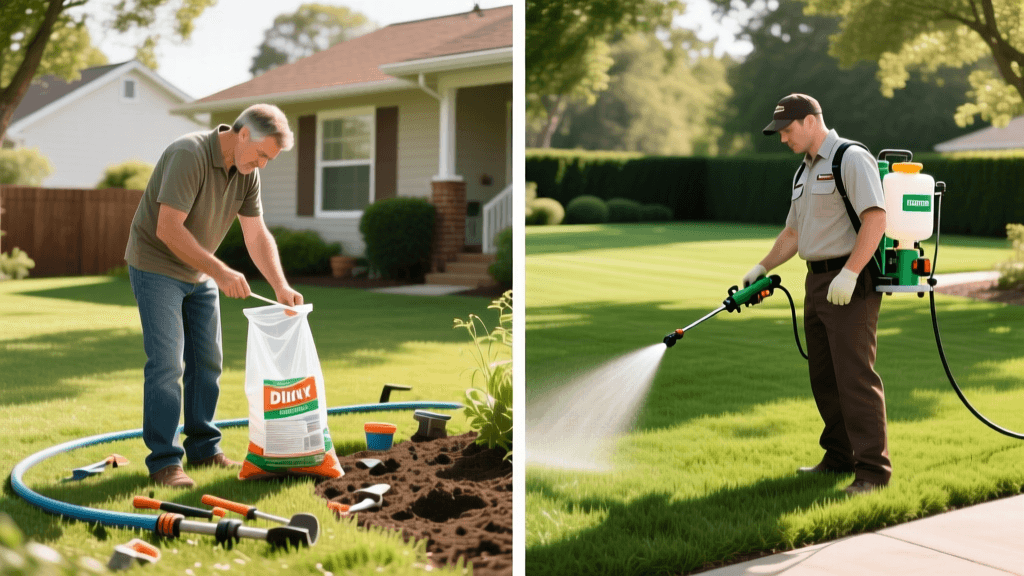
Fall is the best time to take out perennial broadleaf weeds like dandelions, clover, chickweed, and plantain. These plants are moving sugars down into their roots to survive winter. So when you apply a systemic herbicide now, they carry it right down—killing the whole plant, not just the leaves.
Try a multi-ingredient herbicide like Ortho WeedClear, or a professional mix with 2,4-D, MCPP, and Dicamba. Apply on a calm, clear day when temps are between 55°F and 75°F. Wait at least 48 hours after applying before heavy rain or irrigation. And don’t spray newly seeded areas until the grass has been mowed three times.
Mowing Height and Leaf Mulching
As October and November roll in, adjust your mowing. Too-tall grass going into winter holds moisture, creating ideal conditions for snow mold (Microdochium nivale) and voles.
- Gradual Lowering: Starting mid-October, drop your mower deck by half an inch every two weeks. Your last cut—usually late November—should leave grass at 2.0 to 2.5 inches.
- Leaf Mulching: Skip the raking and bagging. Use a mulching mower to chop leaves into small, dime-sized pieces. Studies show they break down fast, adding organic matter and micronutrients without building up thatch. If leaves are too thick, go over them twice—or rake off the excess so the grass isn’t smothered.
What the Research Says
These practices line up with turfgrass science and university extension recommendations. Purdue University Extension's Turfgrass Science program highlights late-fall fertilization as especially helpful for cool-season lawns. In one of their guides, Purdue agronomists write:
"Late-fall fertilization (October to November) results in better rooting, enhanced energy reserves, and an extended period of color retention the following spring. The nitrogen applied during this time is stored in the crown and roots, providing the energy needed for the initial burst of spring growth without the excessive, disease-prone top growth associated with heavy spring applications."
Penn State Extension also points to potassium’s role in winter prep, noting that enough potassium helps cool-season grasses stand up to drought, disease, and cold. Following these guidelines helps your lawn hold up better under real-world conditions.
Winterizing Your Lawn Equipment
Don’t forget the tools. Before stashing your mower for winter, either run the carburetor dry or add a marine-grade fuel stabilizer like STA-BIL. Ethanol-blended gas breaks down over time and can clog fuel lines. Remove the spark plug, drip a few drops of motor oil into the cylinder, and gently pull the starter cord to coat internal parts and prevent rust. Sharpen the blades now—early spring growth comes on fast, and you’ll want them ready.
Follow this fall routine, and your lawn won’t just survive winter—it’ll head into spring strong, dense, and ready to grow.