Lawn Care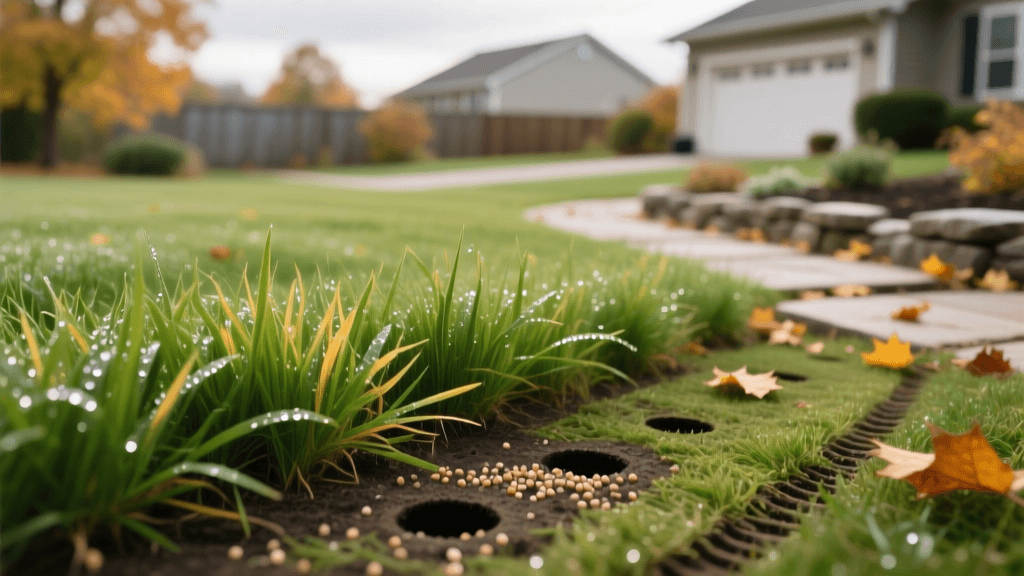
Fall Lawn Care Guide: Winterizing Cool-Season Grasses
Why Fall is the Most Critical Season for Cool-Season Lawns
When autumn arrives, many homeowners mistakenly believe their lawn care duties are winding down. However, for cool-season grasses like Kentucky Bluegrass, Perennial Ryegrass, and Tall Fescue, fall is arguably the most vital season for long-term turf health. While spring prompts rapid leaf growth, fall is all about root development and carbohydrate storage. As air temperatures drop into the 60s and 50s Fahrenheit, soil temperatures remain warm enough to stimulate aggressive root expansion. Proper seasonal maintenance during this window ensures your lawn survives winter dormancy and emerges thick, green, and resilient the following spring.
Step 1: Soil Testing – The Foundation of Autumn Health
Before applying any amendments, you must understand your soil's baseline. A comprehensive soil test measures pH, phosphorus, potassium, and micronutrient levels. Cool-season grasses thrive in slightly acidic to neutral soil, with an ideal pH between 6.0 and 7.0. If your soil test reveals a pH below 6.0, you will need to apply pelletized calcitic or dolomitic lime. A standard application rate is 50 pounds of lime per 1,000 square feet to raise the pH by roughly half a point. Expect to pay between $15 and $30 for a professional soil test through your local university cooperative extension office. Testing in early fall gives lime months to break down and alter the soil chemistry before the spring growing season. Additionally, the soil test will reveal if your lawn is deficient in phosphorus or potassium, allowing you to purchase a customized fertilizer blend rather than wasting money on generic, one-size-fits-all products from the big-box hardware store.
The Ultimate Fall Lawn Care Timeline
To maximize turf health, timing is everything. Follow this structured seasonal calendar to stay on track with your lawn's biological needs.
| Phase | Timing (Approx.) | Primary Tasks | Primary Goal |
|---|---|---|---|
| Early Fall | Late Aug - Early Sept | Core Aeration, Overseeding, Starter Fertilizer | Repair summer damage, establish new seed |
| Mid-Fall | Mid-Sept - Mid-Oct | Continue Mowing, Broadleaf Weed Control, Leaf Mulching | Reduce competition, prevent snow mold |
| Late Fall | Late Oct - Nov | Winterizer Fertilization, Final Mowing | Carbohydrate storage, root hardening |
Core Aeration: Relieving Soil Compaction
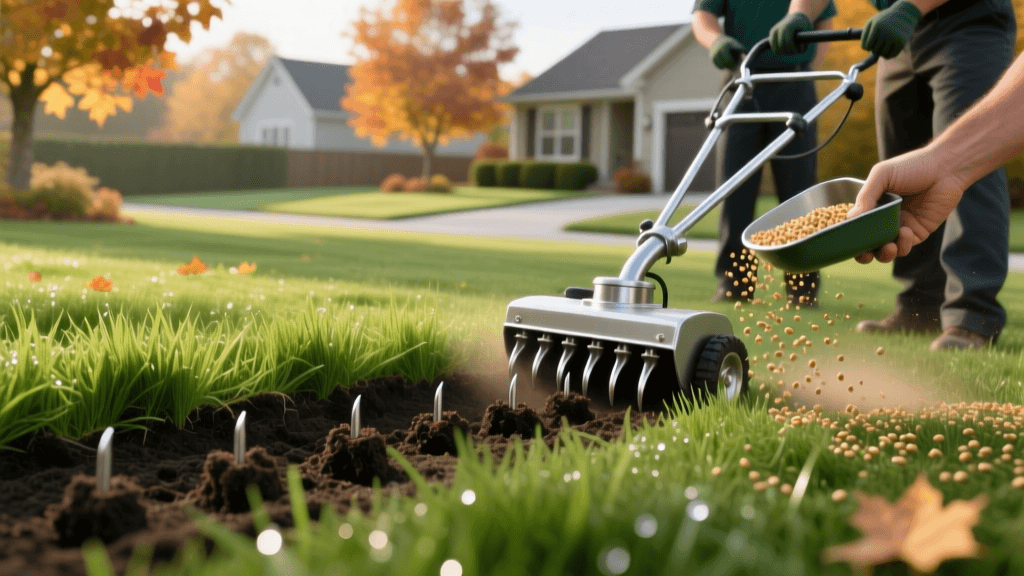
Over the summer, foot traffic, heavy mowing equipment, and intense heat can compact your soil, choking off oxygen and water to the root zone. Core aeration involves using a machine to pull 2-to-3-inch plugs of soil and thatch from the lawn. This process creates micro-channels that allow air, water, and nutrients to penetrate deeply. For cool-season lawns, early fall is the absolute best time to aerate because the grass is entering its peak growth phase and will quickly recover and fill in the holes. If you hire a professional landscaping service, expect to pay between $150 and $250 for a standard 5,000-square-foot lawn. Alternatively, you can rent a walk-behind aerator from a local hardware store for $70 to $100 per day. Always water your lawn deeply 24 hours before aerating to ensure the tines can penetrate the soil effectively.
Overseeding: Thickening the Turf Canopy
Aeration pairs perfectly with overseeding. As the aerator pulls plugs, it exposes bare soil, providing an ideal seedbed for new grass. For cool-season lawns, a blend of Tall Fescue and Kentucky Bluegrass offers excellent drought tolerance and disease resistance. Apply seed at a rate of 3 to 5 pounds per 1,000 square feet for overseeding an existing lawn. To ensure successful germination, keep the top inch of soil consistently moist by watering lightly two to three times a day for the first two weeks. Premium seed brands like Jonathan Green Black Beauty or Scotts Turf Builder Grass Seed cost between $40 and $80 for a 10-pound bag, which is a worthwhile investment to crowd out future weed invasions.
Adjusting Irrigation for Cooler Temperatures
As temperatures drop and daylight hours shorten, the evapotranspiration rate of your lawn decreases significantly. Continuing to water your lawn on a summer schedule will lead to waterlogged soils, shallow root systems, and an increased susceptibility to fungal diseases like brown patch and dollar spot. Transition your irrigation system to a deep and infrequent schedule. Aim to provide roughly 1 inch of water per week, including rainfall, until the ground begins to freeze. Utilize a rain sensor or smart irrigation controller to automatically skip watering cycles after precipitation events. Furthermore, if you have an underground sprinkler system, it is imperative to schedule a professional blow-out before the first hard freeze to prevent cracked PVC pipes and damaged sprinkler heads. A professional winterization service typically costs between $50 and $150, depending on the number of zones in your yard.
Fall Fertilization: The Winterizer Application
Fall fertilization is often misunderstood. While spring fertilizer pushes top growth, fall fertilizer builds roots. You should plan for two distinct applications. The first, applied in early September alongside overseeding, should be a phosphorus-rich starter fertilizer (such as a 24-25-4 N-P-K ratio) to encourage seedling root development. The second application, often called the 'winterizer,' should be applied in late October or November, roughly two weeks after your final mowing. Look for a high-nitrogen, high-potassium formula, such as a 32-0-10. Potassium acts like antifreeze for grass cells, improving cold hardiness and disease resistance. Apply 1.0 to 1.5 pounds of actual nitrogen per 1,000 square feet. According to the Purdue University Extension Turfgrass Science program, late-fall fertilization is crucial because the plant stores these nutrients in its root system, resulting in a deeper root system that helps the turfgrass survive the winter and green up earlier in the spring without the excessive, disease-prone top growth associated with heavy spring fertilization.
Mowing and Leaf Management Strategies
Do not put the mower away just because the weather is cooling. Continue mowing your cool-season lawn at a height of 2.5 to 3.0 inches throughout the early and mid-fall. This height shades out weed seeds and protects the crown of the plant from early frost damage. However, for your very last mow of the season in late November, drop the mower deck down to 2.0 inches. Cutting the grass shorter before winter prevents the blades from matting down under heavy snow, which drastically reduces the risk of snow mold (Microdochium nivale). When it comes to falling leaves, avoid bagging them if possible. Instead, use a mulching mower blade to chop leaves into dime-sized pieces. These leaf fragments will filter down into the soil canopy, decompose, and provide a free, natural source of organic matter and micronutrients.
Targeted Autumn Weed Control
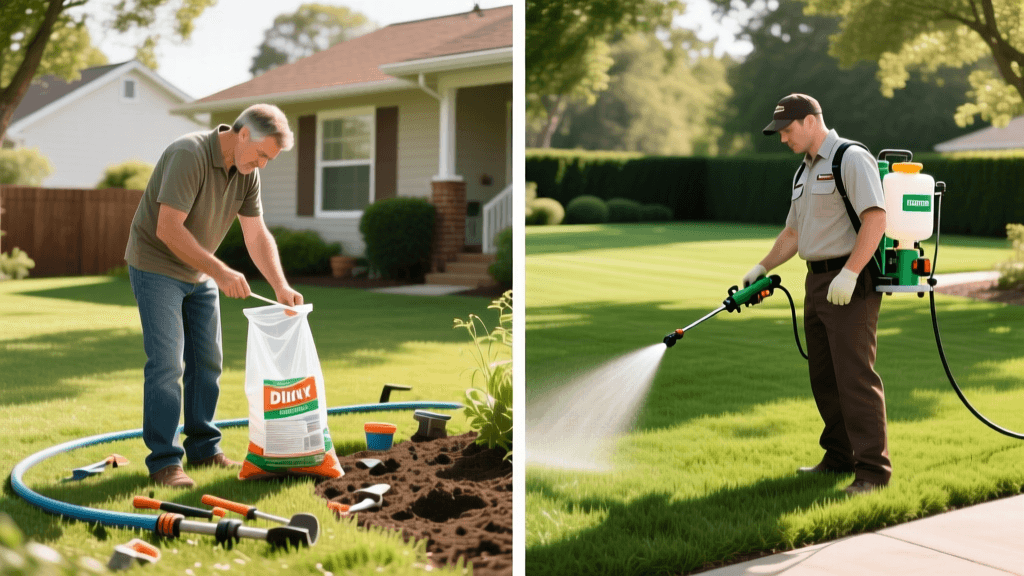
Fall is the most effective time to combat broadleaf perennial weeds like dandelions, clover, and plantain. During autumn, these weeds are actively pulling nutrients down into their root systems to prepare for winter. If you apply a selective, systemic post-emergent herbicide (containing active ingredients like 2,4-D, dicamba, or triclopyr) during this period, the weed will translocate the chemical directly to its roots, ensuring a complete kill rather than just burning off the leaves. Apply the herbicide on a calm, dry day when temperatures are between 55°F and 80°F. Avoid applying pre-emergent crabgrass preventers in the fall if you have recently overseeded, as these chemicals will also inhibit the germination of your new desirable grass seed. Furthermore, manually pulling large taproot weeds like dandelions after a heavy autumn rain is highly effective, as the moist soil allows for the complete extraction of the root system.
Conclusion: Preparing for the Dormant Season
By shifting your focus from cosmetic top-growth to foundational root health, your autumn lawn care routine will pay massive dividends. Aeration, strategic overseeding, precise winterizer fertilization, and proper mowing heights work synergistically to fortify cool-season grasses against the harsh realities of winter. Invest the time and resources into these seasonal maintenance steps now, and you will be rewarded with a lush, vibrant, and deeply rooted lawn the moment the spring thaw arrives.