Tree Care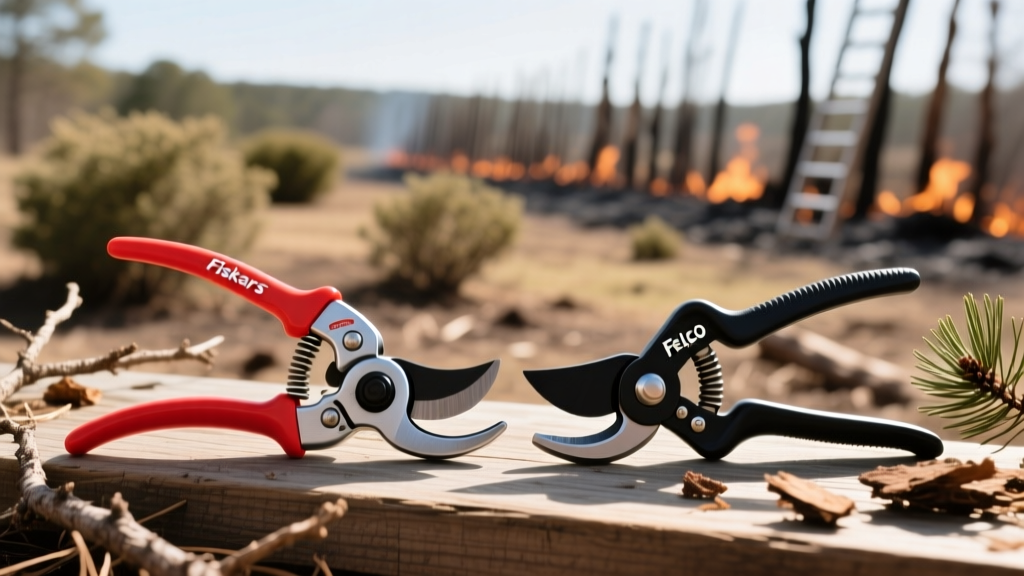
2026 Fiskars vs Felco: Bypass & Anvil Pruners for Firescaping
Lisa ThompsonPublished
The 2026 Wildfire Reality: Why Pruning is Your First Line of Defense
As we navigate the 2026 wildfire season, unpredictable weather patterns and prolonged dry spells have made fire-resistant landscaping—often called firescaping—an absolute necessity for homeowners in fire-prone regions. Creating a defensible space around your home is no longer just a recommendation; it is a critical survival strategy. According to Cal Fire, proper vegetation management, including the strategic removal of deadwood and the elimination of ladder fuels, is the most effective way to protect your property from radiant heat and flying embers.
At the heart of this vegetation management strategy is the humble hand pruner. However, not all pruners are created equal, and using the wrong tool can actually increase your fire risk by damaging trees and inviting disease, which in turn creates more dry, flammable deadwood. In this comprehensive 2026 guide, we break down the essential differences between bypass and anvil pruners, and pit the two industry titans—Fiskars and Felco—against each other to help you choose the perfect tool for maintaining a fire-resistant landscape.
Bypass vs. Anvil Pruners: Understanding the Cut for Fire Prevention
Before choosing a brand, you must understand the mechanics of the cut and how it relates to tree health and fire behavior. A healthy tree with high moisture content is naturally more fire-resistant than a stressed, dying, or dead tree. Therefore, your pruning technique directly impacts your landscape's flammability.
Bypass Pruners: The Live Wood Specialist
Bypass pruners operate like a pair of scissors. A sharpened curved blade passes closely by a thicker, unsharpened lower jaw (the hook). This design creates a clean, precise cut that heals quickly. In firescaping, bypass pruners are mandatory for cutting live branches, shaping trees for airflow, and removing green vegetation in the immediate home ignition zone. A clean cut prevents the entry of pathogens and wood-boring insects, ensuring the tree remains healthy, hydrated, and less susceptible to becoming dry fuel.
Anvil Pruners: The Deadwood Destroyer
Anvil pruners feature a single sharpened blade that closes down onto a flat, soft metal or plastic base (the anvil). This action is more akin to a guillotine or a knife on a cutting board. While an anvil pruner will crush live plant tissue and invite disease, it excels at slicing through hard, dry, brittle deadwood. Deadwood is the primary carrier of fire; it ignites at much lower temperatures and acts as a wick for embers. When clearing out dead interior branches or dried-out brush that could serve as ladder fuels, an anvil pruner provides superior leverage and requires less hand strain.
Fiskars vs. Felco: Which Brand Wins for Firescaping?
When outfitting your fire-prevention toolkit in 2026, Fiskars and Felco represent two distinct philosophies: accessible, ergonomic power versus professional, rebuildable precision.
Felco: The Professional's Choice for Precision
Swiss-made Felco pruners are the gold standard for arborists and master gardeners. The Felco 2 (bypass) and Felco 30 (anvil) are iconic models that have been refined over decades. For firescaping, Felco offers unmatched precision. When you are working in tight canopies, carefully thinning out dense foliage to improve airflow and reduce fuel continuity, the slim profile and razor-sharp sap grooves of a Felco bypass pruner are invaluable. Furthermore, every single part of a Felco pruner is replaceable. If you are clearing heavy, abrasive deadwood and dull the blade, you can simply swap it out rather than buying a new tool. In 2026, a standard Felco 2 retails for around $65 to $75, making it an investment piece designed to last a lifetime.
Fiskars: The Homeowner's Powerhouse for Brush Clearing
Fiskars has dominated the consumer market by focusing on ergonomics and mechanical advantage. Their PowerGear2 line utilizes a patented gear mechanism that multiplies your leverage, making it incredibly easy to cut through tough, dry branches up to 3/4 inch thick. For weekend warriors tackling large properties and clearing vast amounts of dead brush in Zone 2 (30 to 100 feet from the home), Fiskars pruners reduce hand fatigue significantly. The Fiskars X-series anvil pruners feature a fully hardened, precision-ground steel blade that stays sharp through heavy deadwood clearing sessions. Priced between $30 and $45 in 2026, Fiskars offers exceptional value and is often the preferred choice for rapid, high-volume fuel reduction.
Head-to-Head Comparison Chart: 2026 Firescaping Pruners
| Feature | Felco 2 (Classic Bypass) | Felco 30 (Classic Anvil) | Fiskars PowerGear2 (Bypass) | Fiskars X-Series (Anvil) |
|---|---|---|---|---|
| Best Fire-Scaping Use | Live wood thinning, precision canopy airflow | Snapping brittle deadwood, small ladder fuels | High-volume live branch clearing, reducing hand strain | Heavy dead brush removal, dry twig snapping |
| Cut Capacity | 1 inch (25mm) | 0.8 inch (20mm) | 3/4 inch (19mm) | 3/4 inch (19mm) |
| Ergonomics | Excellent, aluminum handles, wire cutting notch | Good, lightweight, sap groove | Superior, rotating handle reduces fatigue | Very Good, SoftGrip touchpoints |
| Maintenance | Fully rebuildable, all parts replaceable | Fully rebuildable, blade easily swapped | Limited replaceability, mostly disposable | Limited replaceability, blade can be sharpened |
| 2026 Est. Price | $65 - $75 | $60 - $70 | $35 - $40 | $30 - $35 |
Executing the Defensible Space Pruning Strategy
According to the National Fire Protection Association (NFPA), the Home Ignition Zone is divided into specific areas, each requiring a different approach to pruning and fuel reduction. Here is how to deploy your Fiskars and Felco pruners across these zones.
Zone 0: The Immediate Zone (0-5 Feet)
This area must be completely free of combustible materials. Use your Felco bypass pruner to meticulously remove any dead leaves, pine needles, or small dry twigs from the bases of shrubs and low-hanging tree branches. If you have ornamental trees near the house, use the bypass blade to cleanly remove any lower branches that touch the siding or roof, ensuring a clean cut that won't rot and create future fire hazards.
Zone 1: The Intermediate Zone (5-30 Feet)
The goal here is to eliminate "ladder fuels"—vegetation that allows a ground fire to climb into the tree canopy. The University of California Agriculture and Natural Resources (UC ANR) division recommends keeping tree canopies pruned so the lowest branches are at least 6 to 10 feet off the ground. Use your Fiskars PowerGear2 bypass pruner to tackle these higher, live branches with minimal arm fatigue. For interior deadwood within the canopy, switch to an anvil pruner to crush through the dry, brittle wood without tearing the surrounding live bark.
Zone 2: The Extended Zone (30-100 Feet)
In this outer zone, the objective is to slow the spread of fire and reduce overall fuel loads. This is where high-volume brush clearing comes into play. Use your heavy-duty Fiskars X-Series anvil pruner to rapidly clear out dead underbrush, dried-out perennial stalks, and dead saplings. The anvil action will power through the dry, fibrous material quickly, allowing you to cover more ground before the peak heat of the afternoon sets in.
Tool Care and Spark Prevention in Dry Conditions
When maintaining a fire-resistant landscape during peak dry seasons, your tools can inadvertently become a fire hazard. Metal-on-metal contact, or striking a hidden rock with a steel anvil blade, can create sparks that ignite dry grass in a fraction of a second.
- Clear the Ground: Before pruning low-hanging deadwood, use a rake to clear away dry grass and leaves directly beneath your work area.
- Avoid Rock Strikes: When using an anvil pruner near the soil line, be hyper-aware of the cutting base. Striking a stone with the hardened steel blade can generate a spark.
- Sanitize Your Blades: Tree diseases weaken plants, turning them into dry fuel. Wipe your bypass pruner blades with isopropyl alcohol between trees to prevent the spread of pathogens like oak wilt or fire blight.
- Lubricate Moving Parts: Sap buildup causes pruners to stick, requiring excessive force that can lead to slips and injuries. Clean your Felco or Fiskars pruners weekly during fire season using a wire brush and a light coat of non-flammable, food-grade mineral oil.
Final Verdict for the 2026 Fire Season
Preparing your property for wildfire season requires the right strategy and the right tools. If you are a homeowner with a large, heavily wooded lot requiring aggressive deadwood removal and brush clearing, the mechanical advantage and affordability of Fiskars anvil and PowerGear pruners will serve you best. However, if you are managing a meticulously designed firescape, focusing on the health, precision, and longevity of your specimen trees to ensure they remain hydrated and fire-resistant, the surgical precision and rebuildable nature of Felco bypass and anvil pruners is worth the premium. By understanding the distinct roles of bypass and anvil blades, you can maintain a lush, beautiful landscape that stands resilient against the threat of wildfire in 2026 and beyond.