Gardening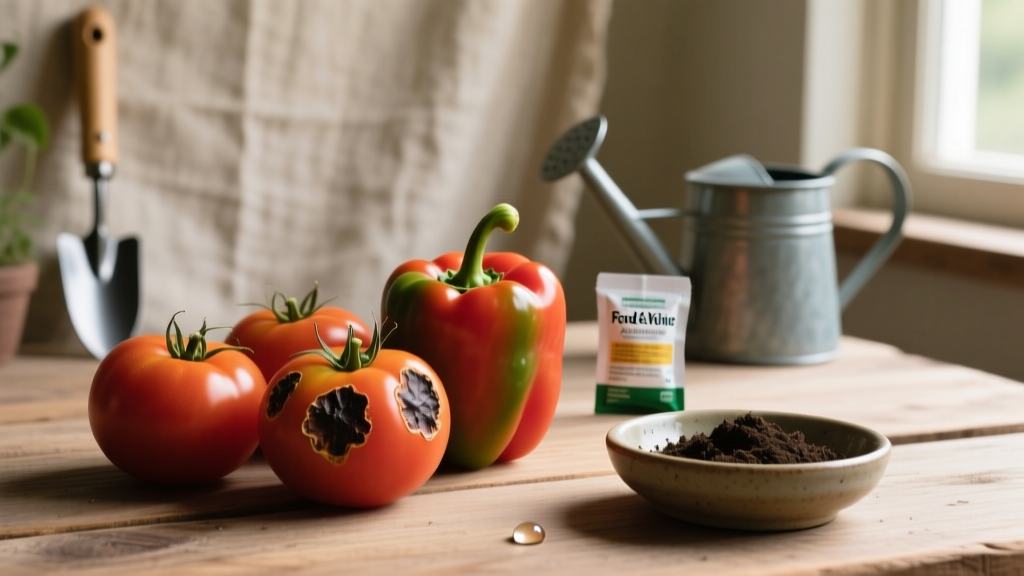
Diagnose and Fix Blossom End Rot in Tomatoes and Peppers
Sarah ChenPublished
Identifying Blossom End Rot: Symptoms and Diagnosis
Blossom end rot (BER) is one of the most frustrating physiological disorders to encounter in the home vegetable garden. It primarily affects tomatoes and peppers, though it can also strike eggplants, squash, and watermelons. Unlike fungal or bacterial diseases, blossom end rot is not caused by a pathogen; it is a physiological condition linked to calcium localization within the developing fruit.
Diagnosis is relatively straightforward if you know what to look for. The first symptom typically appears when the fruit is about one-third to one-half of its mature size. You will notice a small, water-soaked, light-brown spot on the blossom end of the fruit (the bottom, opposite the stem). As the fruit continues to grow, this spot expands into a sunken, leathery, dark brown or black lesion. In advanced stages, secondary fungi or bacteria may invade the lesion, causing the fruit to rot entirely and develop fuzzy spores, which often leads gardeners to misdiagnose the issue as a primary fungal infection.
It is crucial to differentiate BER from sunscald, which appears as white, papery patches on the sides of the fruit exposed to direct sunlight, and from anthracnose, which presents as small, circular, sunken spots with dark borders anywhere on the fruit.
The Root Cause: Calcium Mobility and Moisture Fluctuations
The most common misconception about blossom end rot is that it is strictly caused by a lack of calcium in the soil. According to the University of Minnesota Extension, most garden soils actually contain more than enough calcium to support healthy tomato and pepper growth. The true culprit is almost always inconsistent soil moisture.
Calcium is transported through the plant's xylem (the vascular tissue responsible for moving water and nutrients from the roots to the leaves and fruit). Calcium moves passively with water. When soil moisture fluctuates wildly—alternating between bone-dry and waterlogged—the plant's ability to uptake and transport calcium is severely disrupted. Furthermore, calcium is highly mobile within the plant's leaves but relatively immobile in the fruit. If the plant experiences water stress, it will prioritize sending available water (and the calcium dissolved within it) to the leaves to maintain photosynthesis, effectively starving the developing fruit of calcium and causing the cell walls at the blossom end to collapse.
Step-by-Step Troubleshooting Protocol
If you spot blossom end rot on your tomatoes or peppers, do not panic. The affected fruit cannot be cured and should be removed immediately to redirect the plant's energy. However, you can save the rest of the crop by following this troubleshooting protocol.
Step 1: Audit Your Watering Routine
Tomatoes and peppers require a consistent supply of 1 to 1.5 inches of water per week, including rainfall. Hand-watering with a wand is often inconsistent, leading to the exact moisture fluctuations that trigger BER.
- Action: Invest in a standard rain gauge ($5 to $10) to track weekly precipitation.
- Upgrade: Install a drip irrigation system. A basic 50-foot drip kit costs between $40 and $80 and delivers water directly to the root zone at a slow, consistent rate, eliminating the wet-dry cycle.
- Timing: Water deeply in the early morning. Avoid shallow, daily sprinklings that encourage weak root systems.
Step 2: Apply Mulch to Retain Moisture
Bare soil dries out rapidly in the summer heat, making consistent moisture impossible to maintain. Mulch acts as a physical barrier that regulates soil temperature and drastically reduces evaporation.
- Action: Apply a 3 to 4-inch layer of organic mulch around the base of your plants, keeping it a few inches away from the main stem to prevent stem rot.
- Materials: Straw ($8 to $12 per bale), shredded untreated leaves, or pine needles are excellent, breathable choices. Avoid using thick layers of grass clippings, which can mat down and repel water.
Step 3: Check Soil pH and Amend Accordingly
While calcium may be present in the soil, it becomes chemically 'locked up' and unavailable to plant roots if the soil pH is too acidic or too alkaline. Tomatoes and peppers thrive in a slightly acidic pH range of 6.2 to 6.8.
- Action: Send a soil sample to your local cooperative extension office for a professional test ($15 to $30). Avoid cheap, over-the-counter colorimetric test kits, as they are notoriously inaccurate for measuring calcium levels and buffer pH.
- Amendment: If your pH is below 6.0, apply a fast-acting agricultural lime, such as Espoma Organic Garden Lime, at a rate of 5 lbs per 100 square feet. Work it into the top 6 inches of soil. Note that lime takes several months to fully react, which is why this is primarily a preventative step for the following season.
Step 4: Evaluate Your Fertilizer Regimen
Over-fertilizing, particularly with high-nitrogen synthetic fertilizers, forces the plant to produce rapid, lush vegetative leaf growth. This massive leaf canopy demands the lion's share of the plant's water and calcium, leaving the fruit deficient. Furthermore, fertilizers containing ammonium-nitrogen actually compete with calcium for uptake at the root zone.
- Action: Stop using high-nitrogen lawn fertilizers or synthetic blends (like 10-10-10) on your vegetable garden.
- Alternative: Switch to a low-nitrogen, phosphorus-and-potassium-rich organic fertilizer formulated specifically for tomatoes, such as Jobe's Organics Tomato Fertilizer (2-5-3 NPK ratio).
Fast-Acting Calcium Supplements vs. Long-Term Amendments
When BER strikes mid-season, adding granular lime to the soil surface will not save your current crop, as it takes months to break down and become bioavailable. For immediate triage, you must use water-soluble calcium supplements applied as a foliar spray or soil drench. However, the North Carolina State Extension notes that foliar calcium is only marginally effective because calcium does not easily translocate from leaves into the fruit. Soil drenching is generally preferred.
| Amendment Type | Product Example | Application Rate | Speed of Action | Best Use Case |
|---|---|---|---|---|
| Garden Lime (Calcium Carbonate) | Espoma Organic Garden Lime | 5 lbs per 100 sq ft | Slow (3-6 months) | Fall/Spring soil prep to raise pH and add long-term calcium. |
| Gypsum (Calcium Sulfate) | Down To Earth Gypsum | 1-2 lbs per 100 sq ft | Medium (1-2 months) | Adding calcium without altering soil pH (ideal for alkaline soils). |
| Liquid Calcium Chloride | Greenhouse Megastore CalMag | 1 tsp per gallon (drench) | Fast (Days to Weeks) | Mid-season emergency soil drench to correct acute deficiencies. |
| Bone Meal | Jobe's Organics Bone Meal | 1 tbsp per planting hole | Slow (Season-long) | Planting-time amendment for slow-release calcium and phosphorus. |
Debunking Common Blossom End Rot Myths
The internet is rife with home remedies for blossom end rot that are not only ineffective but can actively worsen the problem. Here is the science-based truth behind three common myths:
- Myth 1: Epsom Salts cure BER. Epsom salt is magnesium sulfate. Magnesium and calcium compete for the same uptake receptors in the plant's root system. Adding Epsom salts to soil that already has adequate magnesium will actually block calcium uptake, accelerating blossom end rot.
- Myth 2: Burying Tums or antacids in the soil works. While antacids contain calcium carbonate, they are formulated with binders and fillers that do not break down easily in soil. They are an expensive and highly inefficient way to amend garden soil.
- Myth 3: Spraying milk on the leaves prevents BER. Milk contains trace amounts of calcium, but not nearly enough to impact a heavy-feeding crop like tomatoes. Furthermore, spraying milk on foliage in warm, humid weather creates a perfect breeding ground for powdery mildew and sooty mold.
Preventative Measures for Next Season
As noted by the University of Wisconsin Extension, the most effective way to manage blossom end rot is through proactive cultural practices before the planting season even begins.
- Avoid Early Planting: Planting tomatoes in cold, wet soil stunts root development and limits early calcium uptake. Wait until soil temperatures consistently reach 60°F or higher before transplanting.
- Root Pruning Awareness: Avoid deep cultivation or aggressive hoeing near the base of your plants. Severing the shallow feeder roots severely limits the plant's ability to absorb water and calcium.
- Cover Crops: Plant a winter cover crop like annual rye or crimson clover. Tilling this organic matter into the soil in the spring improves soil structure, increases water-holding capacity, and promotes the deep, robust root systems necessary to prevent moisture fluctuations.
By shifting your focus from simply 'adding calcium' to managing soil moisture and root health, you can effectively eliminate blossom end rot and enjoy a bountiful, blemish-free harvest of tomatoes and peppers.
