
Landscaping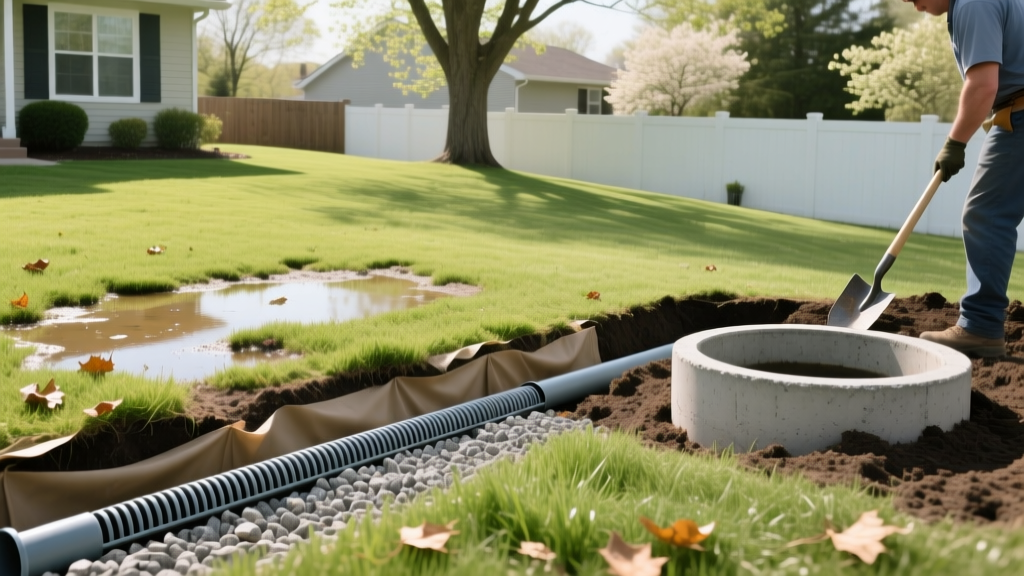
How to Diagnose and Fix Poor Yard Drainage Problems
James MillerPublished
The Hidden Dangers of Standing Water
A beautiful landscape can quickly turn into a soggy, unusable mess when water fails to drain properly. Poor yard drainage is not just an aesthetic nuisance; it is a severe threat to your property. Standing water breeds mosquitoes, suffocates turfgrass roots by displacing vital oxygen, and creates a breeding ground for fungal diseases. More alarmingly, water pooling near your home can seep into your basement, cause structural foundation cracks, and rot wooden siding. If you find yourself stepping over puddles days after a rainstorm, it is time to take action. This comprehensive guide will walk you through diagnosing the root cause of your drainage issues and implementing proven, long-lasting solutions.
Step 1: Diagnosing Your Yard Drainage Problem
Before you start digging trenches or buying gravel, you must understand how water moves across your property and how your soil absorbs it. Water always follows the path of least resistance, and your soil composition dictates the speed of absorption.
Perform a Soil Percolation Test
To determine your soil's drainage rate, perform a simple percolation (perc) test. Dig a hole approximately 12 inches deep and 6 inches wide in the problem area. Fill the hole with water and let it drain completely to pre-soak the surrounding soil. Once empty, refill it to the top and use a ruler to measure the water level. Check the level every hour. If the water drops less than 1 inch per hour, you have heavy clay soil with severe drainage restrictions. If it drops between 1 and 4 inches per hour, you have loamy soil with moderate drainage. Anything faster indicates sandy soil, which rarely suffers from standing water issues.
Identify the Water Source
Observe your yard during a heavy downpour. Is the water coming from a neighbor's elevated property? Are your gutter downspouts dumping thousands of gallons of roof runoff directly next to your foundation? Is the ground simply compacted from years of foot traffic? Identifying the source—whether it is surface runoff, a high water table, or hardscape runoff—will dictate the correct engineering solution.
Step 2: Top Solutions for Standing Water
Once you have diagnosed the issue, you can select the most appropriate intervention. Often, a combination of these methods yields the best results.
1. Regrading and Soil Amendment
If water pools near your home, regrading is your first line of defense. The goal is to create a continuous downward slope away from your foundation. For localized soggy spots in the lawn, core aeration and top-dressing with organic compost can break up compacted clay and improve the soil structure, allowing water to infiltrate rather than puddle.
- Measurements: Aim for a minimum 2% slope away from the foundation. This equates to a drop of 1/4 inch for every horizontal foot.
- Materials: Use a clay-heavy topsoil blend for grading near the house to prevent water from seeping through the soil back toward the foundation. Avoid using pure sand or highly organic mixes near the foundation.
- Cost: DIY regrading costs around $500 to $1,000 for soil rental and equipment. Professional grading typically ranges from $1,500 to $3,000.
2. Installing a French Drain
A French drain is a subterranean trench designed to intercept and redirect groundwater and surface runoff. It is the gold standard for fixing persistently soggy lawns and relieving hydrostatic pressure against basement walls.
- Trenching: Dig a trench 12 to 18 inches deep and 6 to 8 inches wide, maintaining a 1% downward slope toward your discharge point (street, storm drain, or dry well).
- Materials: Line the trench with a non-woven geotextile filter fabric (such as Mirafi 500X) to prevent silt from clogging the system. Place a 4-inch perforated PVC pipe (SDR 35 rigid pipe is vastly superior to corrugated flexible pipe, which crushes and clogs easily) at the bottom. Cover the pipe with 3/4-inch washed, angular crushed stone. Never use rounded pea gravel, as it shifts and allows soil infiltration.
- Cost: DIY installation costs roughly $15 to $30 per linear foot. Professional installation ranges from $40 to $70 per linear foot.
3. Building a Dry Well
If your problem stems from downspout runoff and you lack a suitable daylight discharge area, a dry well is an excellent solution. A dry well is an underground chamber that captures stormwater and allows it to slowly percolate into the surrounding subsoil.
- Product Recommendation: The NDS Flo-Well 50-gallon dry well system is a durable, lightweight, and easy-to-install modular unit.
- Installation: Dig a hole significantly larger than the well unit. Wrap the unit in filter fabric, connect your solid 4-inch PVC downspout extensions to the inlet ports, and surround the entire assembly with 3/4-inch washed gravel to create a massive underground reservoir.
- Cost: A DIY dry well costs between $200 and $400. Professional excavation and installation can cost $800 to $1,500.
4. Creating a Rain Garden
For an eco-friendly, aesthetically pleasing solution, consider a rain garden. This is a shallow, planted depression designed to capture, filter, and absorb runoff from roofs and driveways. Rain gardens remove up to 90% of nutrients and chemicals from stormwater before they reach local waterways.
- Plant Selection: Choose native, moisture-tolerant plants with deep root systems. Excellent choices include Swamp Milkweed (Asclepias incarnata), Blue Flag Iris (Iris versicolor), and Joe-Pye Weed (Eutrochium purpureum).
- Soil Mix: Excavate 6 to 8 inches of native soil and replace it with a bioretention mix consisting of 50% sand, 30% compost, and 20% topsoil to ensure rapid infiltration.
- Cost: DIY materials and plants cost $100 to $300. Professional landscape design and installation range from $1,000 to $2,500.
Cost and Effectiveness Comparison
| Solution | Best Application | Avg. DIY Cost | Avg. Pro Cost | Difficulty Level |
|---|---|---|---|---|
| Regrading | Foundation runoff protection | $500 - $1,000 | $1,500 - $3,000 | Moderate |
| French Drain | Soggy lawn areas, high water table | $15 - $30 / ft | $40 - $70 / ft | High |
| Dry Well | Downspout capture, no daylight | $200 - $400 | $800 - $1,500 | Moderate |
| Rain Garden | Eco-friendly surface runoff | $100 - $300 | $1,000 - $2,500 | Low to Moderate |
Expert Insights and Authoritative Guidelines
When modifying your landscape's hydrology, it is crucial to follow established engineering and environmental guidelines to prevent inadvertently flooding neighboring properties or violating local municipal codes.
According to the University of Minnesota Extension, proper yard grading is the most critical factor in preventing basement water intrusion. They mandate maintaining a minimum 2% slope away from the foundation for at least the first 10 feet. Furthermore, the Environmental Protection Agency (EPA) strongly advocates for decentralized green infrastructure, such as rain gardens and dry wells, to reduce the burden on municipal storm sewers and naturally filter non-point source pollutants.
Always contact your local utility locating service (such as 811 in the United States) at least three business days before digging any trenches for French drains or dry wells. Striking an underground gas, water, or fiber-optic line can result in catastrophic damage and severe financial liability.
Conclusion
Solving yard drainage problems requires a methodical approach: diagnose the soil and water flow, choose the right engineering solution, and execute with precision using high-quality materials. Whether you opt to regrade your foundation, install a rigid PVC French drain, or cultivate a native rain garden, taking proactive steps will protect your home's structural integrity and transform your landscape into a healthy, usable outdoor living space. Do not wait for the next major storm to expose your property's vulnerabilities; tackle your drainage issues today for a drier, safer tomorrow.

