
Landscaping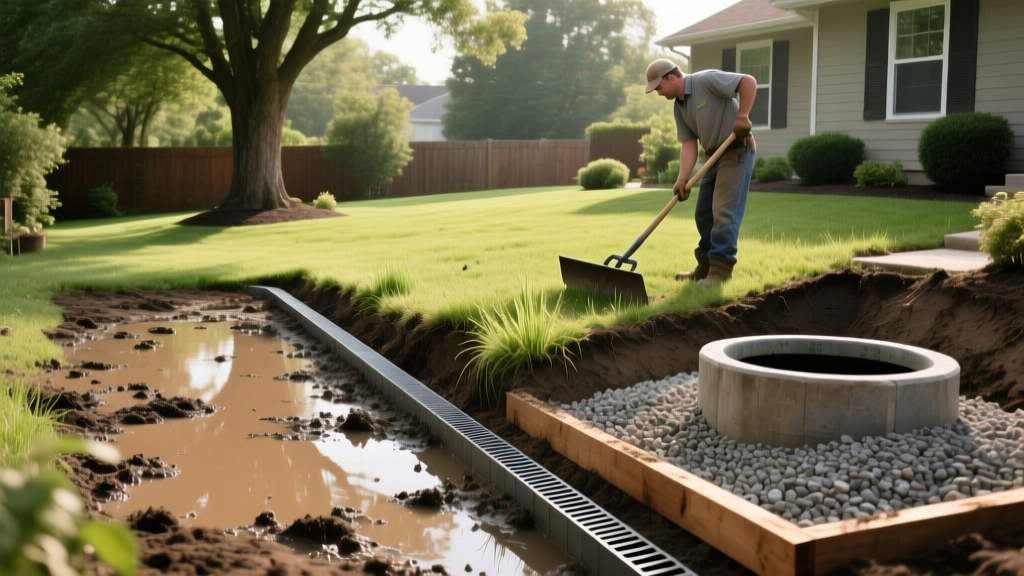
How to Diagnose and Fix Soggy Yard Drainage Issues
Robert HayesPublished
The Hidden Costs of a Soggy Yard
Standing water in your yard is more than just a visual nuisance; it is a critical landscaping problem that can lead to severe structural and environmental consequences. Prolonged soil saturation suffocates turfgrass roots, invites fungal diseases, and creates prime breeding grounds for mosquitoes. More alarmingly, poor yard drainage can cause water to pool against your home's foundation, leading to basement flooding, cracked concrete, and costly structural repairs. Diagnosing the root cause of your soggy yard spots is the first step toward implementing effective, long-lasting drainage solutions. This guide will walk you through professional diagnostic techniques and actionable landscaping fixes to reclaim your outdoor space.
Step 1: Diagnose the Root Cause of Standing Water
Before you start digging trenches or buying gravel, you must understand why water is pooling in specific areas. Yard drainage issues typically stem from one of three culprits: soil composition, improper grading, or concentrated water runoff.
The Percolation Test for Soil Drainage
Soil composition dictates how quickly water infiltrates the ground. Heavy clay soils act like a bowl, trapping water on the surface, while loamy or sandy soils allow for rapid percolation. To diagnose your soil's drainage capacity, perform a simple percolation test:
- Dig a hole 12 inches deep and 12 inches wide in the soggiest part of your yard.
- Fill the hole with water and let it drain completely. This pre-soaks the soil.
- Refill the hole with water and insert a yardstick. Measure the water level drop after one hour.
Diagnosis: If the water drops less than 1 inch per hour, you have poorly draining clay soil. If it drops 1 to 3 inches, you have average loam. Anything over 4 inches indicates excessively fast-draining sandy soil (rarely the cause of standing water). For clay-heavy soils, surface drainage solutions or deep soil amendments are required.
Evaluating Your Yard's Slope and Grading
Water always follows the path of least resistance. If your yard lacks a proper slope, water will pool in low-lying depressions. The industry standard for residential grading is a minimum 5% slope away from your home's foundation. This translates to a 6-inch drop over the first 10 feet of your yard. You can diagnose grading issues using a string line and a line level, or by hiring a landscaping professional to perform a laser-level topographic survey of your property.
Identifying Concentrated Runoff Sources
Sometimes the problem isn't the soil or the slope, but the volume of water being introduced to a specific area. Check your roof's gutter system. A standard 1,000-square-foot roof sheds over 600 gallons of water during a 1-inch rainstorm. If your downspouts dump directly onto the lawn or into undersized splash blocks, the localized soil will quickly become overwhelmed, resulting in a soggy mess.
Step 2: Targeted Drainage Solutions
Once you have diagnosed the problem, you can select the appropriate hardscaping or landscaping intervention. Below are the most effective solutions, complete with material specifications and cost estimates.
1. Regrading and Topdressing
Best for: Minor pooling near the foundation and shallow depressions.
If your yard is relatively flat but lacks the proper 5% slope, regrading is the most permanent solution. For minor issues, you can topdress low spots using a mix of screened topsoil and compost. Apply the soil in 1-inch layers, tamping it down to prevent future settling. Ensure the final grade slopes away from the house. For major regrading projects, you will need to hire a landscaping crew with a skid steer to cut and fill the earth.
- Materials: Screened topsoil, compost, sod seed or plugs.
- Cost: DIY topdressing costs $30 to $50 per cubic yard. Professional regrading costs $1,500 to $3,500 depending on yard size.
2. Installing a French Drain System
Best for: Soggy lawns, clay soil, and intercepting subsurface water.
A French drain is a subsurface trench filled with gravel and a perforated pipe that redirects groundwater away from problem areas. To install one effectively:
- Dig a trench 12 inches deep and 6 inches wide, ensuring a continuous slope of 1/8 inch per foot toward the discharge point (storm drain or daylighted hillside).
- Line the trench with a non-woven geotextile fabric (such as Mirafi 500X) to prevent soil from clogging the system.
- Add a 2-inch base layer of washed 3/4-inch drainage gravel.
- Lay a 4-inch perforated pipe (ADS N-12 corrugated pipe or Schedule 40 PVC) with the holes facing downward.
- Cover the pipe with more gravel until you are 2 inches below the surface grade, then fold the landscape fabric over the top and cover with topsoil and sod.
- Cost: $15 to $25 per linear foot for DIY; $30 to $60 per linear foot for professional installation.
3. Deploying a Dry Well for Downspouts
Best for: Managing concentrated roof runoff without routing pipes across the yard.
If your downspouts are causing localized flooding, a dry well captures the water and allows it to slowly percolate into the surrounding soil. Products like the NDS Flo-Well Dry Well System are highly effective. Bury the 24-inch plastic tank in a hole lined with gravel, connect your 4-inch downspout extension to the inlet, and wrap the unit in landscape fabric. The tank holds up to 50 gallons of water, releasing it gradually into the subsoil.
- Cost: $150 to $250 per dry well, including gravel and excavation.
4. Building a Sustainable Rain Garden
Best for: Eco-friendly stormwater management and enhancing curb appeal.
A rain garden is a shallow, planted depression designed to capture and filter runoff. By amending the soil with sand and compost (a 60/20/20 mix of sand, topsoil, and compost), you create a highly permeable bed. Plant it with deep-rooted native species like Swamp Milkweed, Black-Eyed Susans, or Blue Flag Iris. Rain gardens can absorb up to 30% more water than a standard lawn and filter out pollutants before they reach the water table.
Drainage Solutions Comparison Chart
Use the table below to compare landscaping drainage solutions based on your specific yard constraints, budget, and DIY capabilities.
| Solution | Estimated Cost | DIY Difficulty | Best Application | Maintenance Required |
|---|---|---|---|---|
| Regrading / Topdressing | $30 - $3,500+ | Moderate to High | Shallow pooling, foundation slope correction | Low (annual aeration) |
| French Drain | $15 - $60 / linear ft | High (Heavy digging) | Subsurface water, clay soils, long trenches | Medium (flush pipes annually) |
| Dry Well | $150 - $300 / unit | Moderate | Downspout runoff, localized heavy saturation | Low (check for sediment) |
| Rain Garden | $5 - $15 / sq ft | Moderate | Eco-friendly runoff management, aesthetic beds | High (weeding, pruning, mulching) |
| Dry Creek Bed (Swale) | $10 - $25 / linear ft | Moderate | Surface water channeling, slope management | Low (resetting displaced rocks) |
Expert Insights and Authoritative Guidelines
When tackling severe drainage issues, it is crucial to follow local environmental guidelines and best practices established by agricultural and landscaping authorities. According to Penn State Extension's comprehensive guide on Stormwater Management for Homeowners, minimizing impervious surfaces and utilizing infiltration practices like rain gardens and dry wells is critical for reducing the burden on municipal storm sewers and preventing localized flooding. Furthermore, Penn State experts emphasize that altering the natural flow of water to dump directly onto a neighbor's property or into municipal streets without a permit can result in severe legal and financial liabilities. Always consult your local municipal zoning office before daylighting a French drain into a public storm drain or altering significant topographical features on your lot.
Common Drainage Mistakes to Avoid
Even well-intentioned landscaping projects can fail if these common mistakes are made:
- Using the Wrong Landscape Fabric: Do not use woven weed-blocking fabric for French drains. It clogs quickly with silt. Always use non-woven geotextile drainage fabric which allows water to pass through while filtering out soil particles.
- Perforated Pipe Orientation: Many DIYers install perforated pipe with the holes facing up, assuming water falls in from the top. In reality, water rises from the saturated soil below. Holes must face down to allow water to enter the pipe efficiently while preventing sediment from washing directly into the tube.
- Ignoring the Discharge Point: A French drain is useless if it has nowhere to empty. Ensure your daylighted pipe terminates at least 10 feet away from your foundation and does not cause erosion on neighboring properties. Use a pop-up emitter or a riprap splash pad at the termination point to disperse the water's kinetic energy.
Conclusion
Diagnosing and fixing a soggy yard requires a methodical approach, starting with soil and slope evaluation and ending with targeted hardscaping or landscaping interventions. Whether you opt to regrade your foundation perimeter, install a subsurface French drain, or cultivate a beautiful native rain garden, taking action will protect your home's structural integrity and transform your lawn into a usable, vibrant outdoor living space. Assess your yard's specific percolation and slope metrics today, and choose the drainage solution that best fits your landscape architecture and budget.

