
Landscaping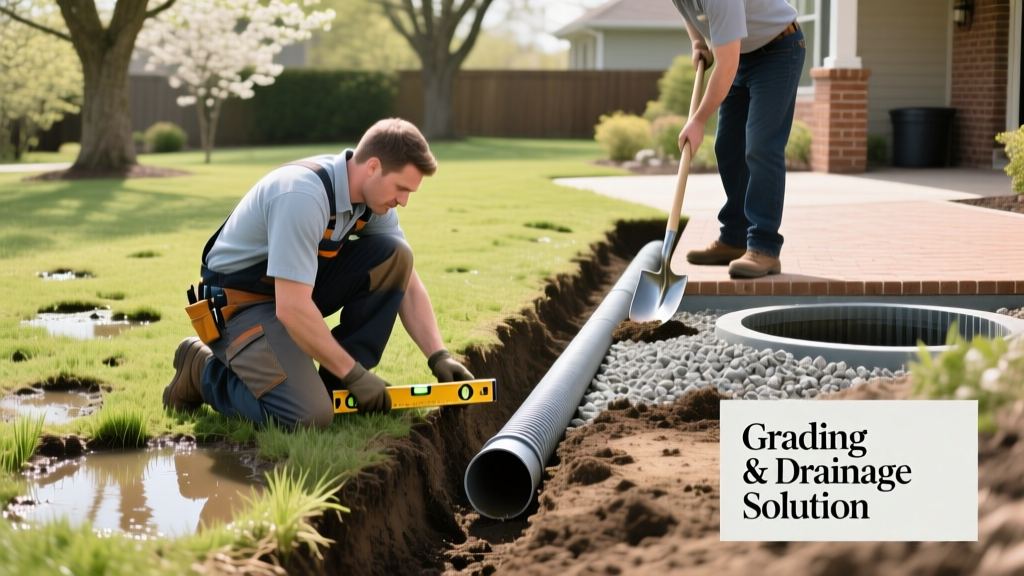
Diagnose and Fix Standing Water and Yard Drainage
Emily WatsonPublished
The Hidden Costs of a Soggy Yard
Standing water in your yard is more than just an aesthetic nuisance; it is a severe threat to your home's structural integrity and landscape health. When water pools near your foundation, it can lead to basement flooding, cracked concrete slabs, and wood rot. Furthermore, poorly drained landscapes become prime breeding grounds for mosquitoes and suffocate the root systems of your turfgrass and ornamental plants. Diagnosing the root cause of poor yard drainage is the critical first step before spending thousands of dollars on hardscaping or landscaping solutions. In this comprehensive guide, we will explore how to identify your specific drainage issues and implement actionable, cost-effective solutions.
Diagnosing the Root Cause of Poor Drainage
Before you start digging trenches, you must understand why water is failing to percolate through your soil or flow away from your property. Most residential drainage problems stem from one of three issues: compacted clay soil, improper grading, or a high water table.
The Soil Percolation Test
To determine your soil's drainage capacity, perform a simple percolation test. According to soil science guidelines, you should dig a hole approximately 12 inches deep and 12 inches wide in the problem area. Fill the hole with water and let it drain completely to saturate the surrounding soil. Then, fill it a second time and measure how long it takes for the water level to drop. If the water drops less than one inch per hour, you have poorly draining soil, typically heavy clay, which requires mechanical intervention rather than just surface amendments.
Evaluating Your Yard's Grading
Water always follows the path of least resistance. The general rule of thumb for landscape grading is that the ground should slope away from your home's foundation at a minimum rate of one-quarter inch per foot for the first ten feet. Use a string line and a line level, or rent a laser level from a local hardware store, to measure the grade. If the slope is flat or, worse, pitched toward your home, surface water will inevitably pool against your foundation.
Top Solutions for Yard Drainage Problems
Once you have diagnosed the issue, you can select the appropriate drainage solution. Here are the most effective methods for resolving standing water, complete with material specifications and cost estimates.
1. Regrading the Landscape
Regrading involves reshaping the topography of your yard to direct surface water toward municipal storm drains or safe discharge areas. For minor issues, a landscaping rake and topsoil may suffice. However, for severe grading problems, you may need to hire an excavation contractor with a skid steer. Professional regrading typically costs between $1,500 and $3,500, depending on the yard size and the amount of dirt that needs to be moved or imported.
2. Installing a French Drain
A French drain is a subsurface drainage system designed to intercept and redirect groundwater and surface runoff. The system consists of a perforated pipe surrounded by washed gravel and wrapped in landscape fabric. For optimal flow, use a rigid PVC pipe with pre-drilled holes or a high-quality corrugated pipe like the NDS Pro Series. The trench should be at least 12 inches wide and 18 inches deep, lined with non-woven geotextile fabric (such as Mirafi 140N) to prevent soil from clogging the gravel. The pipe must maintain a continuous downward slope of at least one-eighth inch per foot toward the discharge point.
3. Building a Dry Well
If you have a localized low spot where downspout water collects, a dry well is an excellent solution. A dry well is an underground chamber that temporarily stores stormwater and allows it to slowly percolate into the surrounding subsoil. The NDS Flo-Well 50-gallon dry well system is a popular choice for DIY landscapers. It costs around $150 for the unit itself and requires a hole roughly three feet wide and three feet deep, filled with clean drainage rock. Always install dry wells at least 10 feet away from your home's foundation to prevent hydrostatic pressure issues.
4. Creating a Rain Garden
For an eco-friendly and aesthetically pleasing solution, consider a rain garden. This involves creating a shallow depression (typically 6 to 8 inches deep) planted with deep-rooted native species that thrive in both wet and dry conditions. Plants like Swamp Milkweed, Blue Flag Iris, and Joe-Pye Weed act as natural sponges, absorbing excess runoff while filtering pollutants. According to the United States Environmental Protection Agency (EPA), rain gardens can reduce stormwater runoff volume significantly while providing vital habitats for local pollinators.
Drainage Solutions Comparison Chart
| Solution | Estimated Cost | DIY Difficulty | Best Application |
|---|---|---|---|
| Regrading | $1,500 - $3,500 | High (Requires heavy machinery) | Flat yards with negative slope toward foundation |
| French Drain | $15 - $30 per linear ft | Moderate (Trenching required) | Subsurface water, soggy lawn areas, retaining walls |
| Dry Well | $300 - $600 | Moderate (Deep excavation) | Downspout runoff, localized pooling |
| Rain Garden | $5 - $15 per sq ft | Low to Moderate | Eco-friendly runoff management, clay soil amendment |
Step-by-Step French Drain Installation Guide
Installing a French drain is one of the most reliable ways to solve persistent yard drainage issues. Follow these steps for a professional-grade installation:
- Call Before You Dig: Always dial 811 a few days before excavation to have underground utility lines marked.
- Map the Trench: Use marking paint to outline the trench path. Ensure the route leads to a safe daylight exit or storm drain, maintaining a 1/8-inch per foot slope.
- Excavate the Trench: Dig a trench 12 inches wide and 18 inches deep. For long runs, consider renting a mini-excavator or a walk-behind trencher to save time and physical strain.
- Lay the Fabric and Gravel: Line the trench with non-woven geotextile fabric, leaving excess on the sides to wrap over the top later. Add a 2-inch base layer of 3/4-inch washed drain rock.
- Install the Pipe: Place the perforated pipe on top of the gravel base with the holes facing downward. This prevents soil from washing directly into the holes and allows water to enter from the bottom and sides.
- Backfill and Wrap: Cover the pipe with more washed gravel until you are 3 inches below the surface grade. Fold the excess landscape fabric over the gravel to create a protective barrier against topsoil intrusion.
- Finish the Surface: Top the trench with topsoil and sod, or use decorative river rock for a functional hardscape feature.
Expert Insights on Stormwater Management
"Managing residential stormwater runoff is critical not only for protecting individual property foundations but also for preserving local water quality. By implementing decentralized green infrastructure like rain gardens and permeable subsurface drains, homeowners can drastically reduce the burden on municipal sewer systems and prevent nutrient pollution in local watersheds."
— United States Environmental Protection Agency (EPA), Stormwater Management Guidelines
Taking a proactive approach to landscape drainage protects your investment. Whether you opt for a mechanical solution like a French drain or a biological approach like a rain garden, the key is to accurately diagnose the water's source and provide it with a clear, unobstructed path away from your living spaces. By combining proper grading techniques with high-quality drainage materials, you can transform a waterlogged, unusable yard into a healthy, thriving outdoor living space.

