
Landscaping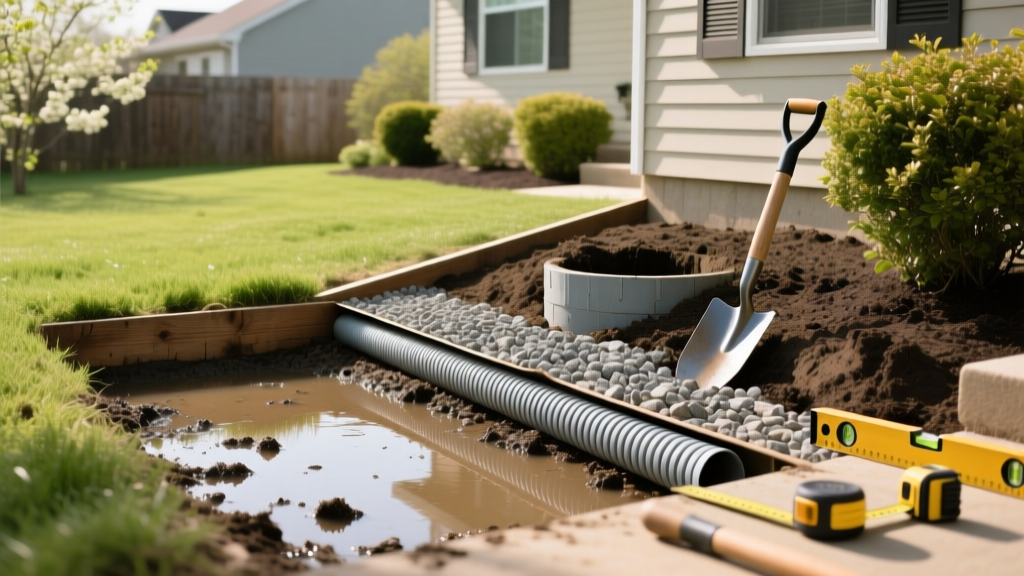
How to Diagnose and Fix Severe Yard Drainage Issues
Emily WatsonPublished
The Hidden Dangers of Poor Yard Drainage
Standing water in your yard is more than just a nuisance that ruins your weekend lawn games; it is a critical threat to your property's structural integrity and your family's health. When water pools near your foundation, it can cause hydrostatic pressure that leads to cracked basement walls, flooded crawl spaces, and thousands of dollars in structural repairs. Furthermore, stagnant water serves as a prime breeding ground for mosquitoes, increasing the risk of vector-borne diseases. Diagnosing the root cause of your landscaping drainage issues is the first step toward implementing a permanent, cost-effective solution.
Diagnosing the Root Cause of Standing Water
Before you start digging trenches or buying gravel, you must understand why water is failing to percolate or run off your property. Most yard drainage problems stem from one of three culprits: soil compaction, improper grading, or high water tables.
Perform a Soil Percolation Test
Soil composition dictates how quickly water drains. Clay-heavy soils retain water, while sandy loams drain rapidly. To test your soil's drainage capacity, perform a simple percolation test:
- Dig a hole approximately 12 inches deep and 12 inches wide in the area where water typically pools.
- Fill the hole with water and allow it to drain completely. This pre-soaks the soil and mimics saturated conditions.
- Refill the hole with water and place a ruler in the center. Measure the water level drop after one hour.
- Results: If the water drops less than 1 inch per hour, you have poorly draining clay soil that will require mechanical drainage solutions like a French drain. If it drops 2 to 4 inches, your soil is adequate, and the issue is likely surface grading.
Evaluate Your Yard's Slope and Grading
Surface water should always flow away from your home. The industry standard for proper foundation grading is a 5% slope, which equates to a 6-inch drop over the first 10 feet extending outward from your foundation. Use a string line, a line level, and wooden stakes to measure the exact grade of your landscape. If the ground slopes toward your home (negative grading), surface water will inevitably pool against your siding and foundation.
Proven Solutions for Yard Drainage Problems
Once you have diagnosed the specific issue, you can select the appropriate hardscaping or landscaping intervention. Below are the most effective, industry-standard solutions for resolving severe yard drainage issues.
1. Regrading the Landscape
If your percolation test is adequate but water flows toward your house, regrading is mandatory. This involves stripping the topsoil, adding compactable fill dirt to create the proper 5% slope away from the foundation, and replacing the topsoil. For an average-sized front yard (1,000 square feet), professional regrading typically costs between $1,500 and $3,500. DIY regrading is possible for small garden beds using a landscaping rake and a laser level, but large-scale regrading requires a skid steer or mini-excavator.
2. Installing a French Drain System
For yards with heavy clay soil or subsurface water issues, a French drain is the gold standard. A French drain intercepts groundwater and channels it to a safe discharge point, such as a municipal storm drain, a dry well, or a lower elevation on your property.
Installation Specifications:
- Trench Dimensions: Dig a trench 12 inches wide and 18 to 24 inches deep. The trench must maintain a continuous downward slope of 1/8 inch per linear foot (1% grade).
- Lining: Line the trench with a high-quality, non-woven geotextile fabric (such as Mirafi 500X) to prevent soil and roots from clogging the system.
- Piping: Use a 4-inch corrugated slotted pipe (like the NDS Pro Series) or rigid PVC with weep holes. Place the pipe at the bottom of the trench with the slots facing downward to prevent sediment from washing into the pipe.
- Backfill: Cover the pipe with 3/4-inch washed, angular drain rock. Avoid rounded river gravel, as it does not lock together and can shift over time. Wrap the excess geotextile fabric over the top of the gravel before covering it with topsoil and sod.
3. Constructing a Dry Well for Downspout Runoff
If your drainage issue is localized to the areas where your roof downspouts discharge, a dry well is an excellent solution. A dry well is an underground chamber that captures roof runoff and allows it to slowly percolate into the surrounding subsoil. Products like the NDS Flo-Well Dry Well system come in 50-gallon and 100-gallon capacities. To install, excavate a pit, place the dry well basin on a 6-inch bed of crushed stone, connect your 4-inch downspout PVC piping, and surround the basin with more gravel. This prevents the concentrated volume of roof water from washing away your mulch and eroding your garden beds.
Comparison Chart: Drainage Solutions
Selecting the right intervention depends on your budget, soil type, and the severity of the water accumulation. Use the chart below to compare the most common landscaping drainage solutions.
| Solution | Best Application | Estimated Cost | DIY Difficulty |
|---|---|---|---|
| Regrading | Negative slope near foundation; flat yards | $1,500 - $3,500 | High (Requires machinery) |
| French Drain | Heavy clay soil; subsurface water; swales | $25 - $50 per linear ft | Moderate to High |
| Dry Well | Downspout discharge; localized pooling | $300 - $800 per unit | Moderate |
| Rain Garden | Mild pooling; eco-friendly runoff management | $500 - $1,500 | Low to Moderate |
| Channel Drain | Driveways; patios; hardscaped surfaces | $100 - $250 per linear ft | Moderate (Concrete work) |
Expert Insights on Soil and Water Management
Landscaping professionals and university researchers emphasize that managing water is a holistic process that involves both hardscaping and soil biology. Amending your soil over time can naturally alleviate minor drainage issues without the need for extensive excavation.
'Proper yard drainage relies on a combination of surface grading and subsurface water management. Amending heavy clay soils with organic matter and utilizing French drains can reduce surface runoff by up to 60%, protecting local watersheds and residential foundations. Furthermore, incorporating deep-rooted native plants in bioswales helps break up compacted soil layers naturally over time.' — University of Minnesota Extension, Water Management and Landscaping Division
Following this expert guidance, homeowners should consider annual core aeration and top-dressing their lawns with high-quality compost. This introduces organic matter into the soil profile, improving the soil structure, increasing pore space, and naturally boosting the percolation rate of your yard.
Ongoing Maintenance to Prevent Future Flooding
Even the most expensive drainage systems will fail if they are not properly maintained. To protect your landscaping investment and keep your yard dry, implement the following maintenance schedule:
- Clean Catch Basins and Grates: Inspect all NDS catch basins and channel drain grates in the spring and fall. Remove leaves, twigs, and sediment that can block water entry.
- Flush the Lines: Once a year, use a garden hose with a high-pressure nozzle to flush out your French drain and downspout PVC lines. This clears out fine silt and mud that may have bypassed the geotextile fabric.
- Monitor Gutter Performance: Ensure your roof gutters are free of debris and that all downspout extensions discharge at least 5 feet away from your foundation. A single clogged gutter can dump hundreds of gallons of water directly into your garden beds during a heavy storm.
- Protect the Discharge Point: If your French drain daylights (exits) at the edge of your property or into a ditch, ensure the exit point is lined with riprap or river rock to prevent the outflowing water from eroding the soil and undermining the pipe.
When to Call a Professional Landscaper
While many homeowners successfully install dry wells and rain gardens, certain scenarios require the expertise of a licensed landscape contractor or a hydrologist. If your yard suffers from a high seasonal water table, if you have complex utility lines (gas, water, fiber optics) running through your proposed trench path, or if your property requires a retaining wall to manage severe elevation changes, professional intervention is necessary. A certified landscaper will utilize transit levels and specialized trenching equipment to ensure your drainage system is engineered to handle 100-year storm events, keeping your home safe and your landscape pristine for decades to come.

