
Landscaping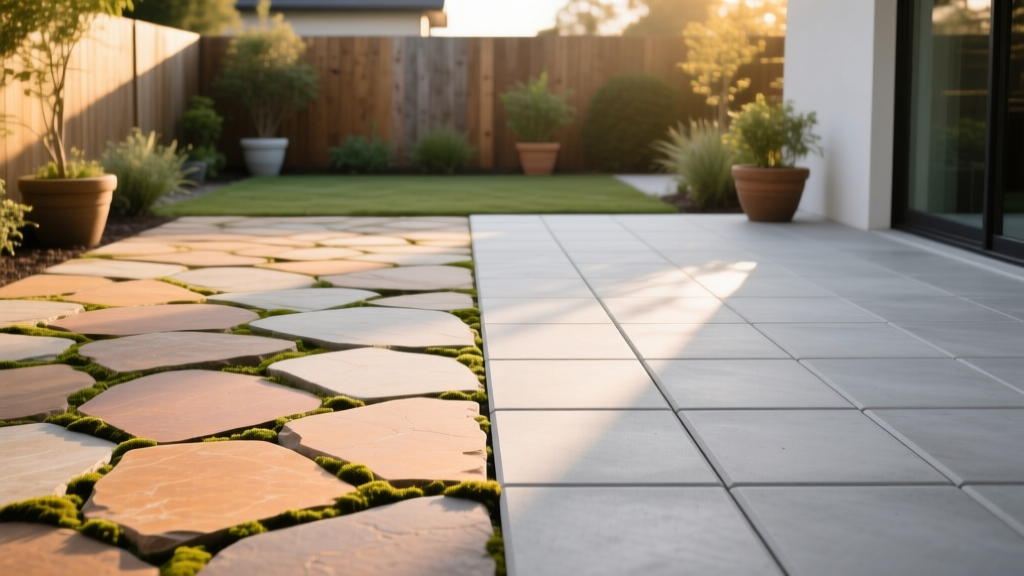
Flagstone vs. Concrete Pavers: Patio Material Guide
Mike RodriguezPublished
The Foundation of Outdoor Living Spaces
Designing the perfect outdoor living space requires balancing aesthetics, functionality, and budget. When it comes to hardscaping projects like patios, walkways, and pool decks, homeowners frequently debate between two of the most popular materials on the market: natural flagstone and manufactured concrete pavers. Both options offer distinct advantages, but they cater to very different design sensibilities and maintenance preferences. Choosing the right material will dictate not only the immediate curb appeal of your landscape but also the long-term durability and upkeep requirements of your outdoor investment.
In this comprehensive guide, we will break down the differences between natural flagstone and concrete pavers. We will explore material composition, installation methodologies, lifecycle costs, and environmental impacts to help you make an informed decision for your next landscaping project.
Understanding the Materials
What is Natural Flagstone?
Flagstone is a generic term for flat, sedimentary rock that is naturally split into broad, flat layers. It is typically composed of sandstone, slate, or limestone. Because it is a natural product quarried directly from the earth, every single piece of flagstone is entirely unique in its color variations, mineral striations, and surface texture. Popular varieties include Pennsylvania Bluestone, known for its dense durability and cool blue-gray hues, and Arizona Flagstone, prized for its warm, earthy tones of rust, terracotta, and sand. For dry-laid patio applications, flagstone is usually cut or selected to be at least 1.5 to 2 inches thick to prevent cracking under foot traffic.
What are Concrete Pavers?
Concrete pavers are manufactured hardscape units made from a mixture of Portland cement, water, and aggregates (such as sand and crushed stone). They are poured into molds, vibrated to remove air pockets, and cured under high pressure. Modern concrete pavers are engineered to meet strict industry standards, often boasting a compressive strength of 8,000 PSI or higher—making them significantly stronger than standard poured concrete. They come in a virtually limitless array of shapes, sizes, and colors, including interlocking designs, cobblestone replicas, and large-format architectural slabs.
Aesthetics and Design Flexibility
The most immediate difference between these two materials is visual. Flagstone offers an organic, rustic, and high-end custom look that blends seamlessly into natural garden beds and woodland landscapes. The irregular shapes and natural cleft surfaces create a one-of-a-kind mosaic that cannot be replicated by machines. However, because the pieces are irregular, fitting them together requires a skilled mason who can treat the installation like a giant jigsaw puzzle.
Concrete pavers, on the other hand, offer unparalleled design versatility and geometric precision. Whether you want a classic herringbone pattern, a modern linear layout, or a circular cobblestone motif, pavers can accommodate the vision. While early generations of concrete pavers looked obviously artificial, modern manufacturing techniques utilize integral color pigments and textured molds that closely mimic the look of natural stone, brick, or even aged wood.
Durability and Weather Resistance
Both materials are exceptionally durable, but they handle stress and weather differently. Natural flagstone is incredibly resilient, but certain porous varieties (like some sandstones) can be susceptible to spalling or flaking if water penetrates the surface and undergoes repeated freeze-thaw cycles. Proper sealing is often required in northern climates to protect the stone's integrity.
Concrete pavers are specifically engineered to withstand harsh freeze-thaw environments. Because they are individual units separated by jointing sand, they flex and shift slightly with the ground's natural expansion and contraction. This prevents the catastrophic cracking often seen in monolithic poured concrete slabs. If a single paver becomes stained or damaged by heavy impact, it can be easily lifted and replaced without disturbing the surrounding hardscape.
Installation Methodologies
A successful hardscape project relies entirely on what lies beneath the surface. Both flagstone and concrete pavers typically utilize a 'flexible base' installation method, though the surface preparation varies.
- Base Excavation: Both require excavating 7 to 9 inches of native soil to accommodate the base and the material thickness.
- Sub-Base Layer: A 4 to 6-inch layer of crushed angular gravel (such as DOT-spec 21A) is spread and mechanically compacted in 2-inch lifts to create a stable, free-draining foundation.
- Bedding Layer: Concrete pavers are laid over a precise 1-inch layer of coarse, washed concrete sand. Flagstone, due to its irregular thickness, is often set in a thicker bed of sand or a mortar mix if a rigid, grouted surface is desired.
- Jointing: Paver joints are swept with polymeric sand, which hardens when misted with water to lock the units in place and deter weeds. Flagstone joints are typically wider and can be filled with polymeric sand, decorative gravel, or even planted with creeping ground covers like creeping thyme or Irish moss.
According to guidelines published by the Interlocking Concrete Pavement Institute (ICPI), the use of geotextile fabric between the native soil and the aggregate base is highly recommended in areas with poor-draining clay soils to prevent base contamination and structural failure.
Maintenance and Long-Term Care
Concrete pavers are generally lower maintenance. An annual sweeping and occasional rinsing are usually sufficient. Resealing the surface every 2 to 3 years will enhance the color and protect the polymeric sand joints from washing out. Weed growth in the joints is minimal if polymeric sand is properly activated during installation.
Flagstone requires a more attentive maintenance regimen. Because natural stone is porous, it can absorb spills, oils, and organic debris, leading to stubborn stains. Applying a high-quality, breathable penetrating sealer every few years is crucial to prevent water intrusion and biological growth like moss or mildew. Furthermore, the wider joints in a flagstone patio may require periodic top-ups of gravel or jointing sand.
Cost Breakdown and Budgeting
Budget is often the deciding factor for homeowners. Material costs for concrete pavers generally range from $2.00 to $6.00 per square foot, depending on the complexity of the shape and the color technology used. Flagstone material costs are typically higher, ranging from $4.00 to $10.00 per square foot, with premium, uniformly thick gauged stones commanding the highest prices.
Labor costs also differ. Because laying irregular flagstone is an artisanal, time-consuming process, masonry labor rates for stone are significantly higher. Total installed costs for a concrete paver patio usually range from $12 to $20 per square foot, while a professionally installed natural flagstone patio typically ranges from $20 to $35+ per square foot.
Feature Comparison Chart
| Feature | Natural Flagstone | Concrete Pavers |
|---|---|---|
| Material Origin | Quarried sedimentary rock | Manufactured cement and aggregate |
| Average Installed Cost | $20 - $35+ per sq. ft. | $12 - $20 per sq. ft. |
| Lifespan | 50+ years | 25 - 50 years |
| Design Consistency | Irregular, entirely unique | Uniform, highly predictable |
| Surface Traction | Excellent (natural cleft texture) | Good (can be slippery when wet/smooth) |
| Repairability | Difficult to match replacement pieces | Easy to swap out individual units |
| Heat Retention | Moderate to High (depends on color) | High (especially darker colors) |
Environmental Impact and Heat Retention
When designing sustainable landscapes, the thermal properties of hardscapes must be considered. Darker hardscape materials absorb solar radiation and re-emit it as heat, contributing to the urban heat island effect. The Environmental Protection Agency (EPA) notes that traditional hardscapes can reach surface temperatures significantly higher than the ambient air, which can stress surrounding landscape plantings and increase cooling costs for adjacent structures. Lighter-colored concrete pavers or light earth-toned flagstones are preferable in hot, sunny climates to minimize heat absorption. Additionally, both materials can be installed as permeable surfaces—using open-graded bases and wider gravel joints—to manage stormwater runoff and recharge local groundwater tables.
Industry Standards and Best Practices
Regardless of the material chosen, adhering to industry standards is vital for longevity. The Natural Stone Institute emphasizes that proper substrate preparation and the selection of the correct stone thickness are paramount to preventing natural stone from fracturing under load. Similarly, concrete paver installations must adhere to strict edge-restraint protocols to prevent the perimeter units from migrating outward over time, which would cause the interlocking matrix to fail.
Final Verdict: Which Should You Choose?
The choice between flagstone and concrete pavers ultimately depends on your budget, aesthetic goals, and tolerance for maintenance. Choose natural flagstone if you are designing a high-end, custom landscape where organic beauty, unique artistry, and a connection to nature are the top priorities, and you have the budget to support artisanal installation. Choose concrete pavers if you desire a highly durable, low-maintenance, and cost-effective surface with precise geometric patterns, making it ideal for large entertainment areas, driveways, and modern architectural landscapes.

