
Landscaping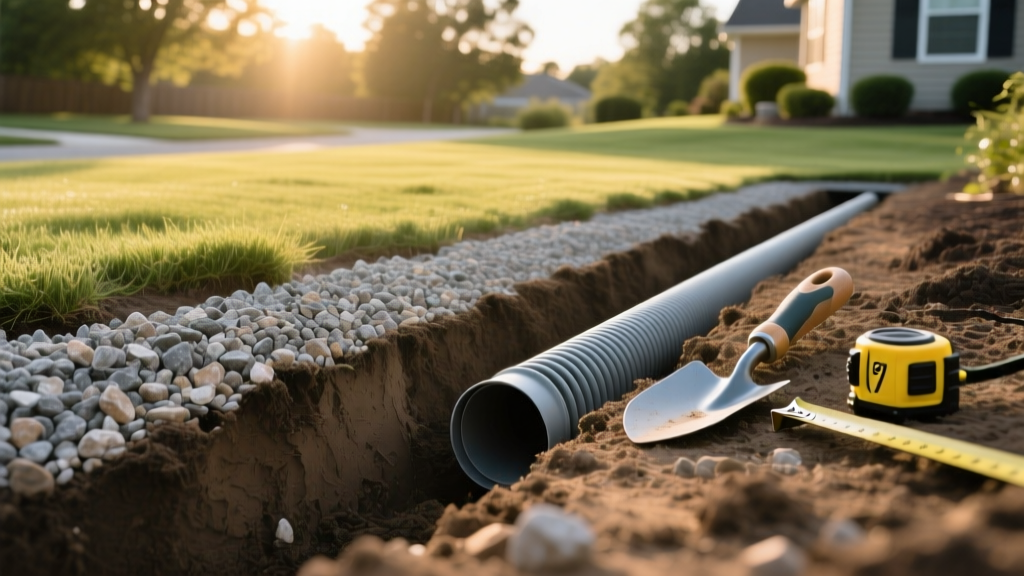
Expert French Drain Installation Tips for Yard Drainage
Mike RodriguezPublished
Water accumulation in your yard can destroy plant roots, erode topsoil, and compromise your home's foundation. As a leading landscaping best practice, installing a French drain offers a highly effective, subsurface solution to redirect excess groundwater and surface runoff. Whether you are dealing with a perpetually soggy lawn or planning a new hardscaping project that requires robust drainage, understanding the expert techniques for French drain installation is critical. This guide provides professional landscaping tips, precise measurements, and material recommendations to ensure your drainage system performs flawlessly for decades.
The Mechanics of a French Drain
A French drain is fundamentally a gravel-filled trench containing a perforated pipe that redirects water away from vulnerable areas of your landscape. Unlike swales or surface drains that rely on open channels, a French drain captures water as it percolates through the soil. The water enters the gravel bed, filters into the perforated pipe, and flows via gravity to a designated discharge point, such as a storm drain, dry well, or lower-elevation splash block. According to the Penn State Extension's guidelines on residential stormwater management, subsurface drainage systems like French drains are essential for mitigating soil saturation in poorly draining clay soils, thereby protecting both landscape investments and structural foundations.
Pre-Installation Planning and Safety Protocols
Before breaking ground, expert landscapers emphasize the importance of site evaluation and safety.
- Call Before You Dig: Always contact your local utility marking service (such as 811 in the United States) at least 48 to 72 hours before excavation to avoid striking underground gas, water, or electrical lines.
- Determine the Discharge Point: A French drain must daylight (terminate above ground) or empty into a dry well. Ensure your discharge point complies with local municipal codes; it is illegal in many jurisdictions to redirect drainage onto a neighbor's property or into municipal sanitary sewer systems.
- Soil Percolation Test: Dig a small test hole and fill it with water. If it drains slower than one inch per hour, you have heavy clay soil, meaning your French drain will need a wider gravel bed (up to 24 inches wide) to increase the water catchment area.
- Site Marking: Use landscaping marking paint to outline the trench path. Identify low spots and standing water zones to ensure the intake area is positioned correctly to intercept the water flow.
Step-by-Step Installation Best Practices
To achieve professional-grade results, follow these precise specifications for trenching, lining, and backfilling.
Step 1: Trenching with the Correct Slope
The most common cause of French drain failure is an inadequate slope. Water requires a minimum gradient of 1% (a 1/8-inch drop per linear foot) to flow effectively through the pipe. For a 40-foot trench, the discharge end must be at least 5 inches lower than the intake end. Use a string line and a line level, or a rotary laser level, to maintain this grade. The trench should typically be 12 to 18 inches wide and 18 to 24 inches deep, depending on the volume of water you need to manage.
Step 2: Lining the Trench with Landscape Fabric
Never skip the landscape fabric. Over time, fine soil particles will migrate into the gravel and pipe, causing catastrophic clogging. Line the entire trench with a high-quality, non-woven geotextile landscape fabric (rated for at least 3 to 4 ounces per square yard). Leave at least 12 inches of excess fabric hanging over the edges of the trench so you can fold it over the top of the gravel later, creating a complete wrap that isolates the drainage aggregate from the surrounding native soil.
Step 3: Selecting and Laying the Perforated Pipe
Place a 2-inch layer of washed gravel at the bottom of the trench before laying the pipe. This prevents the pipe from resting directly in the mud. When using rigid PVC pipe, ensure the perforations (holes) are facing downward. This counterintuitive best practice allows water to pool in the gravel bed and enter the pipe from the bottom up, preventing sediment from washing directly into the holes and settling inside the pipe.
Step 4: Backfilling with Washed Drainage Gravel
Cover the pipe with 3/4-inch washed drainage gravel (often called crushed stone or river rock). Do not use pea gravel, as its rounded edges compact too tightly and impede water flow. Do not use limestone or gravel with stone dust, as the dust will turn into a concrete-like sludge when wet. Fill the trench with gravel until it is 3 to 5 inches below the ground surface. Fold the excess landscape fabric over the gravel, and top the trench with 2 inches of coarse sand and a final layer of topsoil or sod to blend seamlessly with your lawn.
Material Comparison: Corrugated vs. PVC Drain Pipe
Choosing the right pipe is a critical decision in hardscaping and drainage projects. Below is a comparison of the two most common materials used in residential French drains.
| Feature | Rigid PVC (Schedule 20/40) | Corrugated Flexible Pipe |
|---|---|---|
| Cost per 10 ft | $12.00 - $25.00 | $6.00 - $10.00 |
| Durability | Extremely High (Crush-resistant) | Moderate (Can collapse under heavy loads) |
| Interior Surface | Smooth (Excellent flow rate) | Ribbed (Traps debris, slows flow) |
| Clogging Risk | Low | High |
| Installation Ease | Moderate (Requires PVC glue/couplings) | Easy (Bends around curves) |
Expert Verdict: While corrugated pipe is cheaper and easier to bend, professional landscapers almost exclusively recommend rigid PVC with a smooth interior for long-term reliability and ease of future hydro-flushing.
Common Landscaping Drainage Mistakes to Avoid
- Using the Wrong Gravel: As mentioned, crushed stone with 'fines' (dust) will ruin a French drain. Always specify 'washed 3/4-inch gravel' at the landscape supply yard.
- Forgetting the Cleanout: Install a vertical cleanout pipe with a removable cap at the highest point of the system. This allows you to insert a garden hose or plumbing snake to clear out sediment buildup every few years.
- Improper Daylighting: If the pipe exit is buried under mulch or soil, water will back up. Use a pop-up emitter or a visible splash block lined with riprap stone to prevent erosion at the discharge point.
- Neglecting Surface Grading: A French drain is a subsurface tool. If the surface grading slopes toward the house, the drain will be overwhelmed. Always ensure the topsoil slopes away from foundations at a 5% grade.
Cost Estimates and Long-Term Maintenance
The national average cost to hire a professional landscaping contractor to install a French drain ranges from $20 to $35 per linear foot, translating to roughly $1,000 to $2,500 for a standard 50-foot residential system. DIY installation significantly reduces this cost to approximately $300 to $600 for materials and tool rentals (such as a mini-excavator, trencher, and laser level). Maintenance is minimal if installed correctly. Inspect the discharge point annually to remove leaves and debris. Every three to five years, flush the system by running a high-pressure hose down the cleanout pipe to push accumulated silt out of the exit.
Authoritative Insights on Landscape Drainage
Proper drainage is not just about moving water; it is about preserving the ecological and structural integrity of your property. The University of Minnesota Extension highlights that integrating subsurface drainage with surface grading is the most effective method for managing residential stormwater. By combining a properly sloped yard with a well-constructed French drain, homeowners can eliminate standing water, protect hardscaping investments like patios and retaining walls, and foster a healthier, more resilient lawn.
'Effective landscape drainage requires a holistic approach. Subsurface drains must be paired with appropriate surface grading and soil amendment strategies to ensure long-term sustainability and prevent foundation damage.' — Principles of Residential Stormwater Management, Penn State Extension.
By adhering to these expert tips, precise measurements, and material best practices, your French drain will serve as an invisible but indispensable component of your landscape design, keeping your outdoor living spaces dry and your garden beds thriving.

