Tree Care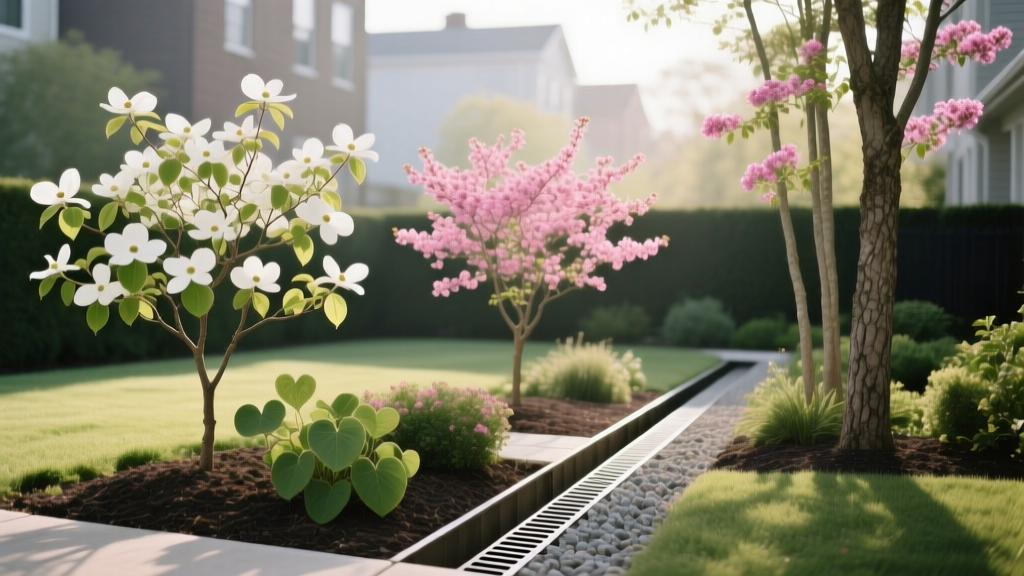
French Drain Tree Guide 2026: Dogwood vs Redbud vs Crape Myrtle
James MillerPublished
The Intersection of Yard Drainage and Ornamental Landscaping
Homeowners dealing with chronically soggy yards, standing water, or soil erosion often turn to French drain installation as the ultimate solution. However, resolving subsurface water issues introduces a new landscaping challenge: what to plant near the drainage infrastructure? In 2026, integrating hardscape drainage solutions with softscape ornamental beauty is a top priority for modern garden design. Flowering ornamental trees are the crown jewels of any landscape, but their root systems and moisture requirements can either harmonize with or completely destroy your newly installed drainage system.
When deciding between the most popular flowering ornamentals—Flowering Dogwood, Eastern Redbud, and Crape Myrtle—you must consider how their unique root architectures interact with the gravel trenches, perforated pipes, and geotextile fabrics of a French drain. Planting the wrong tree too close to a drainage line can result in root intrusion, pipe clogging, and catastrophic system failure. This comprehensive 2026 guide breaks down the French drain installation process and evaluates Dogwood vs. Redbud vs. Crape Myrtle to help you make the safest, most beautiful choice for your yard.
2026 French Drain Installation Essentials
Before selecting your tree, it is crucial to understand what lies beneath the soil. A modern French drain is designed to intercept groundwater and surface runoff, channeling it away from your home and lawn via a sloped trench. In 2026, professional installation typically costs between $60 and $110 per linear foot, depending on soil composition and trench depth.
- The Trench: Usually dug 18 to 24 inches deep and 6 to 12 inches wide, maintaining a minimum 1% slope (1 inch of drop per 8 feet of run).
- The Pipe: A 4-inch perforated PVC or corrugated pipe is placed at the base, with holes facing downward to allow water to seep up into the pipe from the saturated gravel bed.
- The Fabric: High-quality, non-woven geotextile fabric lines the trench to prevent soil and silt from clogging the gravel over time.
- The Gravel: Washed drainage gravel (typically 3/4-inch crushed stone) fills the trench, providing a porous medium for water to travel into the pipe.
Because the gravel trench remains a zone of high moisture and excellent aeration, it acts as a magnet for tree roots. Roots naturally seek out the path of least resistance, and a gravel-filled French drain offers both oxygen and water—the two primary drivers of root growth. Therefore, selecting trees with less aggressive root systems and planting them at a safe distance is non-negotiable.
Evaluating the Contenders: Dogwood vs. Redbud vs. Crape Myrtle
Each of these three ornamental giants brings distinct seasonal color, bark texture, and canopy shape to the landscape. However, their botanical traits dictate how they must be managed in a yard reliant on subsurface drainage.
Flowering Dogwood (Cornus florida)
The Flowering Dogwood is a staple of the understory, famous for its brilliant white or pink spring bracts and striking fall foliage. According to the NC State Extension, Dogwoods possess a very shallow, fibrous root system that spreads horizontally near the soil surface. While they prefer moist, well-drained, acidic soil, they are highly susceptible to root rot if left in standing water.
French Drain Compatibility: Moderate to Low. Because Dogwood roots are shallow and wide-spreading, they can easily migrate into the top layers of a French drain trench if the gravel is close to the surface. Furthermore, if your French drain is installed to dry out a previously swampy area, the Dogwood may suffer from transplant shock or drought stress during its first two years, as it relies on consistent surface moisture. To protect both the tree and the drain, Dogwoods should be planted at least 15 feet away from the main trench line, utilizing modern 2026 HDPE root barriers if space is limited.
Eastern Redbud (Cercis canadensis)
Eastern Redbuds are beloved for their vibrant, magenta-purple early spring blooms that erupt directly from the bark before the heart-shaped leaves emerge. The NC State Extension notes that Redbuds initially develop a deep taproot, which eventually gives way to a lateral, shallow root system as the tree matures. They are remarkably adaptable to various soil types, including heavy clay, but they despise "wet feet" and poorly drained soils.
French Drain Compatibility: Moderate. The Redbud's initial taproot makes it slightly less likely to immediately invade a horizontal French drain compared to surface-rooting species. However, as the tree matures and lateral roots expand, they will seek out the moisture of the drain field. Redbuds are an excellent choice for yards that *need* a French drain because they thrive once the excess water is removed, but they must be planted at least 10 to 12 feet from the trench to prevent mature lateral roots from shifting the pipe or breaching the geotextile fabric.
Crape Myrtle (Lagerstroemia)
Crape Myrtles are the undisputed champions of summer color, offering months of vibrant blooms, stunning exfoliating bark, and excellent drought tolerance once established. The Clemson Cooperative Extension highlights their adaptability to heat and varying soil conditions. However, Crape Myrtles are notorious for developing aggressive surface roots, especially when they are overwatered or when they sense a concentrated water source nearby.
French Drain Compatibility: High (with precautions). Crape Myrtles are highly tolerant of the well-drained conditions created by a French drain. In fact, they prefer the soil to dry out between waterings, making them perfectly suited for yards where drainage has been corrected. The primary risk is root intrusion; if a Crape Myrtle is planted directly over or immediately adjacent to the gravel trench, its aggressive roots will rapidly colonize the pipe. A safe planting distance of 10 feet, combined with deep watering practices to encourage roots to grow downward rather than laterally, ensures a harmonious landscape.
Comparative Data Chart: Ornamental Trees Near French Drains
Use the following 2026 landscaping data chart to compare the structural and environmental profiles of these three trees in relation to subsurface drainage systems.
| Tree Species | Mature Canopy Spread | Root Aggressiveness | Moisture Tolerance | Min. Distance from Drain |
|---|---|---|---|---|
| Flowering Dogwood | 15 - 25 feet | Moderate (Shallow/Fibrous) | Requires consistent moisture; hates waterlogging | 15 feet |
| Eastern Redbud | 15 - 20 feet | Moderate (Taproot to Lateral) | Tolerates clay; hates standing water | 10 - 12 feet |
| Crape Myrtle | 10 - 30 feet (varies by cultivar) | High (Surface-seeking) | Drought tolerant; prefers well-drained soil | 10 feet |
Best Practices for Planting Near a French Drain in 2026
To ensure your French drain continues to function flawlessly while your ornamental trees thrive, follow these advanced landscaping protocols:
1. Install HDPE Root Barriers
If your landscape design requires planting a Crape Myrtle or Redbud closer than the recommended minimum distance to the French drain, you must install a physical root barrier. In 2026, High-Density Polyethylene (HDPE) panels with directional ridges are the industry standard. Bury the barrier vertically between the tree and the drain trench, extending at least 24 to 36 inches deep. This forces the tree's roots to grow downward rather than laterally into the gravel bed.
2. Utilize Clean-Out Access Points
Modern French drains should include vertical clean-out access pipes that extend to the surface. When planting your Dogwood, Redbud, or Crape Myrtle, ensure that the canopy and trunk are positioned so they do not obstruct these access points. You will need clear access to flush the drain lines with a high-pressure hose every 2 to 3 years to clear silt and organic buildup.
3. Smart Mulching Techniques
All three ornamental trees benefit from a 2-to-3-inch layer of organic hardwood mulch to retain soil moisture and regulate root temperature. However, never pile mulch against the trunk ("volcano mulching"), as this invites rot and pests. More importantly, do not bury your French drain's surface gravel or catch basins under thick layers of mulch or topsoil, as this will impede surface water from entering the drainage system during heavy 2026 spring storms.
4. Deep, Infrequent Watering
To train your Crape Myrtle or Redbud roots to stay away from the shallow French drain trench, practice deep, infrequent watering. Using a drip irrigation system or a slow-flow soaker hose placed near the tree's dripline encourages roots to chase water deep into the native soil profile, rather than spreading horizontally toward the drain's gravel reservoir.
Conclusion
Integrating a French drain into your yard does not mean you must sacrifice the breathtaking beauty of flowering ornamental trees. By understanding the distinct root behaviors and moisture preferences of the Flowering Dogwood, Eastern Redbud, and Crape Myrtle, you can make an informed decision that protects your drainage investment. While the Crape Myrtle offers the best tolerance for the well-drained soils created by a French drain, the Redbud and Dogwood can also thrive if planted at a safe distance and protected with modern root barriers. Plan your 2026 landscape with both engineering and botany in mind, and you will enjoy a dry, healthy yard framed by spectacular seasonal blooms for decades to come.
