
Landscaping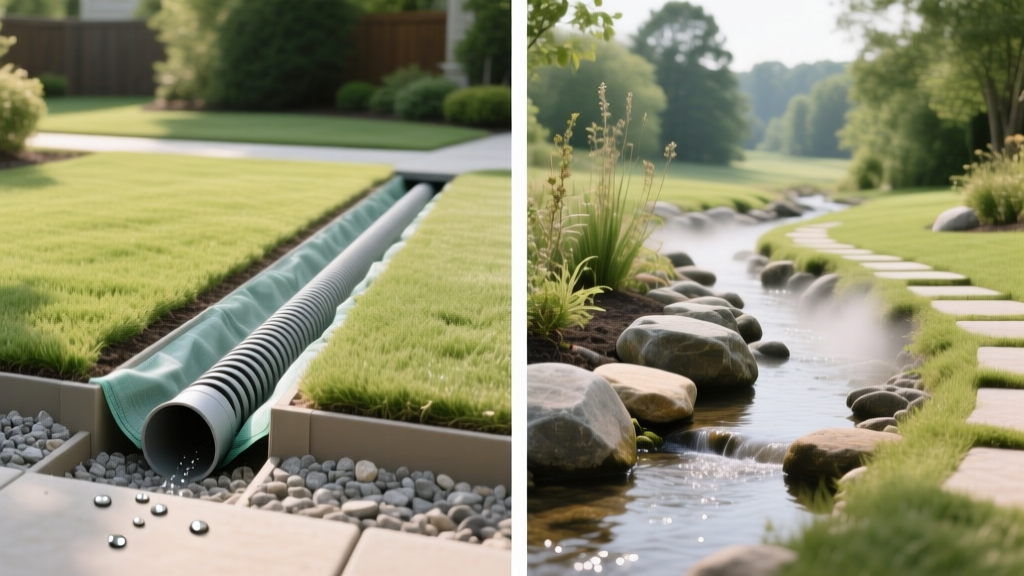
French Drain vs Dry Creek Bed: Which Drainage is Best?
Anna KowalskiPublished
The Hidden Costs of Poor Yard Drainage
Water pooling in your yard is more than just a muddy nuisance; it is a direct threat to your home’s structural integrity and the health of your landscape. When surface water fails to percolate into the soil or flow away from your foundation, it can lead to basement flooding, soil erosion, and root rot in your garden beds. According to the Environmental Protection Agency (EPA), managing residential stormwater runoff is critical not only for protecting individual properties but also for preventing localized flooding and reducing the burden on municipal sewer systems. When faced with a chronically wet yard, homeowners typically narrow their hardscaping and drainage solutions down to two primary contenders: the French drain and the dry creek bed. But which one is right for your specific topography, soil type, and aesthetic preferences?
French Drains: The Subsurface Workhorse
A French drain is a subsurface drainage system designed to intercept and redirect groundwater and surface water away from vulnerable areas. Despite the name, it is essentially a gravel-filled trench containing a perforated pipe that collects water and channels it to a safe discharge point, such as a storm drain, dry well, or lower elevation on your property.
How It Works
Water enters the trench through the porous gravel and flows into the perforated pipe. The pipe is wrapped in a geotextile filter fabric to prevent soil and debris from clogging the system. Because the pipe is installed with a slight downward slope (typically a 1% grade, or 1 inch of drop per 8 feet of pipe), gravity pulls the water away from the problem area.
Installation and Costs
Installing a French drain is labor-intensive. It requires digging a trench that is usually 12 to 24 inches deep and 6 to 12 inches wide. You must carefully calculate the slope, lay the filter fabric, add a base layer of washed drainage rock, place the PVC or corrugated perforated pipe, and cover it with more gravel before topping it off with soil or sod. Because of the excavation and materials involved, professional installation typically costs between $20 and $30 per linear foot, meaning a standard 50-foot system can range from $1,000 to $1,500.
Pros and Cons
- Pros: Highly effective at managing heavy subsurface water; completely hidden from view once covered with sod; protects foundations from hydrostatic pressure.
- Cons: High initial cost and labor; requires precise slope calculations; can clog over time if filter fabric fails or if tree roots infiltrate the pipe.
Dry Creek Beds: The Aesthetic Surface Solution
A dry creek bed, sometimes called a dry stream bed, is a surface-level drainage solution designed to mimic the look of a natural, rocky stream while channeling surface runoff away from your landscape. It is an excellent choice for yards with gentle slopes where water naturally sheet-flows during heavy rainstorms.
How It Works
Instead of using buried pipes, a dry creek bed relies on a shallow, meandering trench lined with landscape fabric and filled with various sizes of river rock, cobble, and boulders. The rocks slow down the velocity of the water, preventing soil erosion, while the trench directs the flow to a designated outlet, such as a rain garden or a dry well. As noted by the Missouri Botanical Garden, incorporating surface channels and rain gardens into your landscape design is a highly effective way to reduce runoff and allow water to infiltrate the soil naturally.
Installation and Costs
The installation process is less technically demanding than a French drain but requires a good eye for natural landscape design. You will need to excavate a shallow trench (usually 6 to 12 inches deep and 1 to 3 feet wide), tamp down the soil, and lay a heavy-duty weed barrier. The aesthetic success of the project depends on varying the sizes of your stones—placing large boulders along the banks for structural support and using smaller river rock in the center to facilitate water flow. Material costs are generally lower, and professional installation ranges from $5 to $15 per linear foot, depending on the types of stone selected and the complexity of the design.
Pros and Cons
- Pros: Visually appealing and adds natural texture to the landscape; lower installation cost; easy to clean and maintain; excellent for controlling surface erosion on slopes.
- Cons: Only handles surface water, not high water tables or subsurface saturation; takes up significant surface space; rocks can wash away in extreme flash floods if not properly secured.
Head-to-Head Comparison Chart
To help you visualize the differences between these two landscaping drainage solutions, review the comparison table below:
| Feature | French Drain | Dry Creek Bed |
|---|---|---|
| Primary Function | Subsurface & surface water removal | Surface water routing & erosion control |
| Average Cost (Pro) | $20 - $30 per linear foot | $5 - $15 per linear foot |
| Visibility | Hidden (covered by soil/sod) | Visible (acts as a hardscape feature) |
| Maintenance | Low (but difficult to repair if clogged) | Moderate (removing debris, resetting rocks) |
| Best Terrain | Flat yards, heavy clay soils, foundation edges | Gentle slopes, naturalized garden areas |
| Lifespan | 15 - 30 years (depending on pipe/fabric) | Lifetime (with occasional rock replenishment) |
Environmental Impact and Sustainability
When planning your landscape drainage, it is vital to consider where the water ultimately ends up. Simply piping water from your yard into the street or municipal storm sewer shifts the burden and can contribute to local waterway pollution. The EPA strongly advocates for green infrastructure practices that encourage water to soak back into the earth. Both French drains and dry creek beds can be adapted to support these sustainable practices.
For instance, rather than terminating a French drain pipe at the curb, you can route it into a subterranean dry well or a pop-up emitter situated in a permeable area of your lawn. Similarly, a dry creek bed can be designed to empty directly into a rain garden planted with deep-rooted native species. This not only solves your immediate drainage problem but also recharges local groundwater and filters out pollutants like lawn fertilizers before they reach local watersheds.
Step-by-Step Installation Overview
Whether you choose a French drain or a dry creek bed, proper preparation is the key to longevity.
For a French Drain:
- Call 811: Always have underground utilities marked before digging.
- Map the Route: Use a string line and line level to ensure a continuous 1% downward slope.
- Dig the Trench: Excavate to a depth of 18 inches, keeping the walls as straight as possible.
- Line and Fill: Drape non-woven geotextile fabric over the trench, add 3 inches of washed gravel, and lay the perforated pipe (holes facing down).
- Cover and Conceal: Fill the remaining space with gravel, fold the fabric over the top, and cover with topsoil and sod.
For a Dry Creek Bed:
- Design the Flow: Map out a meandering path with gentle curves to slow water velocity.
- Excavate: Dig a shallow trench, varying the depth and width to mimic nature.
- Secure the Banks: Tamp the soil firmly and lay heavy-duty landscape fabric, securing it with staple pins.
- Place the Hardscape: Position large anchor boulders along the outside of the curves to prevent erosion.
- Add the River Rock: Fill the center with 2- to 5-inch river cobble, ensuring the rocks are tightly packed to resist displacement during heavy flows.
Making the Final Decision
Choosing between a French drain and a dry creek bed ultimately comes down to the source of your water problem and your landscape design goals. If you are battling a high water table, soggy soil in flat areas, or water seeping into your basement, the subsurface power of a French drain is non-negotiable. It is an engineering solution designed for heavy lifting out of sight.
Conversely, if your issue is surface runoff cascading down a slope, washing away your mulch, and carving unsightly gullies into your lawn, a dry creek bed is the superior choice. It transforms a destructive force into a beautiful, naturalistic hardscape feature that enhances your curb appeal while protecting your soil. In some complex landscapes, the most effective strategy is a hybrid approach: utilizing a French drain to capture subsurface moisture and a dry creek bed to manage the surface stormwater, ensuring your outdoor space remains dry, beautiful, and structurally sound for decades to come.

