
Landscaping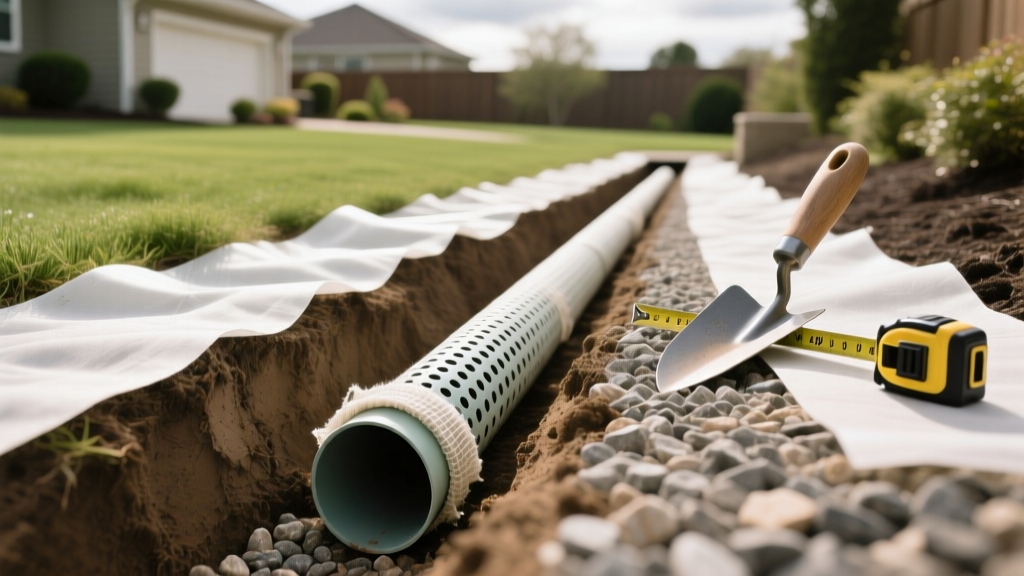
Expert Guide to French Drain Installation & Yard Drainage
Mike RodriguezPublished
Water accumulation in your yard is more than just a landscaping nuisance; it is a direct threat to your home's structural integrity and the health of your turf. When surface water pools near your foundation or creates soggy dead zones in your garden beds, you need a definitive, engineered solution. As landscaping professionals, we consistently recommend the French drain system as the gold standard for subsurface water management. However, a French drain is only as effective as its installation. In this comprehensive guide, we will share expert tips, precise measurements, and best practices for designing and installing a high-performance yard drainage system.
Diagnosing the Need for Subsurface Drainage
Before breaking ground, it is vital to confirm that a French drain is the correct remedy for your landscape. Surface grading issues can often be solved with topsoil and re-sloping, but subsurface water retention requires interception. Signs that you need a French drain include:
- Hydrostatic Pressure: Water seeping through basement walls or crawl space floors after heavy rain.
- Soil Saturation: Puddles that remain for more than 24 hours after a storm, indicating poor percolation rates often found in heavy clay soils.
- Erosion Channels: Deep ruts forming in your lawn where water naturally attempts to escape.
- Fungal Lawn Diseases: Persistent brown patch or dollar spot diseases fueled by constant moisture and poor air circulation at the soil level.
Understanding Soil Percolation Rates
Before designing your drainage route, you must understand how your native soil interacts with water. Clay-heavy soils, common in many parts of the South and Midwest, have incredibly slow percolation rates, sometimes absorbing less than 0.2 inches of water per hour. In contrast, sandy loams can absorb over 2 inches per hour. If you are dealing with heavy clay, a French drain is not just an option; it is a necessity. The clay acts as a bowl, trapping surface water and suffocating turfgrass roots. By installing a French drain, you create an artificial, high-speed pathway for water to bypass the impermeable clay layers and exit the property safely.
The Science of Slope and Percolation
The most common reason DIY French drains fail is inadequate slope. Water will not move through a perforated pipe without gravitational assistance. Expert landscapers adhere to a strict minimum slope ratio of 1 percent. This translates to a 1-inch drop for every 8 feet of pipe run.
To achieve this, you must use a laser level or a string line with a line level. Do not rely on visual estimation. If your yard is entirely flat, you will need to dig a progressively deeper trench as you move toward the discharge point, or install a dry well or sump pump system at the terminus to actively move the water away from the property.
Material Selection: Pipe and Gravel Comparison
Choosing the right materials dictates the lifespan of your drainage system. Below is a professional comparison of the most common drainage pipes used in residential landscaping.
| Pipe Type | Pros | Cons | Best Use Case |
|---|---|---|---|
| Corrugated Flexible (Slotted) | Inexpensive, easy to bend around curves, lightweight. | Prone to crushing under heavy soil loads, ridges trap sediment. | Shallow garden bed drains, low-traffic zones. |
| SDR 35 PVC (Rigid) | Extremely durable, smooth interior prevents clogs, handles heavy loads. | Requires fittings for turns, more expensive, harder to cut. | Deep foundation drains, under driveways, main yard lines. |
| Triple-Wall Corrugated | Good crush resistance, flexible, smooth inner wall. | More expensive than single-wall, still requires careful bedding. | Medium-depth yard drains, areas with moderate foot traffic. |
Step-by-Step Installation Best Practices
To ensure your system functions flawlessly for decades, follow these professional installation steps.
1. Call Before You Dig
Always dial 811 at least three business days before trenching. Striking a gas line, fiber optic cable, or water main is dangerous and financially devastating.
2. Trenching Dimensions
For a standard yard French drain, dig a trench that is 12 to 24 inches wide and 18 to 24 inches deep. The width allows enough room for a proper gravel envelope, while the depth ensures the pipe sits below the frost line in many climates and intercepts water before it reaches root zones or foundations.
3. The Landscape Fabric Envelope
Never lay pipe directly in the dirt. Line the entire trench with a high-quality, non-woven geotextile landscape fabric (such as Dewitt or Mirafi). Leave at least 12 inches of excess fabric on each side of the trench to fold over the top later. This fabric acts as a filter, preventing fine soil particles from migrating into the gravel and clogging the pipe.
4. Gravel Bedding and Pipe Placement
Add a 2-to-3-inch base layer of washed, angular drain rock (typically 3/4-inch crushed granite). Why washed rock? Unwashed gravel contains fines—tiny particles of stone dust and clay. When water flows through unwashed gravel, these fines turn into a thick slurry that quickly clogs the geotextile fabric and the pipe perforations. Always specify washed 3/4-inch angular drain rock at your local landscape supply yard.
Expert Tip: If using slotted corrugated pipe, place it with the holes facing down. Counterintuitively, water enters from the bottom up as the gravel bed saturates. Facing the holes down prevents heavy sediment from falling directly into the pipe from above.
5. Backfilling and Wrapping
Cover the pipe with another 3 to 5 inches of washed gravel. Then, fold the excess landscape fabric over the top of the gravel, creating a complete burrito wrap. This overlap is critical. Finally, top off the trench with 2 to 3 inches of coarse sand or native topsoil, and finish with sod or seed to match the surrounding lawn.
Cost and Timing Estimates
Understanding the investment required helps in planning your landscaping budget.
- DIY Installation: Materials (pipe, gravel, fabric, catch basins) typically cost $10 to $25 per linear foot. Renting a mini-excavator adds $200 to $400 per day. A 50-foot DIY system takes a weekend and costs roughly $800 to $1,500.
- Professional Installation: Landscaping contractors charge between $40 and $100+ per linear foot, depending on soil conditions, hardscape removal, and access. A professional crew can complete a 50-foot system in a single day, costing $2,000 to $5,000.
Authoritative Insights on Stormwater Management
Proper drainage is not just about protecting your property; it is about responsible stormwater management. According to the Penn State Extension guidelines on residential stormwater management, intercepting and slowly releasing subsurface water helps recharge local groundwater tables while preventing the rapid runoff that causes municipal sewer overflows and stream bank erosion. By utilizing a French drain that terminates in a dry well or a vegetated rain garden, homeowners can align their landscaping practices with sustainable environmental stewardship.
Maintenance Best Practices
A French drain is largely maintenance-free, but it is not invincible. To maximize longevity:
- Install a catch basin at the highest point of the system to capture surface debris before it enters the subsurface pipe.
- Inspect and clean the catch basin grate and bucket every autumn after leaf drop.
- Every three to five years, use a sewer jetter (not a standard pressure washer nozzle, which can shatter PVC joints) to flush out any accumulated silt or root intrusions.
By adhering to these expert landscaping practices, precise measurements, and material guidelines, you can transform a waterlogged, unusable yard into a dry, healthy, and structurally sound outdoor living space.

