
Landscaping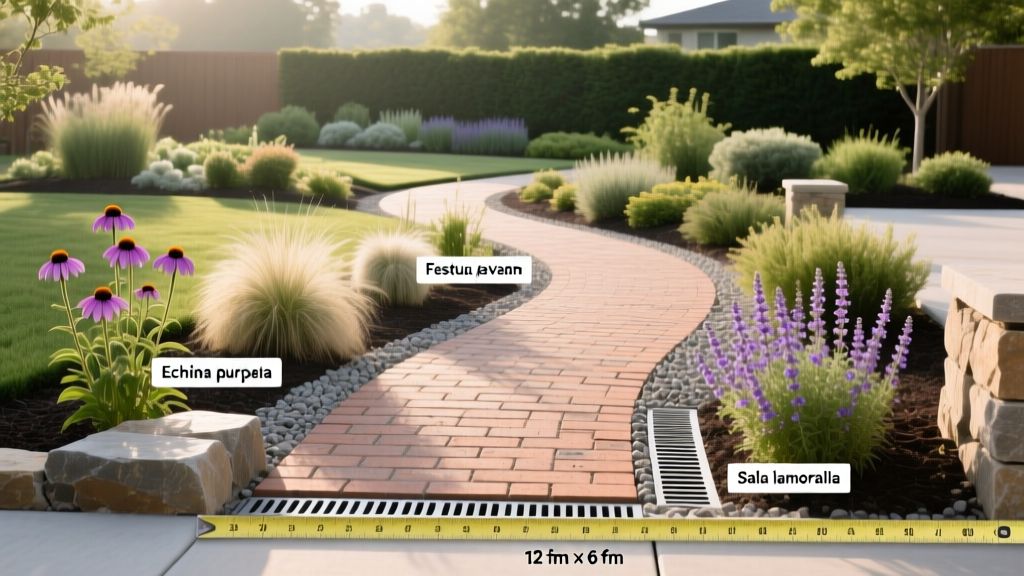
Front Yard Pathway Ideas Using Recycled Bricks
Designing with Purpose: Integrating Recycled Bricks into Front Yard Pathways
Recycled bricks have a quiet, grounded appeal—they’re durable, they fit well into older neighborhoods, and they skip the energy cost of new manufacturing. When used in front yard pathways, they work with the site instead of against it: fitting the slope, letting water soak in, and matching local building traditions. The American Society of Landscape Architects (ASLA) suggests hardscape elements “minimize impervious surface area, support native plant communities, and reflect regional character” (ASLA, 2021). A brick pathway does all three when it’s thoughtfully placed alongside plants, grading, and drainage.
Material Sourcing and Structural Considerations
Recycled bricks vary—some hold up fine under foot traffic, others don’t. Bricks pulled from pre-1950s sidewalks or foundations—like those taken from Boston’s Beacon Hill—often test stronger than modern pavers because of how they were fired. Tap one with a metal tool: a clear ring usually means it’s sound. Look closely for flaking, cracks, or crumbling edges. For standard walkways, ASLA recommends a 4-inch layer of compacted gravel under a 1-inch sand bed. If you plan to roll carts or wheelchairs over it, add solid edge restraints and keep joints under 3 mm.
Key Dimensions and Layout Guidelines
- Standard pathway width: 36–48 inches for single-person passage; 60 inches minimum where ADA compliance is desired
- Brick thickness: 2.25–3 inches for walkways; thinner units need extra base compaction
- Maximum slope gradient: 5% (1:20 ratio) per ASLA Accessibility Guidelines (2022)
- Joint spacing: 3–5 mm between bricks to handle temperature shifts and allow permeable joint fill
- Minimum radius for curved sections: 6 feet to keep the path stable and easy to mow around
Pattern Options That Balance Aesthetics and Function
How bricks are laid changes how the path wears and looks. Herringbone (at 90° or 45°) locks tightly sideways—good near doors or steps where people walk often, but it takes more precise cutting at corners. Basketweave gives clean lines and is manageable for most installers. Running bond is simple to lay but needs strong edging, or the bricks may shift over time. At the University of California, Davis Arboretum, a 2018 update swapped cracked concrete for running-bond recycled brick along the Walter A. Buehler Alumni Center approach—cutting stormwater runoff by 27% compared to the old concrete.
Permeability and Drainage Integration
Brick pathways with open joints and sand or gravel fill let water through—up to 1,200 inches per hour in lab tests, which covers most rainfall rates across the U.S. To make the most of that, set the path inside a shallow bioswale planted with Chasmanthium latifolium (Northern sea oats) and Eutrochium fistulosum (Joe-Pye weed) along the edges. These plants handle wet soil and help filter silt and nutrients. Portland’s Green Streets Program asks for at least 15% permeable surface in new residential hardscapes—a target brick paths hit easily when using polymeric sand or similar joint fillers.
Planting Strategies Adjacent to Brick Surfaces
Plants next to brick edges soften the line between hardscape and garden—and help hold soil, cool the air, and support insects. Stick with low, drought-tolerant species that won’t crowd into joints or block walking space. Thymus vulgaris (common thyme), Sedum spurium ‘Dragon’s Blood’, and Phlox subulata (moss phlox) grow well in sun and brush up against light foot traffic. In shade under mature Acer rubrum (red maple), try Asarum canadense (wild ginger) and Polystichum acrostichoides (Christmas fern)—both native to eastern North America and listed in the Arnold Arboretum’s Plant Collections Database (Harvard University, 2020).
Cost Analysis and Budget Planning
Price depends on where you live and what kind of brick you get. Reclaimed Chicago common brick runs $3.25–$5.75 each; hand-molded Pennsylvania Dutch bricks sometimes hit $8.50 each after sorting and cleaning. Labor costs more than materials: pros charge $18–$25 per square foot. DIY takes about 12 hours per 100 sq ft once the base is ready. A 12-foot-long, 4-foot-wide path (48 sq ft) using mid-range reclaimed brick comes to $420–$680 in brick costs alone—not counting edging, base rock, or plants.
Regional Adaptations and Climate Resilience
In places like Minneapolis-St. Paul, where ground freezes deep, bricks need a base that goes below the frost line—usually 48–60 inches down. In dry areas like Tucson, choose bricks low in iron to cut down on white salt stains (efflorescence), and water nearby plants with subsurface drip lines instead of overhead spray—less salt drift onto the brick. The Desert Botanical Garden’s Heritage Trail uses crushed adobe brick mixed into decomposed granite, showing how local material reuse can feel right for the place while still working well.
Maintenance Protocols for Longevity
A little care each year helps these paths last 30+ years. Sweep out joints every spring. Top off joint filler every 3–5 years. Skip de-icing salts—calcium magnesium acetate (CMA) or plain sand works better. Don’t pressure-wash above 1,500 PSI—it can wash out sand and loosen mortar. Watch for heaving: if part of the path lifts more than ¼ inch over 10 feet, check for poor drainage or roots from nearby Quercus alba (white oak) trees.
“Landscape architecture begins not with aesthetics, but with soil, water, and material memory. Recycled brick pathways are literal ground-up expressions of place-based design.” — ASLA Sustainable Sites Initiative (SITES) v2, 2023
Case Study: Retrofitting a Suburban Front Yard in Durham, NC
A 2022 project at 214 S. Duke Street replaced a cracked 120-sq-ft concrete walkway with a 42-inch-wide herringbone path made from 840 reclaimed bricks pulled from Raleigh’s demolished First Presbyterian Church (1924). The design added 10 linear feet of bioswale planted with Iris versicolor (blue flag iris) and Carex vulpinoidea (fox sedge), cutting peak runoff by 41% during modeled 10-year storms. Total installed cost: $2,985—including $1,120 for bricks, $1,340 for labor, and $525 for native plants and soil prep.
| Element | Specification | Quantity/Notes |
|---|---|---|
| Brick Type | Reclaimed Philadelphia red clay | 840 units, avg. 3.5" × 8" × 2.25" |
| Base Material | Crushed limestone (¾" minus) | 1.2 cu yd, compacted to 4" depth |
| Joint Fill | Angular silica sand | 0.8 cu ft per 100 sq ft |
| Planted Edge Zone | Native pollinator strip | 3 ft wide × 12 ft long; 12 species mix |
| Drainage Slope | Longitudinal grade | 1.8% toward existing rain garden |
Recycled brick pathways guide people, yes—but they also tie a neighborhood to its own history, cut embodied carbon by up to 70% compared to new clay pavers (U.S. Green Building Council, 2022), and offer texture and variation you can feel underfoot. Pair them with the right plants and smart drainage, and they become part of something bigger: supporting insects, slowing runoff, and holding space for what’s already been built.
At New York City’s High Line, segments of recycled brick from old West Side rail structures mark gentle transitions between steel decking and plant beds—proof that reclaimed masonry fits even in dense cities. The Missouri Botanical Garden’s 1913 Japanese Garden renovation used 1,200 reclaimed Kyoto-fired bricks to recreate traditional ishidatami stepping stones—blending old craftsmanship with today’s accessibility needs.
Choosing recycled brick isn’t just about looks. It’s about keeping materials in use, lowering landfill waste, and supporting local salvage efforts. Add thoughtful planting and water planning, and a front yard path becomes more than pavement—it’s a small but real piece of resilient, living landscape.
Homeowners in temperate zones might start with a 100-sq-ft section: see how joints hold up through wet and dry seasons, watch how Heuchera americana (alumroot) fills gaps at the edges, and track how much upkeep it really needs before expanding. Keep notes—the details you learn help others trying similar projects.
Every brick you lay is a choice about what sticks around. Whether you source from a local group like Build Reuse in Seattle or a city program like Austin’s ReStore, picking reclaimed material starts a chain of care—one that begins underfoot and stretches into how we treat land and community.

