Tree Care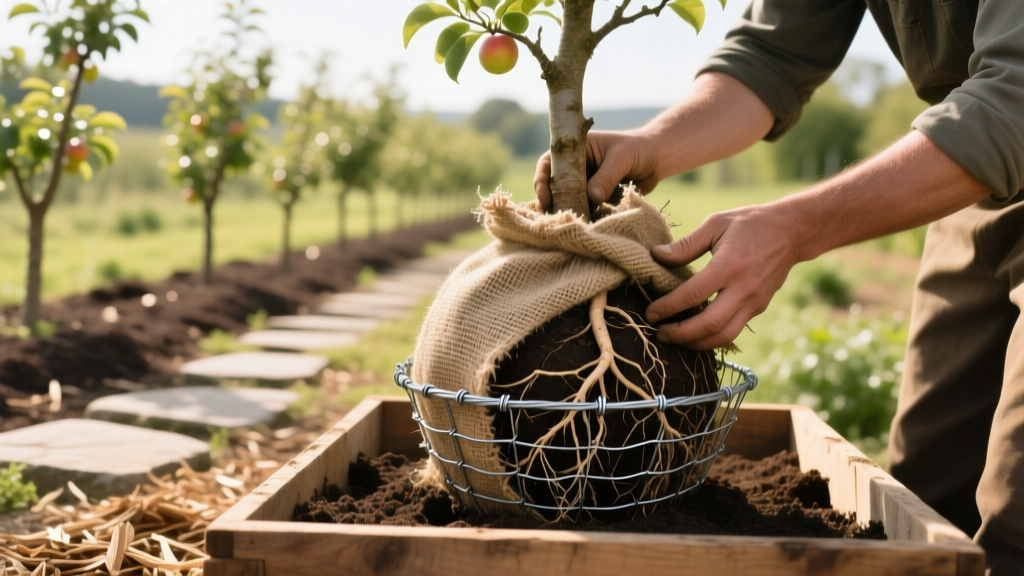
Foodscaping 2026: Fruit Tree Root Ball & Burlap Prep
James MillerPublished
The 2026 Edible Landscape Revolution
As we navigate the growing season of 2026, the integration of fruit-bearing trees into ornamental landscapes—commonly known as foodscaping—has reached unprecedented popularity. Homeowners and urban farmers alike are moving beyond traditional vegetable patches, opting instead to plant semi-dwarf Honeycrisp apples, cold-hardy avocados, persimmons, and pawpaws directly into their front yards and patio borders. However, the success of these premium edible landscapes hinges entirely on proper planting techniques. When sourcing larger, established fruit trees from nurseries, you will frequently encounter Balled and Burlapped (B&B) specimens. While B&B trees offer immediate canopy presence and faster initial fruiting potential, they also present unique challenges regarding root ball preparation and burlap removal that can make or break your harvest for years to come.
The Hidden Dangers of Improper Root Ball Prep
In the pursuit of a bountiful edible landscape, many gardeners focus heavily on soil amendments, pruning schedules, and organic pest management, only to neglect the critical transition zone between the nursery root ball and the native soil. Fruit trees are particularly sensitive to planting depth and root restriction. If the burlap wrapping is left intact, or if the wire cage is not properly addressed, the tree's shallow feeder roots—the very roots responsible for the massive uptake of phosphorus and potassium required for blossom set and fruit development—will become trapped. Over time, this leads to girdling roots, which strangle the tree's vascular system, restricting the flow of sugars from the leaves to the developing fruit and ultimately leading to a slow, unproductive decline.
Identifying Burlap: Natural vs. Synthetic in 2026
Not all burlap is created equal. Historically, nurseries used untreated, natural jute burlap that would slowly decompose in the soil. However, modern nursery practices in 2026 frequently utilize synthetic polypropylene burlap or natural burlap treated with copper-based fungicides to extend shelf life and prevent rot during long-term storage. Synthetic burlap will never decompose. If left in the planting hole, it acts as a physical barrier, preventing roots from expanding into the surrounding native soil and creating a severe 'bathtub effect' where water pools in the root zone, drowning the tree and promoting devastating root rots like Phytophthora. To test your burlap, cut a small strip and hold a lighter to it. Natural jute will smolder and turn to fine ash, while synthetic burlap will melt into a hard, plastic bead. Regardless of the material, the current consensus among leading arborists and edible landscape designers is to remove all burlap from the top and sides of the root ball before backfilling.
The Wire Basket Dilemma: To Remove or Not?
Most large B&B fruit trees, such as standard pear or mature fig trees, are secured with heavy galvanized wire baskets. A persistent myth in landscaping suggests that the basket can simply be left in the ground to rust away. While it is true that the wire will eventually corrode, this process can take up to two decades. By the time the basket degrades, the tree's primary structural roots will have already grown through the wire mesh, resulting in severe girdling. For edible trees, where long-term vigor and consistent annual yields are paramount, removing the wire basket is non-negotiable. According to guidelines supported by the Arbor Day Foundation, exposing the root structure and removing synthetic barriers is essential for establishing a resilient, drought-tolerant root system capable of supporting heavy fruit loads.
Step-by-Step Root Ball Preparation for Edibles
Follow this meticulous preparation process to ensure your foodscaping investments thrive in 2026 and beyond:
- Hydrate the Root Ball: Two days before planting, thoroughly soak the B&B root ball. Nursery clay soil dries out rapidly, and a dry core will wick moisture away from your native backfill, leaving the tree parched even if you water the surface.
- Locate the Root Flare: Before digging your hole, excavate the top of the root ball to find the trunk flare—the point where the trunk widens and transitions into the primary structural roots. Research highlighted by the Clemson University Home & Garden Information Center emphasizes that planting trees too deeply is the number one cause of transplant failure. The root flare must sit slightly above the native soil grade.
- Score and Shave the Perimeter: Using a sharp, sterilized pruning saw or hori-hori knife, shave off the outer half-inch of the root ball. This removes any circling roots that formed against the burlap or container wall and stimulates the growth of new, outward-facing feeder roots.
- Strip the Burlap and Cage: Once the tree is positioned in the hole, cut away all twine, peel back the burlap entirely, and use bolt cutters to remove the wire basket. Never drag the tree by the trunk, as this will snap the delicate taproot and structural anchors.
- Apply Mycorrhizal Inoculants: Dust the exposed, shaved root ball with a granular mycorrhizal inoculant containing Glomus intraradices. These beneficial fungi form symbiotic relationships with fruit tree roots, vastly expanding their surface area for water and nutrient absorption, which is critical for maximizing fruit sugar content (Brix levels).
Edible Tree Root Preparation Matrix
Different edible species possess unique root architectures and soil preferences. Use the following matrix to tailor your root ball preparation strategy to your specific foodscaping choices:
| Edible Tree Species | Root Architecture | Burlap/Wire Protocol | Special 2026 Considerations |
|---|---|---|---|
| Apple & Pear (Pome Fruits) | Dense, fibrous, shallow feeders | Full removal; shave outer 1 inch | Highly susceptible to crown rot; ensure root flare is 2 inches above grade. |
| Peach & Plum (Stone Fruits) | Deep taproot with lateral spread | Full removal; untangle taproot if bound | Require exceptional drainage; avoid amending backfill to prevent perched water tables. |
| Persimmon & Pawpaw | Fleshy, brittle, sensitive to disturbance | Cut away top burlap; leave bottom intact to prevent ball shatter | Minimize root ball manipulation; use high-phosphorus liquid root stimulator post-plant. |
| Citrus & Fig | Aggressive, wide-spreading surface roots | Full removal; score sides deeply | Aggressive roots will quickly girdle if restricted; score vertically in 4 places. |
Managing the Soil Texture Interface
One of the most significant challenges in 2026 foodscaping is managing the soil texture interface. Nurseries often grow B&B trees in heavy clay soils to maintain the integrity of the root ball during harvest. If your native landscape soil is sandy or loamy, water will move through the native soil much faster than it moves through the clay root ball. This creates a hydrophobic barrier where the root ball remains bone dry while the surrounding soil is saturated. To combat this, some progressive edible landscapers are adopting the 'root washing' technique. By using a gentle stream of water to wash away the outer 30% of the nursery clay, you expose the roots directly to the native soil environment, eliminating the texture interface entirely and promoting immediate, unhindered root expansion.
Post-Planting Care for the Edible Landscape
Once the burlap is removed, the wire basket is discarded, and the tree is properly backfilled with native soil (avoiding the outdated practice of heavily amending the planting hole, which only encourages roots to stay in the 'pot' rather than exploring the landscape), your focus must shift to mulching and watering. Apply a 2-to-3-inch layer of coarse arborist wood chips in a wide donut shape around the tree, ensuring the mulch does not touch the trunk flare. This mimics the natural forest floor, regulating soil temperature and retaining moisture. During the first critical growing season, utilize a slow-release drip irrigation system calibrated to deliver deep, infrequent soakings. This encourages the newly freed roots to dive deep into the soil profile, anchoring your fruit tree securely and establishing the robust foundation necessary to support heavy, juice-laden harvests for decades to come.
Conclusion
Foodscaping in 2026 is a rewarding endeavor that blurs the line between ornamental beauty and agricultural utility. However, the vitality of your edible landscape is fundamentally determined in the first few hours of planting. By taking the time to properly identify and remove synthetic burlap, extract restrictive wire baskets, and meticulously prepare the root ball, you are setting the stage for a thriving, productive orchard right in your own backyard. Treat the root zone with the respect it deserves, and your fruit trees will reward you with abundant, flavorful harvests for years to come.