Gardening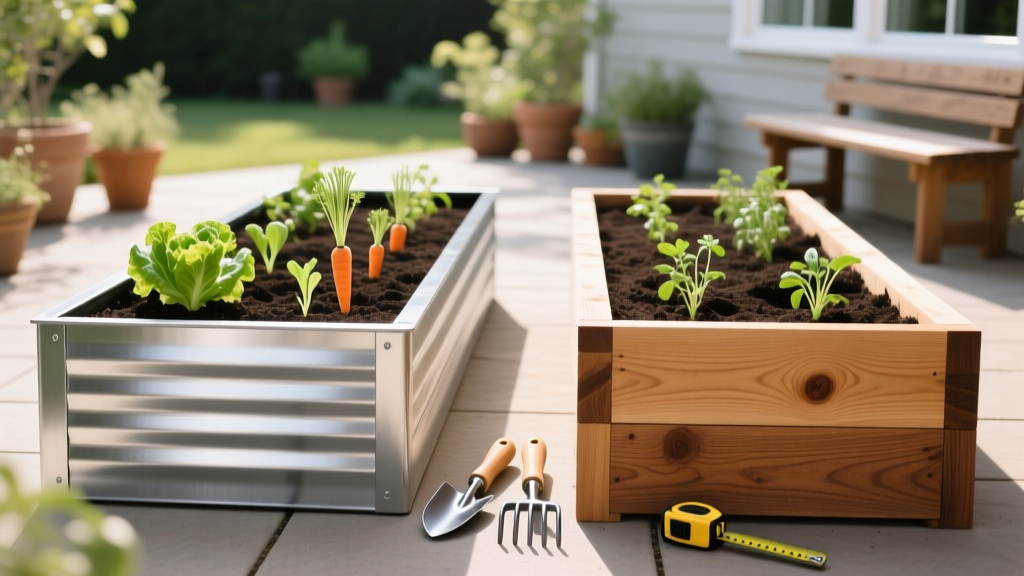
Galvanized Steel vs Cedar Raised Beds: A Buyer Guide
Emily WatsonPublished
The Great Raised Bed Debate: Metal vs. Wood
Raised bed gardening has completely revolutionized how home growers approach vegetable and flower gardening. By elevating the soil profile, gardeners gain superior control over drainage, soil composition, and weed management. Whether you are cultivating deep-rooted tomatoes, delicate companion-planted marigolds, or a sprawling autumn squash patch, the physical structure holding your soil is just as critical as the organic matter within it. According to the University of Minnesota Extension, raised beds warm up faster in the spring and provide superior drainage, making them ideal for regions with heavy clay soils. As you plan your seasonal planting guides and prepare for the upcoming growing season, you will inevitably face a major purchasing decision: should you invest in galvanized steel or natural cedar wood? Both materials offer distinct advantages regarding longevity, aesthetics, and thermal retention. In this comprehensive product review and comparison, we break down the science, costs, and real-world performance of the top raised bed kits on the market to help you make an informed investment for your garden.
Understanding Your Materials: Steel vs. Cedar
Before diving into specific product reviews, it is essential to understand the fundamental differences between galvanized steel and cedar wood.
Galvanized Steel Raised Beds
Galvanized steel beds are constructed from corrugated metal sheets coated in a layer of zinc to prevent rust and corrosion. These beds have surged in popularity due to their modern, industrial aesthetic and incredible structural integrity. Steel beds do not rot, warp, or attract carpenter bees, making them a virtually maintenance-free option. Furthermore, the corrugated design provides immense lateral strength, allowing these beds to hold thousands of pounds of wet soil without bowing. The primary concern with metal beds is thermal conductivity; the edges can heat up significantly in peak summer sun, potentially stressing shallow-rooted plants near the perimeter. However, the soil mass itself acts as a temperature buffer, and the heat can actually extend your growing season in cooler climate zones by warming the soil faster in early spring.
Cedar Wood Raised Beds
Western Red Cedar is the gold standard for wooden garden structures. Unlike pressure-treated pine, which is infused with chemical preservatives that some organic gardeners prefer to avoid, cedar contains natural oils and tannins that make it inherently resistant to rot, decay, and insect damage. Cedar beds offer a classic, natural look that blends seamlessly into traditional garden landscapes. Wood is also a natural insulator, meaning the soil temperature remains more stable during extreme heat waves or sudden frost snaps. The downside to cedar is its lifespan; even premium untreated cedar will eventually succumb to moisture and soil microbes, typically lasting between seven to fifteen years depending on your local climate and drainage conditions.
Head-to-Head Comparison Chart
| Feature | Galvanized Steel | Western Red Cedar |
|---|---|---|
| Average Lifespan | 20-30+ Years | 7-15 Years |
| Cost (4x8 ft Kit) | $90 - $130 | $110 - $160 |
| Assembly Difficulty | Moderate (Requires tools) | Easy (Often tool-free) |
| Soil Temperature | Heats up quickly, extends spring | Insulated, stable temps |
| Aesthetics | Modern, Industrial, Farmhouse | Classic, Natural, Traditional |
| Maintenance | None (Check for scratches) | Optional oiling, eventual replacement |
Top Product Reviews: Steel vs. Cedar Kits
1. VEVOR Galvanized Steel Raised Bed (4x8x2 ft)
The VEVOR 4x8x2 ft Galvanized Steel Planter Box is a powerhouse for serious vegetable gardeners who need maximum root depth and volume. Priced competitively at around $90 to $110, this kit offers an unbeatable cost-to-volume ratio. The two-foot depth is ideal for deep-rooted crops like carrots, parsnips, and indeterminate tomatoes. Assembly is straightforward, utilizing reinforced corner brackets and rubber edging to protect your hands during construction. The zinc coating is food-safe, and the corrugated walls easily withstand the lateral pressure of heavy, wet compost blends. One actionable tip: because metal beds lack a bottom, we recommend laying down a heavy-duty hardware cloth beneath the bed to deter burrowing pests like gophers before filling it with soil.
2. Greenes Fence Premium Cedar Raised Bed (4x8x10.5 in)
For gardeners prioritizing quick assembly and traditional aesthetics, the Greenes Fence Premium Cedar Raised Bed is a top-tier choice. Retailing for approximately $120 to $140, this 4x8 ft bed stands at 10.5 inches tall, achieved by stacking two tiers of rough-sawn cedar boards. The dovetail joint design means you can slide the boards into the corner posts without needing a single tool or screw, making it perfect for rooftop gardens, patios, or renters who might need to disassemble and move their beds later. At 10.5 inches, it provides ample depth for leafy greens, radishes, bush beans, and most companion-planted herbs. However, it is not deep enough for long-rooted vegetables without underlying soil aeration. The rough-sawn cedar will weather to a beautiful silvery-gray patina over time, or it can be treated with raw linseed oil to maintain its warm honey hue.
3. Best Choice Products Modular Cedar Garden Bed (4x4x9 in)
If space is limited or you are focusing on intensive square-foot gardening, the Best Choice Products 4x4 Modular Cedar Bed (around $75) is an excellent entry point. Its compact footprint makes it highly manageable for crop rotation and intensive companion planting strategies, such as pairing basil with tomatoes or nasturtiums with squash. The modular design allows you to purchase multiple units and stack or connect them to create custom L-shapes or deeper tiered beds. The wood is relatively thin compared to premium lumber yard cedar, meaning its lifespan may lean closer to the five-to-seven-year mark in highly humid environments. To extend its life, we recommend lining the interior walls with heavy-duty landscape fabric to create a moisture barrier between the wet soil and the wooden boards.
Calculating Soil Volume and Preparation Costs
The hidden cost of raised bed gardening is the soil required to fill them. According to the Oregon State University Extension, a successful raised bed requires a specific balance of aeration, moisture retention, and nutrient density. A standard 4x8 ft bed that is 12 inches deep requires exactly 32 cubic feet of soil. Filling this volume with bagged potting mix from a big-box store can easily exceed $200. Instead, we recommend the classic "Mel's Mix" or a bulk delivery from a local landscape supply yard. A cost-effective and highly productive blend consists of 60% high-quality topsoil, 30% organic compost, and 10% coarse horticultural sand or perlite for drainage. If you are using a deep 24-inch steel bed, you can save money by filling the bottom third with bulk organic matter like fallen leaves, wood chips, or straw (a technique known as Hugelkultur), reserving the premium soil blend for the top 12 inches where the active root zones reside.
Safety Concerns: Leaching and Toxins
A frequent question in the gardening community revolves around the safety of galvanized steel. Will the zinc or heavy metals leach into your organic vegetables? The University of Maryland Extension notes that the amount of zinc that might leach from a galvanized container is minimal and generally not a threat to human health, especially in neutral to slightly alkaline soils. Zinc is actually an essential micronutrient for plant growth. However, highly acidic soils (pH below 5.5) can accelerate the breakdown of the zinc coating and the underlying steel. To mitigate this, regularly test your soil pH and amend with garden lime if necessary. Conversely, with wooden beds, you must absolutely avoid old railway ties or pressure-treated lumber manufactured before 2004, which may contain chromated copper arsenate (CCA). Always stick to untreated, naturally rot-resistant woods like cedar or redwood for edible gardens.
Final Verdict: Which Should You Buy?
Choosing between galvanized steel and cedar ultimately depends on your budget, aesthetic preferences, and physical gardening needs. If you want a permanent, indestructible structure that offers deep soil volume for a one-time investment, the VEVOR Galvanized Steel bed is the undisputed champion of durability and value. On the other hand, if you prefer a traditional, insulated, and chemical-free natural material that blends beautifully into a cottage-style garden, the Greenes Fence Cedar bed remains the gold standard. Whichever material you choose, investing in high-quality soil and practicing seasonal crop rotation will ensure your raised beds yield bountiful harvests for years to come.
