Gardening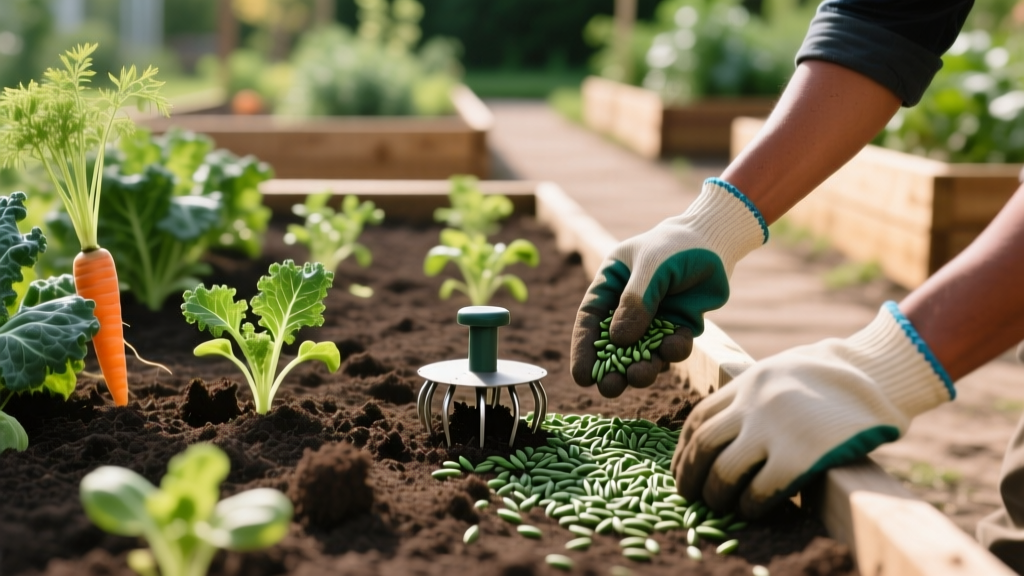
Garden Bed Aeration and Cover Crop Overseeding Guide
Robert HayesPublished
When most gardeners hear the terms aeration and overseeding, they immediately picture turfgrass lawns. However, these fundamental soil management techniques are equally critical for vegetable and flower gardens. Over time, garden beds suffer from severe soil compaction, nutrient depletion, and structural degradation. By adapting lawn care aeration and overseeding techniques for the garden—specifically through deep manual aeration and the planting of cover crops (green manure)—you can dramatically revitalize your soil ecosystem without relying on destructive tilling.
The Hidden Enemy: Soil Compaction in Vegetable Beds
Soil compaction is the silent yield-killer in both raised beds and in-ground gardens. Every time you step into a bed to harvest, every heavy summer downpour, and every pass with a heavy wheelbarrow compresses the soil particles together. This reduces the pore space necessary for oxygen exchange, water infiltration, and root penetration. According to soil health experts, compacted soil creates anaerobic conditions that stunt beneficial microbial life and encourage root rot diseases.
While many gardeners reach for a rototiller to solve compaction, this often creates a hardpan layer just below the tines' reach and destroys the delicate mycorrhizal fungal networks that help plants absorb nutrients. Instead, modern organic gardening relies on deep, low-impact aeration combined with the biological power of overseeded cover crops.
Broadfork Aeration: The Ultimate No-Till Tool
The broadfork (or U-bar digger) is the gold standard for garden bed aeration. Unlike a rototiller that pulverizes and inverts the soil, a broadfork gently lifts and fractures the soil profile, introducing oxygen deep into the root zone while leaving the soil layers and microbial habitats intact. The Rodale Institute, a pioneer in organic no-till systems, heavily advocates for minimizing soil disturbance to preserve soil carbon and structure, noting that no-till and low-till practices are essential for long-term garden resilience.
A standard broadfork features four to six heavy-duty steel tines, typically 12 to 16 inches long, attached to a wide U-shaped handle. Using it requires a rhythmic, full-body motion: you step on the crossbar to drive the tines into the earth, pull the handles back toward your body to lift and crack the soil, and then step backward six to eight inches to repeat the process across the entire bed.
Overseeding Garden Beds with Cover Crops
In lawn care, overseeding introduces new grass varieties to fill in bare spots. In the garden, overseeding means broadcasting cover crop seeds over freshly aerated soil to protect the earth during the off-season and add organic matter. The definitive guide Managing Cover Crops Profitably by the Sustainable Agriculture Research and Education (SARE) program highlights that cover crops act as biological tillers, nitrogen fixers, and weed suppressors.
When you overseed a garden bed immediately after broadforking, the seeds fall into the micro-fissures created by the tines, ensuring excellent seed-to-soil contact without the need for raking or burying. Below is a comparison of the best cover crops for garden overseeding.
| Cover Crop | Type | Seeding Rate (per 100 sq ft) | Primary Benefit | Termination Time |
|---|---|---|---|---|
| Crimson Clover | Legume | 0.5 oz | Nitrogen fixation, early spring biomass | Early Spring (at flowering) |
| Cereal Rye | Grass | 3.0 oz | Deep roots, heavy weed suppression | Late Spring (at booting stage) |
| Daikon Radish | Brassica | 0.2 oz | Bio-drilling deep compaction layers | Winter-kill (in zones 6 and below) |
| Hairy Vetch | Legume | 1.0 oz | Massive nitrogen contribution, mulch | Late Spring |
For a comprehensive look at how these plants interact with soil biology, the Overview of Cover Crops and Green Manures published by ATTRA provides excellent regional planting windows and inoculation tips for legumes.
Step-by-Step Aeration and Overseeding Process
Step 1: Clearing and Prepping the Bed
At the end of your growing season, remove all spent vegetable crops, trellises, and heavy mulch. If you have a thick layer of autumn leaves, shred them with a lawnmower first and set them aside; whole leaves can smother emerging cover crops. The soil surface should be relatively bare but undisturbed.
Step 2: Deep Broadfork Aeration
Insert your broadfork tines vertically into the soil. If the ground is rock hard, water the bed deeply two days prior to aerate. Drive the tines 8 to 10 inches deep. Pull back on the handles just enough to see the soil surface crack—do not flip the soil over. Step back 6 inches and repeat until the entire bed is fractured. This process takes roughly 15 minutes per 50-square-foot bed.
Step 3: Top-Dressing and Overseeding
Immediately after aerating, apply a thin top-dressing of finished compost (about 1/4 inch thick). This provides a nutrient-rich medium for the cover crop seeds. Next, broadcast your chosen cover crop seed at the rates listed in the table above. For optimal germination, mix small seeds like crimson clover with dry sand to ensure even distribution. Lightly tamp the soil with the back of a rake or simply walk over the bed with flat-soled shoes to press the seeds into the compost and aeration fissures.
Step 4: Watering and Winter Care
Water the bed gently using a fine mist nozzle to avoid washing the seeds away. Keep the top inch of soil consistently moist for the first 7 to 10 days until germination occurs. Once established, the cover crop will survive on natural rainfall and snowmelt throughout the winter.
Cost Analysis and Return on Investment
Investing in aeration and overseeding tools pays dividends in subsequent harvests. A high-quality, American-made broadfork (such as those from Johnny's Selected Seeds or Meadow Creature) costs between $130 and $250. While this is a significant upfront cost, it requires zero fuel, no engine maintenance, and will last a lifetime. Cover crop seeds are remarkably inexpensive; a one-pound bag of crimson clover costs around $15 and is enough to overseed a 3,000-square-foot garden. Compared to the recurring costs of synthetic fertilizers, bagged compost, and herbicides, the biological services provided by overseeded cover crops yield a massive return on investment by year two.
Spring Termination and Integration
The final step in the aeration and overseeding cycle is termination. You must kill the cover crop before it goes to seed, but after it has produced maximum biomass. For legumes like crimson clover, this is right as the flowers begin to bloom. For grasses like cereal rye, it is during the boot stage (just before the seed head emerges).
To terminate without tilling, use a weed whip, a string trimmer, or a specialized roller-crimper to cut the plants at the soil line. Leave the dead plant material on the surface as a thick, weed-suppressing mulch. You can then plant your spring vegetable transplants directly into the mulch by parting the residue and digging small holes. The decaying roots of the cover crop will continue to aerate the soil from the inside out, while the surface mulch retains moisture and slowly feeds the soil food web.
By adopting these turf-inspired aeration and overseeding techniques, you transform your garden beds from depleting resources into regenerative ecosystems. The combination of deep mechanical fracturing and biological root action ensures that your soil remains loose, fertile, and teeming with life for decades to come.
