Tree Care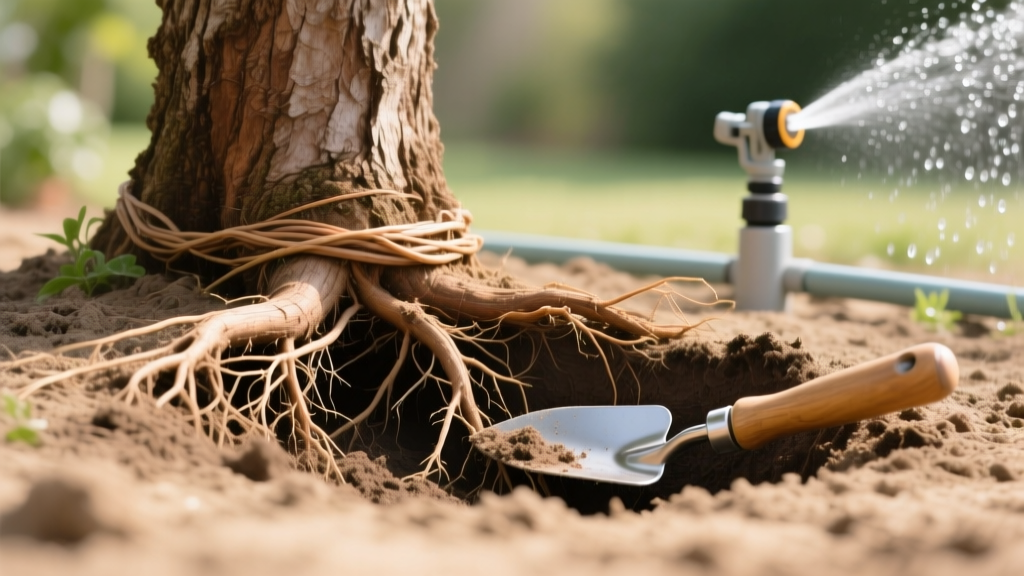
Girdling Root Flare Treatment & Irrigation Fixes 2026
Lisa ThompsonPublished
The Hidden Threat: How Irrigation Causes Girdling Roots
Trees are the crown jewels of any landscape, providing shade, beauty, and immense property value. However, a hidden and often fatal issue lurks beneath the soil line: girdling roots. A girdling root is exactly what it sounds like—a root that wraps around the trunk or other major roots, slowly strangling the tree by cutting off the vital flow of water and nutrients through the xylem and phloem. While poor planting depth is a primary culprit, your home's sprinkler and irrigation system is frequently the silent enabler of this deadly condition.
When turfgrass irrigation systems are designed without considering the needs of mature trees, they typically deliver frequent, shallow watering. This constant surface moisture, combined with soil compaction from lawn maintenance, encourages trees to develop adventitious surface roots rather than deep, structural anchor roots. Over time, these shallow roots circle the base of the trunk in search of the easy water provided by your sprinkler heads. According to the University of Minnesota Extension, roots that remain near the surface due to improper watering and heavy mulching are highly prone to circling and eventually girdling the root flare.
Identifying Girdling Roots at the Root Flare
Before you can treat the problem or adjust your irrigation zones, you must confirm the presence of girdling roots. The root flare is the area where the trunk expands at the base and transitions into the structural root system. In a healthy tree, this flare should be clearly visible above the soil grade, resembling the bell of a trumpet.
Visual Symptoms Above Ground
- The Telephone Pole Effect: If your tree trunk goes straight into the ground like a pole with no visible flare, the flare is likely buried, and girdling roots are almost certainly present.
- Flat Sides on the Trunk: A trunk that appears flat on one side at the base indicates a root is pressing against it just below the soil, restricting cambial growth.
- Early Fall Color and Dieback: Because the vascular system is being choked, the canopy will show stress, including undersized leaves, early autumn coloration, and branch dieback, particularly on the side of the tree where the girdling root is located.
To definitively identify the issue, the root flare must be exposed. As noted by The Morton Arboretum, careful excavation of the root collar is the only way to assess the severity of the girdling and determine if the tree can be saved.
Step-by-Step Treatment and Root Flare Excavation
In 2026, the industry standard for root flare excavation is the use of pneumatic air tools, commonly known as an AirSpade. Using shovels or metal rakes can easily slice into and damage the very roots you are trying to save or the critical vascular tissue of the trunk.
- Clear the Area: Remove any turfgrass, weeds, and excessive mulch within a 3 to 5-foot radius of the trunk.
- Pneumatic Excavation: Use an AirSpade 2000 (or hire a certified arborist who owns one) to blow away the soil. The compressed air safely fractures compacted soil without tearing the delicate bark of the root flare.
- Assess the Damage: Once the flare is exposed, identify which roots are circling. Roots that are smaller than 1/3 the diameter of the trunk can usually be removed safely.
- Pruning the Girdling Root: Using a sterilized, sharp pruning saw or chisel, make clean cuts to remove the offending root. If a root is deeply embedded into the trunk bark, an arborist may need to carefully shave it away over several seasons to avoid shocking the tree.
- Leave the Flare Exposed: Never bury the root flare again. The excavated area should remain open to the air or be covered only with a very light layer of coarse mulch, keeping it entirely away from the bark.
Reconfiguring Your Sprinkler and Irrigation System
Treating the physical root is only half the battle. If you do not change the environmental conditions that forced the tree to develop surface roots in the first place, the tree will simply grow new girdling roots. This is where upgrading your irrigation system becomes critical for long-term tree health.
Cap and Relocate Spray Heads
Traditional pop-up spray heads are designed for shallow-rooted turfgrass, delivering water to the top 4 inches of soil. If you have spray heads located within the tree's critical root zone (the area under the drip line), they are watering the tree incorrectly. Cap the spray heads nearest to the trunk to prevent the root flare from sitting in constant moisture, which promotes rot and adventitious root growth.
Install Deep-Root Bubblers or Drip Irrigation
Trees require deep, infrequent watering to encourage roots to grow downward. Converting a zone to a deep-root bubbler system or a high-flow drip line is the best irrigation fix for 2026. Bubbler heads can be installed on PVC stakes driven 12 to 18 inches into the soil, delivering water directly to the deep root zone where it is needed most. Penn State Extension emphasizes that deep, slow watering is essential for establishing and maintaining deep structural roots, which prevents the surface circling that leads to girdling.
Upgrade to a Smart Irrigation Controller
Overwatering is a massive contributor to surface rooting. In 2026, smart controllers like the Rachio 4 or the Hunter Pro-C2 with Hydrawise are essential. These systems use hyper-local weather data and soil moisture sensors to automatically adjust watering schedules. By programming your smart controller to water trees on a separate zone with deep, infrequent cycles (e.g., once a week for 45 minutes) rather than daily 10-minute turf cycles, you force the tree to seek water deeper in the soil profile.
Irrigation System Comparison for Tree Health
Choosing the right irrigation delivery method is vital for preventing girdling roots and promoting deep structural anchoring. Below is a comparison of common irrigation methods evaluated for tree health.
| Irrigation Method | Water Depth | Impact on Root Flare | Suitability for Trees |
|---|---|---|---|
| Turf Spray Heads | 2 - 4 inches | Keeps flare constantly wet; promotes surface roots | Poor (Avoid near trunk) |
| Soaker Hoses | 6 - 8 inches | Can be moved; moderate surface moisture | Fair (Good for temporary use) |
| Surface Drip Lines | 8 - 12 inches | Keeps flare dry if routed properly; encourages spreading | Good (Best for wide zones) |
| Deep Root Bubblers | 12 - 18+ inches | Bypasses surface; keeps flare completely dry | Excellent (Ideal for 2026 standards) |
Cost Breakdown for 2026 Tree Care and Irrigation Upgrades
Budgeting for proper tree care and irrigation adjustments can save you thousands of dollars in tree removal costs down the line. Here are the estimated costs for professional services and equipment upgrades in 2026:
- AirSpade Root Flare Excavation: $350 to $650 per tree, depending on soil compaction and accessibility.
- Girdling Root Pruning by Certified Arborist: $150 to $300 per hour. Complex cases involving embedded roots may require multiple visits.
- Smart Irrigation Controller (e.g., Rachio 4): $250 to $350 for the hardware, plus $100 to $200 for professional installation and zone reconfiguration.
- Drip Line or Bubbler Zone Conversion: $400 to $800 per zone, including trenching, PVC stakes, and new valves.
Post-Treatment Care and 2026 Mulching Standards
Once the girdling roots are removed and the irrigation system is reconfigured, proper aftercare is essential. The most common mistake homeowners make post-excavation is re-burying the root flare with heavy mulch. The "volcano mulching" trend is entirely counterproductive to tree health.
For 2026, adhere strictly to the 3-3-3 mulching rule: apply a 3-inch layer of coarse, organic mulch (like pine bark or wood chips), in a 3-foot radius around the tree, but keep it 3 inches away from the actual trunk bark. This preserves soil moisture, regulates temperature, and prevents weed competition without suffocating the root flare or encouraging the growth of new girdling roots.
By combining surgical root flare excavation with a modernized, deep-watering irrigation strategy, you can halt the progression of girdling roots and ensure your landscape trees remain healthy, stable, and vibrant for decades to come.