Tree Care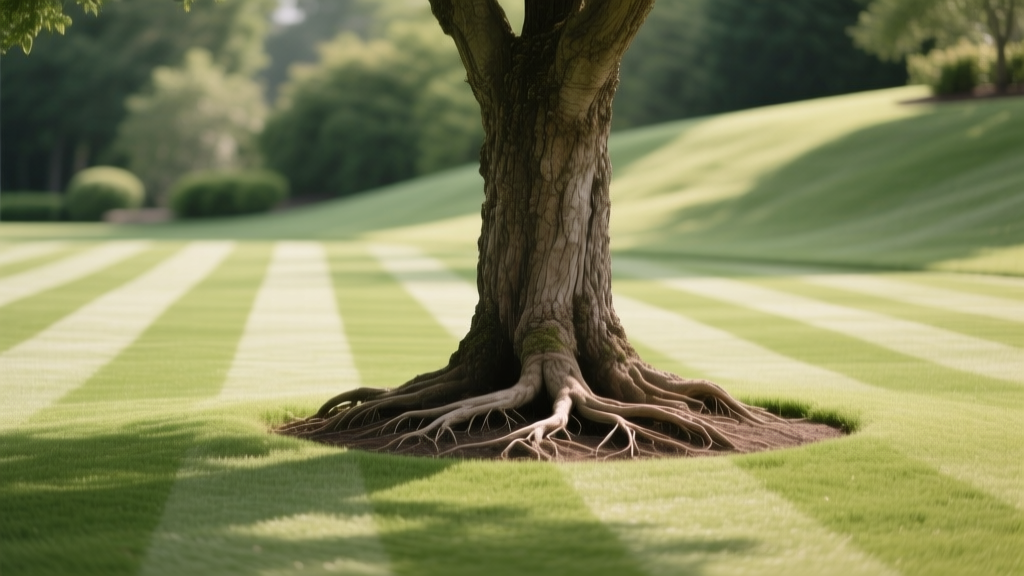
2026 Girdling Root Treatment: Save Trees & Lawn Striping
Lisa ThompsonPublished
The Intersection of Tree Health and Lawn Aesthetics
Creating flawless, stadium-quality lawn stripes requires more than just a premium 2026 zero-turn mower and a heavy-duty roller striping kit. It demands a perfectly graded turf canopy and healthy, structurally sound landscape trees. Nothing ruins the optical illusion of a meticulously striped lawn faster than a declining centerpiece oak, a maple dropping dead limbs onto your fresh cut, or an unsightly, overgrown root flare that forces you to scalp the turf during teardrop turns. In 2026, the most dedicated lawn care enthusiasts recognize that tree care and lawn aesthetics are inextricably linked. The most common hidden destroyer of both tree vitality and mowing zones is the girdling root.
When roots circle the base of the trunk rather than growing outward, they slowly strangle the tree's vascular system. But beyond the biological damage to the tree, these buried, circling roots create massive, uneven mounds at the root flare. These mounds disrupt the level deck of your mower, creating an uncut "halo" of grass that shatters the continuity of your striping patterns. This comprehensive guide explores how to identify, excavate, and treat girdling roots at the root flare, ensuring your trees thrive and your lawn stripes remain uninterrupted.
Understanding Girdling Roots and the Root Flare
The root flare (or trunk flare) is the area at the base of the tree where the trunk widens and transitions into the root system. A healthy tree planted at the correct depth will display a visible, gradual flare resembling the base of a wine glass. However, according to The Morton Arboretum, many trees are planted too deeply or kept in containers too long, causing roots to circle and eventually cross over the trunk. These are girdling roots.
As the tree and the girdling root both expand in diameter, the root acts like a tourniquet. It compresses the phloem and xylem tissues, restricting the flow of water, nutrients, and carbohydrates. Above ground, this manifests as dieback, early fall coloration, and structural weakness. Below ground, the tangled mass of roots pushes upward, burying the true root flare under a mound of woody tissue and soil, creating a severe hazard for your mower deck.
How Buried Root Flares Ruin Lawn Striping Patterns
To achieve sharp, high-contrast stripes, the turf must be cut at a consistent height, and the grass blades must be bent uniformly in one direction. Modern 2026 mowers, like the Exmark Lazer Z or the Toro Titan MAXX, rely on a perfectly level deck to generate the vacuum that stands the grass up before cutting. When a tree has a buried root flare and girdling roots, the soil grade around the trunk is artificially elevated.
- Deck Scalping: When executing a smooth teardrop turn around the tree to reverse your stripe, the elevated root mound catches the mower deck, scalping the turf down to the soil.
- The Uncut Halo: To avoid damaging your blades or the tree bark, you are forced to steer wide, leaving a wide ring of uncut, unkempt grass that breaks the visual flow of the stripes.
- Turf Competition: Girdled trees are stressed and often develop shallow, desperate surface roots that steal water and fertilizer from the surrounding Kentucky Bluegrass or Bermudagrass, causing the turf in your striping zone to thin and turn yellow.
- Canopy Dieback: A stressed tree drops small branches and leaves prematurely, littering your pristine stripes and requiring constant blowing to maintain the aesthetic.
Step-by-Step Identification in 2026
Before you can restore your mowing zone, you must confirm the presence of girdling roots. The University of Minnesota Extension recommends looking for a trunk that goes straight into the ground like a telephone pole, with no visible flare. If the soil at the base feels spongy or forms a distinct mound compared to the surrounding graded lawn, girdling roots are likely present.
In 2026, professional arborists and advanced DIYers use minimally invasive techniques to expose the root flare without destroying the surrounding turf border. The goal is to excavate just enough of the root collar to assess the damage while preserving the sod ring that frames the tree in your landscape design.
Excavation and Treatment Techniques
Once the root flare is exposed, the treatment requires precision. You cannot simply hack away at the base of the tree. The ANSI A300 standards for tree care dictate that only the offending roots should be removed, and only if they do not comprise the majority of the tree's structural support.
Tools for the Job
Choosing the right tool is critical to protect both the tree's cambium layer and your lawn's aesthetic edge.
| Excavation Tool | Cost (2026 Estimate) | Impact on Turf Border | Best Use Case |
|---|---|---|---|
| AirSpade 2070 (Compressed Air) | $1,200+ (or $150/day rental) | Minimal; blows away soil without tearing grass roots. | Large, established trees with heavy clay soil. |
| Hand Trowel & Hori Hori Knife | $45 | Moderate; requires careful slicing of the sod ring. | Young trees, minor root flare corrections. |
| Water Wanding (Hydro-Excavation) | $30 (Specialty nozzle) | High; turns the mowing zone into a muddy mess. | Not recommended for active lawn striping zones. |
| Silky Gomboy 240 (Pruning Saw) | $75 | N/A (Used for cutting the root, not soil). | Severing the girdling root cleanly without tearing bark. |
The Cutting Process
After exposing the root flare using an AirSpade or careful hand excavation, identify the root that is crossing over the trunk or diving downward into the root ball. Using a sterilized Silky Gomboy pruning saw, make clean, precise cuts to remove the section of the girdling root. Do not apply wound sealants or pruning paints; current 2026 arboriculture science confirms that trees compartmentalize wounds best when left exposed to oxygen. By removing the tourniquet effect, the tree can immediately begin expanding its vascular tissue, restoring canopy health and reducing the debris that falls onto your striped lawn.
Restoring the Mowing Zone and Turf Grade
The aesthetic payoff of treating girdling roots is the ability to regrade the soil around the root flare. Once the offending roots are removed and the true root flare is exposed, you must carefully backfill the immediate area with a sandy loam topsoil that matches your existing lawn grade. The goal is to create a smooth, gradual transition from the trunk to the turf, allowing the deck of your zero-turn mower to glide over the root zone without scalping.
If the excavation damaged the surrounding sod ring, use a sharp spade to cut clean, geometric edges into the existing turf. Remove the damaged grass and lay down fresh, matching sod. Water the new sod heavily for the first two weeks. Once established, you can safely bring your mower right up to the edge of the newly graded root flare, executing tight, perfect teardrop turns that leave no uncut halos behind.
Managing Mulch Rings vs. Flush Turf Edges for Striping
A common debate among lawn care enthusiasts in 2026 is whether to maintain a mulch ring around the tree or grow the turf flush against the root flare. From a purely aesthetic striping perspective, a flush turf edge allows for the most continuous, unbroken lines of bent grass. However, string trimmers used to maintain flush edges often damage the bark at the root flare, inviting pathogens and pests. If you choose a mulch ring to protect the tree, it must be kept perfectly level with the surrounding turf. Use a commercial-grade steel landscape edging barrier sunk flush with the soil surface. This allows the anti-scalp wheels of your mower deck to ride smoothly over the steel edge, bending the grass perfectly right up to the boundary without dipping into the mulch and ruining the stripe's crisp termination point.
Preventative Measures for Future Aesthetics
To ensure your lawn stripes remain pristine and your trees remain healthy for decades, preventative care is essential. When planting new shade trees to serve as focal points in your striped lawn, always locate the root flare before the tree goes into the ground. Brush away the nursery soil from the top of the root ball until the first lateral root is visible. Plant the tree so that the root flare sits slightly above the final grade of the lawn.
Avoid the temptation to "volcano mulch" around the base of the tree. Piling mulch against the trunk hides the root flare, encourages new girdling roots to form in the mulch layer, and creates the exact same mowing hazards you just worked to eliminate. Instead, maintain a thin, level layer of organic mulch that tapers down to the turf line, or rely entirely on the flush steel edging method mentioned above.
By addressing girdling roots at the root flare, you are not just performing vital tree surgery; you are reclaiming the geometric perfection of your lawn. A healthy tree with a properly graded root flare allows for uninterrupted mowing patterns, ensuring your 2026 lawn striping remains the envy of the neighborhood.
