Lawn Care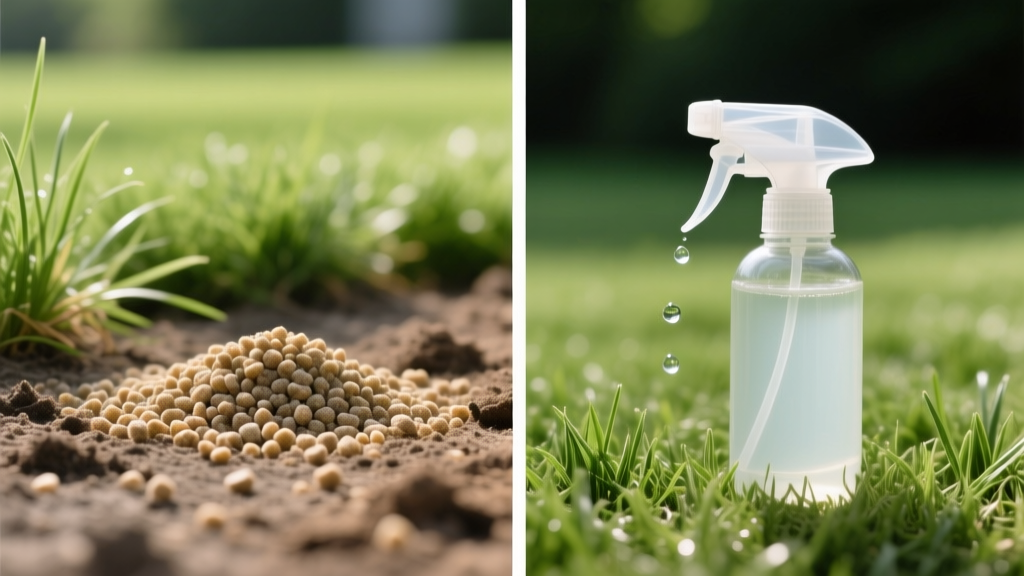
Granular vs Liquid Fertilizer: Which Is Best for Your Lawn?
Key Takeaways:
- Granular fertilizer is cost-effective and lasts 6 to 8 weeks per application.
- Liquid fertilizer acts in 24 to 48 hours but requires frequent reapplication.
- Use granular for baseline soil nutrition and liquid for targeted, rapid corrections.
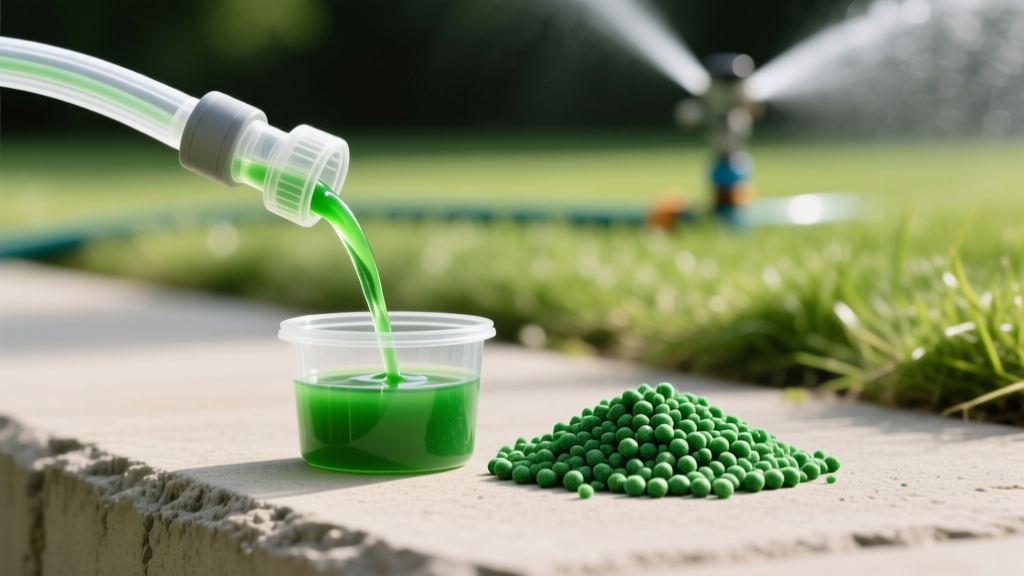
When comparing granular vs liquid lawn fertilizer, the core difference lies in nutrient delivery speed and application frequency. Granular fertilizer provides slow-release, long-lasting nutrition (typically 6 to 8 weeks) ideal for maintaining established lawns. Liquid fertilizer offers rapid, precise nutrient absorption within 24 to 48 hours, making it perfect for quick green-ups and treating specific deficiencies. This comprehensive comparison is designed for homeowners and DIY lawn care enthusiasts deciding which formulation best fits their 2026 turf management strategy.
Granular Lawn Fertilizer: Pros and Cons
Granular fertilizers consist of solid, pelletized nutrients that break down over time. Slow-Release Nitrogen is a fertilizer formulation coated with polymer or sulfur to gradually release nutrients into the soil over several weeks. This prevents nutrient leaching, reduces the risk of turf burn, and provides a steady food supply for grass roots during active growth cycles.
Advantages of Granular Fertilizer
Granular formulations offer superior longevity. A single application of polymer-coated urea typically feeds the lawn for 6 to 8 weeks. This reduces the total number of applications required per season, saving time and physical labor.
Cost efficiency is another major benefit. Granular products average $0.04 to $0.06 per 1,000 square feet, making them the most economical choice for large properties. Furthermore, modern broadcast spreaders ensure highly uniform distribution across expansive turf areas.
Disadvantages of Granular Fertilizer
The primary drawback is the delayed response time. Because the pellets require moisture to dissolve, visible greening can take 7 to 14 days. If heavy rainfall does not occur, manual irrigation is mandatory to activate the nutrients and prevent the pellets from sitting on the surface.
Improper application can also lead to fertilizer burn. If granular product lands on wet grass blades and is not watered in immediately, the concentrated salts will scorch the tissue. The Penn State College of Agricultural Sciences emphasizes that sweeping stray granules off hardscapes is crucial to prevent concrete staining and runoff.
Liquid Lawn Fertilizer: Pros and Cons
Liquid fertilizers are concentrated solutions mixed with water and applied via sprayers. Foliar Feeding is the process of applying liquid fertilizer directly to grass blades rather than the soil. Plant leaves absorb dissolved nutrients through their stomata, bypassing soil lock-up issues and delivering immediate visual results, though it does not build long-term soil nutrient reserves.
Advantages of Liquid Fertilizer
Speed is the defining advantage of liquid formulations. Grass blades absorb the dissolved nutrients within 24 to 48 hours, resulting in a rapid color boost. This makes liquid products the premier choice for reviving stressed turf or preparing a lawn for a specific event.
Liquid applications also allow for precise, localized treatments. Homeowners can easily spot-treat iron-deficient areas or combine the fertilizer with liquid aeration compounds and herbicides in a single tank mix, streamlining the overall lawn care workflow.
Disadvantages of Liquid Fertilizer
The major limitation is short-term longevity. Liquid nutrients are consumed or leached rapidly, requiring reapplication every 2 to 3 weeks to maintain peak color. This frequent schedule increases the cumulative cost and time commitment over the growing season.
Additionally, liquid concentrates carry a higher risk of foliar burn if mixed incorrectly. Applying a solution with a 15% to 20% nitrogen concentration during peak midday heat will rapidly desiccate the grass blades. Purdue University Extension advises applying liquid feeds only during early morning or late evening hours to maximize absorption and minimize thermal stress.
Head-to-Head Comparison Matrix
Use this decision framework to select the right product for your specific lawn care goals.
| Feature | Granular Fertilizer | Liquid Fertilizer |
|---|---|---|
| Nutrient Release Speed | 7 to 14 days | 24 to 48 hours |
| Longevity | 6 to 8 weeks | 2 to 3 weeks |
| Cost per 1,000 sq ft | $0.04 - $0.06 | $0.10 - $0.15 |
| Application Equipment | Broadcast spreader | Hose-end or pump sprayer |
| Best Use Case | Baseline seasonal feeding | Quick green-up and spot treatment |
Frequently Asked Questions
Is liquid fertilizer better than granular for new grass?
Yes, liquid fertilizer is generally better for new grass seedlings. The immediate nutrient availability supports rapid root and blade development without the risk of heavy granular pellets smothering or burning tender young shoots. Once the lawn is established, transition to granular for sustained feeding.
How often should you apply liquid vs granular fertilizer?
Apply granular fertilizer every 6 to 8 weeks during the active growing season, typically resulting in 4 to 5 applications per year. Liquid fertilizer must be applied every 2 to 3 weeks to maintain consistent nutrient levels, requiring 8 to 12 applications annually.
Can you mix liquid and granular lawn fertilizers?
You can use both in the same lawn care program, but do not apply them on the exact same day. Apply the granular baseline fertilizer first, water it in, and wait 10 to 14 days before using a liquid booster. This prevents nitrogen overload and subsequent turf burn.
Final Verdict and Next Steps
The choice between granular and liquid fertilizer depends entirely on your timeline and maintenance capacity. Granular fertilizer remains the superior choice for cost-effective, long-term soil building and baseline nutrition. Liquid fertilizer is the specialized tool for immediate visual corrections and precise foliar feeding.
To finalize your 2026 turf strategy, your immediate next step is to conduct a professional soil test. This data will reveal your lawn's exact phosphorus and potassium baseline, allowing you to select either a granular or liquid formulation that perfectly matches your soil's specific deficiencies.