Tree Care
Beginner Guide to Growing and Caring for Japanese Maples
Why Choose a Japanese Maple?
Japanese maples (Acer palmatum) are widely considered the crown jewels of home landscapes. Known for their delicate, deeply lobed leaves and stunning seasonal color transitions, these trees offer year-round visual interest. For beginners, they are an excellent entry point into ornamental tree care because they generally stay small, require minimal structural pruning, and can thrive in partial shade, making them perfect for understory planting or patio focal points. Depending on the cultivar and maturity, expect to spend anywhere from $45 for a small 3-gallon nursery stock to over $250 for a mature, 15-gallon specimen. This comprehensive beginner-friendly growing guide will walk you through everything you need to know to plant, nurture, and protect your Japanese maple.
Selecting the Right Variety for Your Yard
Before purchasing, it is crucial to match the tree's growth habit to your available space. Japanese maples are broadly categorized into three main growth habits: upright, weeping (dissectum), and dwarf. Below is a comparison chart to help you choose the right cultivar for your landscape.
| Variety Type | Popular Cultivar | Mature Height | Mature Spread | Best Use Case | Avg. Nursery Cost |
|---|---|---|---|---|---|
| Upright | Bloodgood | 15-20 feet | 15-20 feet | Focal point, shade tree | $80 - $150 |
| Weeping | Tamukeyama | 6-8 feet | 8-12 feet | Garden borders, water features | $60 - $120 |
| Dwarf | Crimson Queen | 8-10 feet | 8-10 feet | Containers, small patios | $50 - $90 |
| Upright | Coral Bark (Sango Kaku) | 20-25 feet | 15-20 feet | Winter interest, bright bark | $100 - $200 |
Site Selection and Soil Preparation
Japanese maples are notoriously picky about their soil and sunlight conditions. In their native habitat, they grow as understory trees, protected by the forest canopy. Therefore, in most North American climates (USDA Zones 5-9), they prefer dappled sunlight or partial shade. Too much harsh afternoon sun will scorch their delicate leaves, causing the edges to turn brown and crispy.
Testing and Amending Your Soil
These trees require well-draining, slightly acidic soil with a pH between 5.0 and 6.5. Heavy clay soils will suffocate the roots and lead to root rot, while overly sandy soils will drain too quickly, causing drought stress. Before planting, use a home soil test kit (such as the Luster Leaf Rapitest) to check your pH and drainage. If you have heavy clay, amend the planting area with composted pine bark or peat moss to improve aeration and lower the pH. Avoid planting in low-lying areas where water pools after heavy rain.
Step-by-Step Planting Guide
Timing is everything. The best time to plant a Japanese maple is in early spring after the last frost or in early fall at least six weeks before the ground freezes. This allows the root system to establish without the stress of extreme summer heat or winter freeze.
The Planting Process
- Dig the Hole: Dig a hole that is two to three times wider than the root ball, but exactly the same depth. Planting too deep is the number one killer of Japanese maples. The root flare (where the trunk widens at the base) must sit slightly above the surrounding soil grade.
- Loosen the Roots: Gently remove the tree from its nursery pot. If the roots are circling tightly, use a clean hand trowel to gently tease the outer roots outward. This encourages them to grow into the native soil rather than strangling the trunk.
- Backfill: Mix your native soil with 20% organic compost. Backfill the hole halfway, then water deeply to eliminate air pockets. Finish backfilling and create a small, 2-inch high soil berm around the outer edge of the hole to help retain water.
- Initial Watering: Immediately after planting, apply a root-stimulating fertilizer or a liquid transplant solution (like Miracle-Gro Quick Start 4-12-4) to reduce transplant shock and encourage rapid root growth.
Watering and Mulching Essentials
Consistent moisture is vital, especially during the first two years of growth. Japanese maples do not tolerate drought well, but they also cannot sit in waterlogged soil.
Watering Schedule
For a newly planted tree, provide approximately 10 to 15 gallons of water per week during the growing season. Use a soaker hose placed around the drip line for 30-45 minutes twice a week, rather than a quick daily sprinkle from a hose. Deep, infrequent watering encourages roots to grow downward, making the tree more resilient to future droughts. During extreme summer heat, increase watering to three times a week.
Proper Mulching Technique
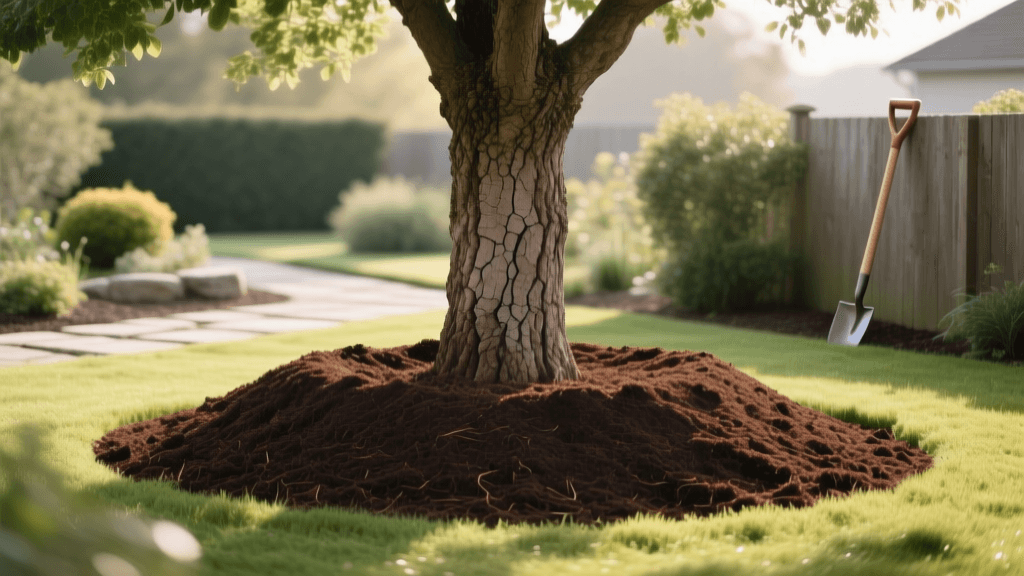
Mulch is a Japanese maple's best friend. It regulates soil temperature, retains moisture, and suppresses weeds. Apply a 2 to 3-inch layer of organic mulch (such as shredded hardwood bark or pine straw) in a 3-foot diameter ring around the tree. Crucial Beginner Tip: Never pile mulch against the trunk. This practice, known as 'volcano mulching,' traps moisture against the bark, inviting fungal diseases and rotting the root flare. Keep the mulch at least 3 inches away from the trunk base.
Fertilizing Schedule and Product Recommendations
Japanese maples are light feeders. Over-fertilizing can lead to weak, leggy growth that is highly susceptible to wind damage and pest infestations. Furthermore, high-nitrogen synthetic fertilizers can burn their shallow root systems.
When and What to Feed
Fertilize only once a year in late winter or early spring, just before the buds break. Avoid fertilizing in late summer or fall, as this stimulates new growth that will be killed by the first winter frost. Use a slow-release, acidic, organic fertilizer. Espoma Holly-tone (4-3-4 NPK) is widely considered the gold standard for Japanese maples. For a young tree, apply 1 cup of Holly-tone per inch of trunk diameter, spreading it evenly from the trunk to the drip line, and water it in thoroughly. If your soil is already rich in organic matter, you may only need to fertilize every two years.
Pruning Basics for Beginners
One of the most intimidating aspects of tree care for beginners is pruning. Fortunately, Japanese maples require very little pruning to maintain their natural, elegant shape. The goal is to remove dead wood, improve airflow, and lightly shape the canopy.
Timing and Tools
The ideal time to prune is in late winter while the tree is fully dormant. Pruning in spring when the sap is flowing heavily can cause the tree to 'bleed,' which, while rarely fatal, weakens the tree and looks unsightly. Always use sharp, sterilized bypass pruners (such as Felco F-2) for small branches and a fine-toothed pruning saw for limbs thicker than 1.5 inches. Wipe your blades with 70% isopropyl alcohol between cuts to prevent the spread of disease.
The Three-Cut Pruning Method
- Remove the Dead and Diseased: Start by cutting out any dead, damaged, or crossing branches. This opens the canopy to sunlight and air circulation.
- Thin the Interior: Remove small, twiggy growth from the inside of the canopy. Japanese maples look best when their beautiful branch architecture is visible.
- Shape the Exterior: Lightly trim the tips of branches that disrupt the tree's natural weeping or upright form. Always make your cuts at a 45-degree angle, just above an outward-facing bud.
Pest and Disease Management
While generally hardy, Japanese maples can fall victim to a few specific pests and fungal issues. Early identification is key to saving your tree.
- Aphids: These tiny, sap-sucking insects often cluster on new spring growth, causing leaves to curl and distort. They also excrete a sticky substance called honeydew, which attracts ants. Treat minor infestations with a strong blast of water from a hose. For severe cases, apply insecticidal soap or Neem oil in the early evening to avoid harming beneficial pollinators.
- Japanese Beetles: These metallic green and copper beetles skeletonize the leaves in mid-summer. Hand-picking them in the early morning and dropping them into a bucket of soapy water is the most effective, eco-friendly control method.
- Tar Spot: A common fungal disease that leaves unsightly black, tar-like spots on the leaves in late summer. While it rarely kills the tree, it looks terrible. Prevent it by raking and destroying all fallen leaves in autumn, as the fungus overwinters in leaf litter.
- Verticillium Wilt: A devastating soil-borne fungus that causes sudden wilting and dieback on one side of the tree. There is no chemical cure. Prevention is the only strategy: ensure excellent soil drainage and avoid planting in areas where tomatoes, potatoes, or other susceptible crops have previously grown.
Expert Insights and Citations
Proper tree care relies on science-backed horticultural practices rather than old wives' tales. According to the Oregon State University Extension Service, Japanese maples are highly sensitive to environmental stressors, particularly poor drainage and excessive soil alkalinity. Their research emphasizes that chlorosis (yellowing leaves with green veins) in Japanese maples is frequently a symptom of iron deficiency induced by high soil pH, rather than a lack of iron in the soil itself. The OSU Extension recommends applying chelated iron or sulfur to lower soil pH rather than relying on heavy synthetic fertilizers, which can exacerbate root stress.
By following this beginner-friendly guide, monitoring your soil conditions, and providing consistent, mindful care, your Japanese maple will thrive for decades, becoming a stunning, living heirloom in your garden landscape.