Pest Control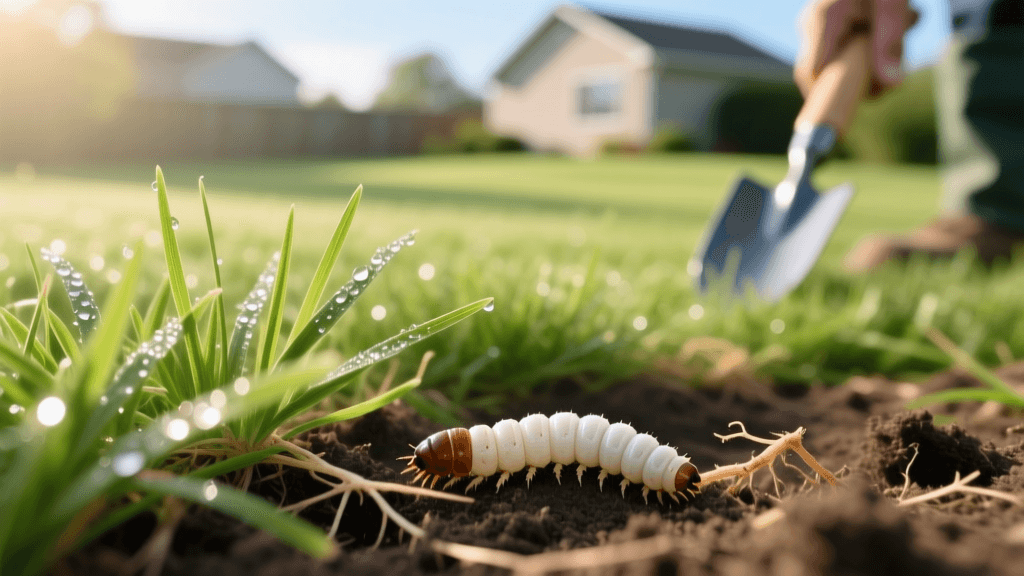
Grub Worm Diagnosis and Treatment for Cool-Season Lawns
Diagnosing a Grub Infestation in Your Lawn
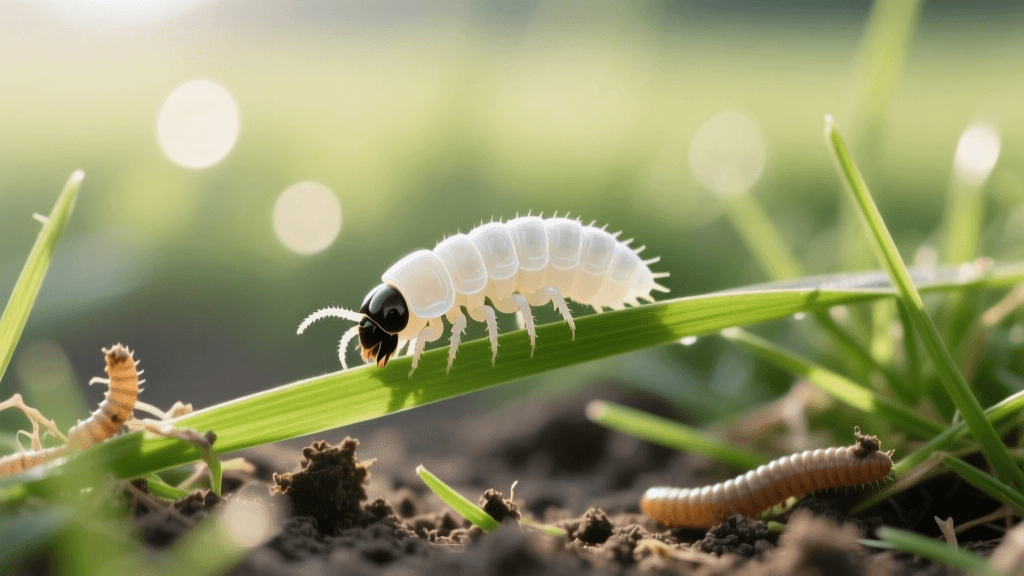
Is your cool-season lawn developing irregular brown patches that seem to detach from the soil like a rolled-up carpet? If you are noticing increased activity from foraging skunks, raccoons, or flocks of starlings tearing up your turf, you are likely dealing with a white grub infestation. Grubs are the larval stage of scarab beetles, including Japanese beetles, European chafers, and June bugs. Left untreated, these C-shaped, cream-colored larvae will devour the root systems of Kentucky bluegrass, tall fescue, and perennial ryegrass, leading to catastrophic lawn failure.
Accurate problem diagnosis is the cornerstone of Integrated Pest Management (IPM). Before reaching for chemical treatments, you must confirm that grubs are the primary culprit and not a secondary issue masking drought stress or fungal diseases like brown patch.
The Shovel Test: Confirming the Culprit
To properly diagnose a grub problem, you need to look beneath the surface. The most reliable method is the shovel test, which allows you to quantify the population density.
- Select the right zone: Inspect the margins of the brown patches where the grass is still green but wilting. This is the active feeding zone.
- Cut a one-square-foot section: Use a spade to cut three sides of a 12x12 inch square, about 3 inches deep.
- Peel it back: Roll the turf back like a carpet hinge.
- Count the grubs: Sift through the soil and roots, counting every white, C-shaped grub you find.
The Threshold Rule: According to Cornell University’s Turfgrass Advisory Program, finding fewer than 5 to 7 grubs per square foot is generally tolerable for a healthy, well-maintained cool-season lawn. However, if you count 10 or more grubs per square foot, intervention is required to prevent severe turf loss.
Understanding the Grub Life Cycle for Precise Timing
Applying the right product at the wrong time is the most common reason for treatment failure. Grubs follow a predictable annual cycle in most North American climates:
- Mid-Summer (July-August): Adult beetles lay eggs in the soil. These hatch into tiny, highly vulnerable first-instar grubs.
- Early Fall (September-October): Grubs are in their second and third instars, feeding aggressively near the surface and causing the most visible damage.
- Late Fall to Spring (November-April): Grubs migrate deep into the soil to overwinter, becoming entirely unreachable by surface-applied treatments.
- Late Spring (May-June): Grubs pupate and transform into adult beetles, emerging to mate and restart the cycle.
Preventive vs. Curative Chemical Solutions
Chemical interventions are categorized by their mode of action and the life stage they target. Choosing between a preventive and a curative approach depends entirely on the time of year and the current damage level.
Preventive Treatments (The Long Game)
Preventive insecticides are systemic or long-residual contact chemicals applied in late spring to early summer (June to mid-July). They are designed to kill young, newly hatched grubs before they can cause damage.
- Active Ingredients: Chlorantraniliprole (e.g., Scotts GrubEx) or Imidacloprid (e.g., Bayer Advanced Season-Long Grub Control).
- Application Rate: Typically 2.5 to 3.5 lbs per 1,000 square feet for granular formulations.
- Cost: $15 to $25 per bag (covers 5,000 sq ft).
- Crucial Step: You must water the lawn with at least 0.5 inches of irrigation immediately after application to move the active ingredient into the root zone where the eggs will hatch.
Curative Treatments (The Rescue Mission)
If you missed the preventive window and are seeing active damage in late summer or early fall (August to September), you need a fast-acting, short-residual curative insecticide. These products target larger, aggressive third-instar grubs.
- Active Ingredients: Trichlorfon (e.g., Bayer Advanced 24 Hour Grub Killer) or Carbaryl (e.g., Sevin).
- Application Rate: Follow label instructions strictly; Trichlorfon is often applied at 2 lbs per 1,000 square feet.
- Cost: $20 to $35 per bag.
- Limitations: Curative products degrade rapidly in the soil (often within 10-14 days) and will not provide protection into the following spring.
Organic and Biological Control Methods
For homeowners practicing strict organic lawn care or those with pets and children who frequently use the turf, biological controls offer a highly effective, environmentally safe alternative to synthetic chemicals.
Beneficial Nematodes
Microscopic, unsegmented worms called entomopathogenic nematodes actively hunt and parasitize grubs. The most effective species for lawn grubs is Heterorhabditis bacteriophora (Hb nematodes).
- Timing: Apply in late summer when soil temperatures are between 60°F and 85°F and grubs are near the surface.
- Application: Mix with water and apply via a hose-end sprayer in the late afternoon or early evening to avoid UV degradation.
- Cost: $30 to $45 for a package treating 2,000 to 3,000 square feet (available from suppliers like Arbico Organics).
Milky Spore Disease
Milky Spore (Paenibacillus popilliae) is a naturally occurring bacterium that specifically targets Japanese beetle grubs. While it takes 2 to 3 years to fully establish in the soil, a single application can provide control for up to 15 years.
“Milky spore is most effective when applied in a grid pattern across the entire lawn, not just as a spot treatment, as the spores need to multiply within the grub population to reach effective concentrations in the soil.” — University of Massachusetts Extension Turf Program
Treatment Comparison Chart
| Treatment Type | Active Agent | Best Timing | Target Life Stage | Est. Cost (per 5k sq ft) |
|---|---|---|---|---|
| Preventive Chemical | Chlorantraniliprole | June - Mid-July | Eggs / 1st Instar | $15 - $20 |
| Curative Chemical | Trichlorfon | August - September | 2nd / 3rd Instar | $25 - $35 |
| Biological | Hb Nematodes | August - September | 2nd / 3rd Instar | $60 - $80 |
| Biological | Milky Spore | Spring or Fall | Japanese Beetle Grubs | $40 - $60 |
Lawn Recovery and Cultural Prevention
Eradicating the grubs is only half the battle. Once the pests are controlled, you must repair the damaged turf and alter your cultural habits to make the lawn less inviting to egg-laying beetles.
- Overseed Bare Patches: Rake away dead thatch, loosen the topsoil, and overseed with a resilient cool-season blend containing tall fescue or endophyte-enhanced perennial ryegrass, which naturally resist root-feeding insects.
- Adjust Irrigation: Adult beetles prefer laying eggs in moist, irrigated soil during mid-summer. If possible, allow your lawn to go slightly dormant (turning a bit brown) during July and August to deter egg-laying, provided local water restrictions and drought conditions permit.
- Raise Your Mower Deck: Mow your cool-season grass at a height of 3 to 4 inches. Taller grass develops deeper, more robust root systems capable of tolerating minor grub feeding without showing visible surface damage. Furthermore, a dense, tall canopy shades the soil, making it less attractive to foraging beetles.
By combining accurate diagnosis with targeted, well-timed interventions and proactive cultural practices, you can effectively manage grub populations and maintain a thick, vibrant, and resilient cool-season lawn year after year.