
Landscaping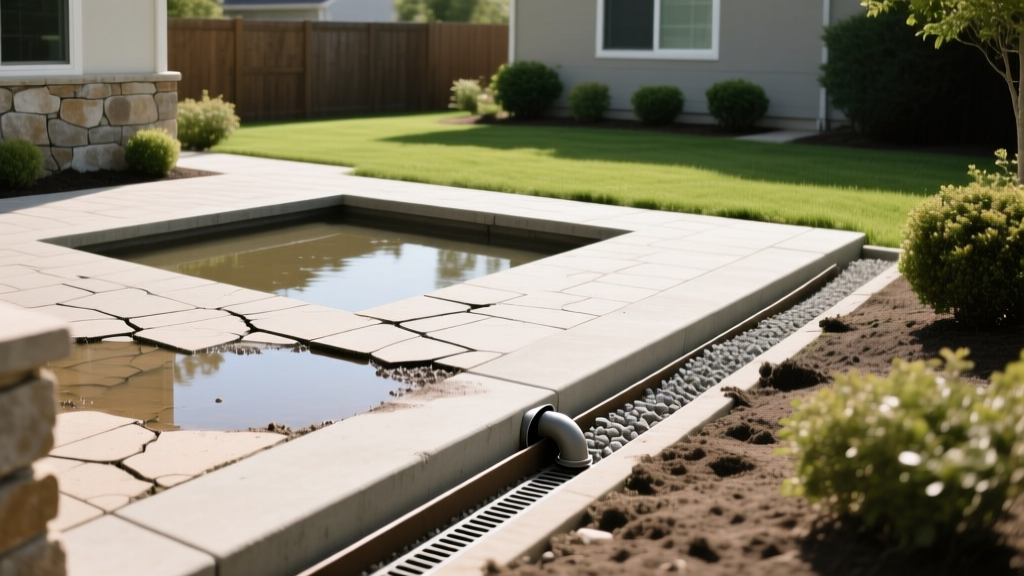
Top 5 Hardscape Drainage Mistakes and How to Fix Them
Sarah ChenPublished
The Hidden Enemy of Hardscaping: Poor Drainage
Hardscaping transforms a mundane backyard into a luxurious outdoor living space. Whether you are installing a paver patio, a winding walkway, or a retaining wall, the aesthetic appeal of natural stone and concrete is undeniable. However, water is the ultimate enemy of any hardscape project. When drainage is ignored or improperly executed, the results can be catastrophic: sinking pavers, frost heave, efflorescence, weed infestations, and even flooded basements.
According to the National Association of Landscape Professionals (NALP), drainage-related callbacks account for a significant percentage of hardscape repair work. Homeowners and amateur DIYers often focus entirely on the surface materials while neglecting the crucial subsurface engineering. In this comprehensive guide, we will break down the five most common hardscape drainage mistakes and provide actionable, step-by-step fixes to ensure your outdoor investment stands the test of time.
Mistake 1: Ignoring the Proper Slope (Grade)
The most fundamental rule of hardscape drainage is that water must be directed away from structures and low-lying areas. Many DIYers build patios that are perfectly level, assuming that water will simply evaporate. In reality, a perfectly flat patio will pool water, leading to joint erosion and winter ice hazards.
The Fix: Implement the 1/4 Inch Per Foot Rule
Industry standards dictate a minimum slope of 1/4 inch per linear foot away from the house or any retaining structure. To achieve this:
- Use a String Line and Line Level: Stake out your patio area and run a masonry string line from the house to the outer edge.
- Calculate the Drop: For a 12-foot deep patio, the outer edge must be exactly 3 inches lower than the edge touching the house (12 feet x 0.25 inches = 3 inches).
- Compact the Soil: Use a mechanical plate compactor (rentable for about $60 per day) to grade and compact the native soil to this exact slope before adding your base materials.
If your patio is already built and pooling water, you may need to carefully remove the pavers, re-grade the base, and reinstall them. For minor pooling, applying a self-leveling polymeric sand overlay can sometimes bridge minor depressions, but re-grading is the only permanent fix.
Mistake 2: Using the Wrong Sub-Base Material
A hardscape is only as strong as its foundation. A frequent and costly mistake is using topsoil, native clay, or fine masonry sand as the primary sub-base. Clay holds water and expands when frozen, causing severe frost heave. Fine sand washes away during heavy rains, leaving voids beneath the pavers that lead to sinking and cracking.
The Fix: Install a 3/4-Inch Minus Crushed Stone Base
The Interlocking Concrete Pavement Institute (ICPI) strongly recommends using an open-graded or dense-graded crushed stone base. For most residential patios and walkways, a 4 to 6-inch layer of 3/4-inch minus crushed rock (also known as crusher run or Item 4) is the gold standard. The jagged edges of the crushed stone lock together when compacted, creating a nearly concrete-like surface that still allows for deep subsurface drainage.
| Base Material | Drainage Quality | Compaction Strength | Best Use Case |
|---|---|---|---|
| Native Clay/Soil | Poor (Holds Water) | Unstable (Prone to Frost Heave) | Never use for hardscape bases |
| Masonry Sand | Moderate | Low (Shifts under heavy loads) | Bedding layer only (1 inch max) |
| Pea Gravel | Excellent | Low (Round stones do not lock) | French drains, not direct bases |
| 3/4-Inch Minus Crushed Stone | Good to Excellent | Very High (Locks together) | Primary sub-base for patios/driveways |
Mistake 3: Relying on Regular Sand for Paver Joints
The joints between pavers are critical for surface drainage and structural interlock. Many beginners sweep standard masonry sand or play sand into the joints. While this is cheap (about $5 per 50lb bag), regular sand never truly hardens. Heavy rainstorms wash it out, and ants love to burrow into it, creating channels that undermine the bedding layer and ruin your drainage slope.
The Fix: Upgrade to Polymeric Sand
Polymeric sand contains special silica-based additives that bind the sand grains together when activated with water. Once cured, it forms a flexible, concrete-like joint that resists washouts, weed growth, and insect infiltration, while still allowing microscopic moisture permeability.
- Cost: Expect to pay $30 to $45 per 50lb bag of high-quality polymeric sand (brands like Techniseal or Gator Dust).
- Application Tip: The joints must be completely dry and free of dust before application. After sweeping the sand in and compacting it, use a gentle mist setting on your hose to activate the polymers. A strong stream of water will wash the polymers out of the sand and leave a hazy, permanent film on the surface of your pavers.
Mistake 4: Omitting Edge Restraints
Pavers are a flexible paving system, meaning they are not mortared together. Without a rigid perimeter, the natural expansion and contraction of the ground, combined with foot traffic and water flow, will cause the pavers to slowly spread outward. As the joints widen, the jointing sand washes away, and the structural interlock fails, leading to localized sinking and poor surface drainage.
The Fix: Install Heavy-Duty Edge Restraints
You must secure the perimeter of your hardscape. While some contractors use a concrete haunch (a hidden curb of poured concrete), modern plastic or aluminum edge restraints are faster, more flexible, and highly effective.
- Product Recommendation: SnapEdge or PermaEdge are industry favorites. They cost roughly $3 to $5 per linear foot.
- Installation: Spike the restraints directly into the compacted sub-base using 10-inch galvanized steel spikes. Place a spike every 12 inches, and double them up on curves or high-stress corners. Ensure the restraint sits just below the final paver surface so it remains hidden.
Mistake 5: Disrupting Natural Surface Water Flow
When designing a large patio or driveway, homeowners often inadvertently build a 'dam' that blocks the natural flow of rainwater across the property. This forces water to pool against the house foundation or flood neighboring garden beds. The Environmental Protection Agency (EPA) emphasizes the importance of managing stormwater runoff through smart landscape design to prevent local flooding and erosion.
The Fix: Integrate Channel Drains and Permeable Solutions
If your hardscape must cross a natural drainage path, you must provide a way for the water to pass through or under it.
- Channel Drains: Install a trench drain (such as the NDS 5-inch Pro Channel Drain) across the patio or at the base of a driveway. These cost around $50 to $80 per 3-foot section and can be tied into a solid PVC pipe to day-light the water safely into a lower part of the yard.
- Permeable Pavers: For new installations in areas with heavy clay soil or strict municipal runoff regulations, consider permeable pavers. These systems use larger, open-graded aggregate in the joints and sub-base, allowing thousands of gallons of water to percolate directly into the earth rather than running off into storm sewers.
Cost Breakdown: Fixing Drainage Mistakes
Addressing drainage issues early saves thousands of dollars. Here is a realistic look at the costs associated with fixing common hardscape drainage failures:
- Re-sanding Joints (DIY): $150 - $300 (Materials: Polymeric sand, sealer).
- Installing Edge Restraints (DIY): $200 - $400 (Materials: Plastic edging, steel spikes, mallet).
- Re-grading a Sinking 200 sq. ft. Patio (Professional): $1,500 - $3,500 (Labor intensive: requires removing pavers, excavating bad base, adding crushed stone, compacting, and reinstalling).
- Adding a Trench Drain System (Professional): $800 - $2,000 (Includes trenching, PVC piping, and catch basins).
Final Thoughts on Hardscape Longevity
A beautiful hardscape is 20% surface material and 80% subsurface engineering. Never cut corners on your base, your slope, or your drainage pathways.
By avoiding these five common mistakes, you ensure that your patio, walkway, or driveway remains level, beautiful, and functional for decades. Always prioritize the movement of water in your initial design phase, and remember that investing in high-quality base materials and polymeric sands will pay massive dividends when the heavy spring rains and freezing winter temperatures arrive.

