
Landscaping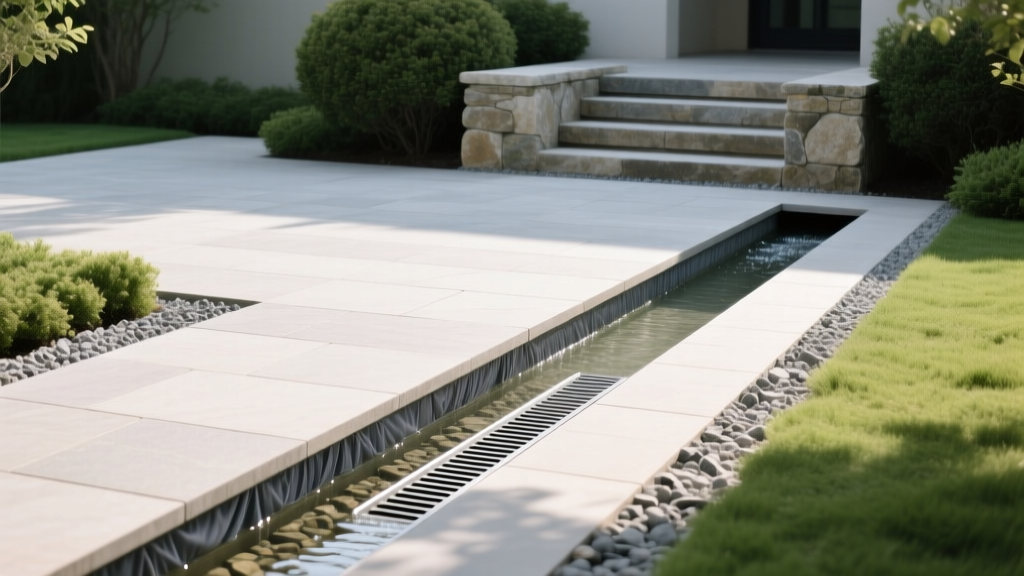
Common Hardscaping Drainage Mistakes and Expert Fixes
Emily WatsonPublished
The Hidden Enemy of Hardscaping: Poor Drainage
Hardscaping projects like patios, walkways, and retaining walls can dramatically elevate your outdoor living space and boost your property value. However, the most beautiful natural stone patio or interlocking paver driveway will quickly become a costly nightmare if water management is ignored. Water is the ultimate adversary of hardscapes; it causes frost heave, washes out base materials, stains surfaces, and can even compromise your home's foundation.
According to landscape industry experts, drainage-related callbacks account for a massive percentage of hardscaping failures. Whether you are a DIY enthusiast planning a weekend project or a homeowner vetting a contractor, understanding where water goes is just as important as choosing the right stone. Below, we break down the most common hardscaping drainage mistakes and provide actionable, expert-backed fixes to ensure your outdoor structures stand the test of time.
Mistake 1: Ignoring the Proper Slope and Grade
The Mistake: Many homeowners and novice installers build patios and walkways perfectly flat to make the installation process easier. Worse, some surfaces are inadvertently graded toward the home, creating a funnel that directs thousands of gallons of roof and surface runoff straight into your foundation or basement.
The Fix: Every hardscape surface must have a minimum slope of 2%, which translates to a 1/4-inch drop per linear foot away from any structure.
- How to measure: Use a string line with a line level, or a laser level for larger areas. For a 10-foot patio, the far edge must be exactly 2.5 inches lower than the edge touching the house.
- Fixing an existing flat patio: If your concrete patio is flat and pooling water, you do not always need to demolish it. A professional can use a process called mudjacking or polyurethane foam jacking (costing roughly $3 to $6 per square foot) to lift and re-slope the existing slab.
- Permeable alternative: If sloping away from the house is physically impossible due to property lines, install a trench drain or channel drain directly at the threshold of the door to intercept water before it spreads.
Mistake 2: Choosing the Wrong Base Aggregate
The Mistake: Using fine sand, dirt, or unwashed 'crusher run' gravel with too many fine particles as a base. While these materials compact well initially, the fine particles trap water like a sponge. In freezing climates, this trapped water expands, causing severe frost heave that cracks pavers and shifts retaining walls.
The Fix: Follow the strict base guidelines established by the National Concrete Masonry Association (NCMA).
- Excavation: Dig down to the subsoil (removing all organic topsoil and clay).
- Geotextile Fabric: Lay down a non-woven geotextile fabric (such as Mirafi 500X) to separate the soil from the aggregate and prevent the base from sinking into the mud over time.
- Aggregate Selection: Use a 3/4-inch open-graded, clean crushed stone (often classified as ASTM No. 57 or No. 8 stone). Because it lacks fine dust, water passes directly through it rather than pooling.
- Compaction: Compact the base in 2-inch 'lifts' (layers) using a mechanical plate compactor. A standard patio requires a 4-to-6-inch compacted base, while driveways require 8-to-12 inches.
Mistake 3: Using Impermeable Materials in Heavy Clay Soil
The Mistake: Pouring a solid concrete slab or using standard, tightly sealed pavers over heavy clay soil without an exit strategy for the water. Clay soil is virtually impermeable; water hitting a solid hardscape will pool, erode adjacent garden beds, or flood nearby lawns.
The Fix: Embrace permeable hardscaping. The EPA's Green Infrastructure guidelines on permeable pavement highly recommend permeable interlocking concrete pavers (PICP) or permeable flagstone set in gravel joints. These systems allow rainwater to infiltrate the ground naturally, reducing stormwater runoff by up to 80%. If you must use solid concrete, incorporate a French drain system beneath and alongside the slab to capture and redirect subsurface water.
Comparison Chart: Hardscape Drainage Solutions
When you cannot rely on surface grading alone, you must install subsurface or intercepting drainage. Use this chart to select the right system for your hardscape project.
| Drainage Solution | Best Application | Estimated Cost | Maintenance Level |
|---|---|---|---|
| French Drain | Relieving hydrostatic pressure behind retaining walls and beneath patios. | $20 - $35 per linear ft. | Medium (Requires flushing every 2-3 years) |
| Channel / Trench Drain | Intercepting surface water at door thresholds, driveways, and patio edges. | $50 - $100 per linear ft. | High (Grates must be cleared of debris seasonally) |
| Dry Well | Collecting downspout and hardscape runoff in areas where daylighting a pipe is impossible. | $500 - $1,500 per unit | Low (Ensure filter fabric remains intact) |
| Swale | Directing large volumes of runoff away from hardscaped areas using landscaped ditches. | $5 - $15 per linear ft. | Low (Requires occasional re-seeding or weeding) |
Mistake 4: Dumping Downspouts Directly Onto Hardscapes
The Mistake: Allowing roof gutter downspouts to discharge directly onto a new paver patio or against a retaining wall. A standard 1,000-square-foot roof can shed over 600 gallons of water during a 1-inch rainstorm. Concentrating this volume onto a localized hardscape area will wash out joint sand, erode the base, and stain the materials.
The Fix: Integrate roof runoff management into your hardscape design phase. As highlighted by Penn State Extension's stormwater management resources, managing water at the source is critical for property health.
- Catch Basins: Install an NDS 9x9 or 12x12 catch basin grate flush with the patio surface directly beneath the downspout.
- Underground Piping: Connect the basin to 4-inch Schedule 40 PVC pipe (avoid corrugated black flex pipe, which easily crushes under hardscape weight and sags, causing clogs).
- Daylighting: Run the PVC pipe underground (trenched at least 12 inches deep) and 'daylight' it at a lower elevation in your yard using a pop-up emitter or by tying it into a municipal storm drain (where local codes permit).
Mistake 5: Skipping Polymeric Sand for Paver Joints
The Mistake: Sweeping standard masonry sand or fine play sand into the joints of pavers and flagstone. Regular sand does not bind. Heavy rains will wash it out, creating voids where water can pool and freeze, while also providing an open invitation for weeds and ants.
The Fix: Always use polymeric sand (such as Alliance Gator Dust or Techniseal). Polymeric sand contains special binding agents that, when activated with water, harden into a flexible, water-resistant joint that locks the pavers together while still allowing microscopic drainage.
Pro-Tip for Application: The most common error with polymeric sand is 'hazing'—a white, cloudy film that ruins the look of the stone. To prevent this, ensure the pavers are 100% bone dry before application. Sweep the sand into the joints, compact it with a plate compactor to vibrate the sand deep into the crevices, and then mist the surface with a gentle shower nozzle. Do not use a high-pressure hose, which will wash the polymers out of the joint and onto the stone surface.
Conclusion: Plan for Water Before You Build
A successful hardscaping project is 80% subsurface preparation and 20% surface beauty. By avoiding these common drainage mistakes—ensuring a proper 2% slope, utilizing clean open-graded base aggregates, managing roof runoff, and using modern binding sands—you protect your investment from the destructive forces of water. Always assess your soil type and local rainfall patterns before breaking ground, and when in doubt, consult with a certified landscape professional to design a comprehensive drainage strategy.

