
Landscaping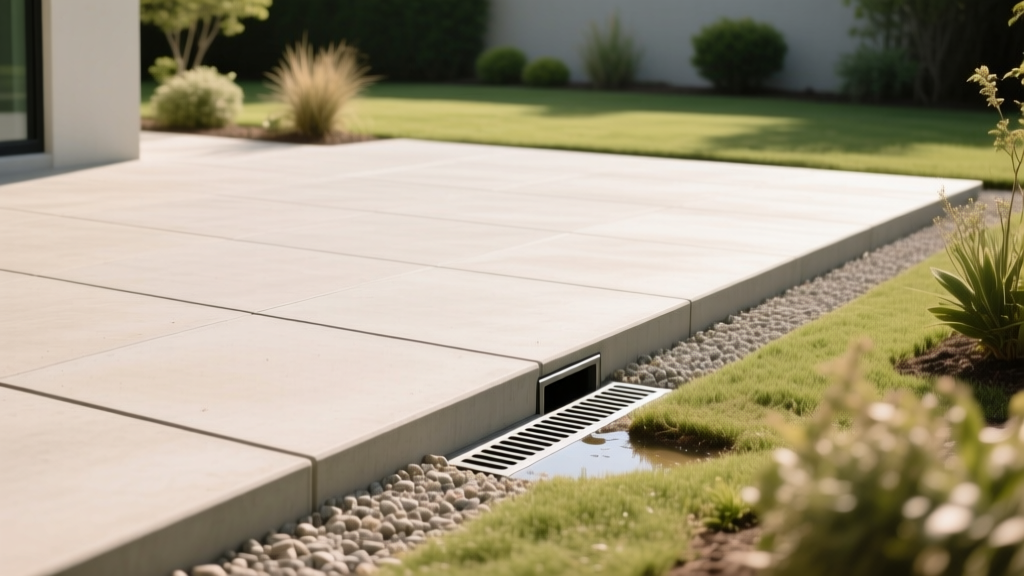
Hardscaping Drainage Mistakes: 5 Essential Patio Fixes
Anna KowalskiPublished
The Hidden Enemy of Hardscaping: Poor Drainage
A beautifully designed patio or walkway can instantly elevate your outdoor living space, boost curb appeal, and increase your property value. However, the most expensive and visually stunning hardscaping projects will quickly deteriorate if one critical element is ignored: drainage. Water is the ultimate enemy of hardscaping. When moisture pools, freezes, or undermines the base, it leads to frost heave, cracking, efflorescence, and even severe foundation damage to your home.
According to the University of Minnesota Extension, improper yard and hardscape grading is one of the leading causes of residential water intrusion and landscape failure. Yet, many DIYers and even some inexperienced contractors make fundamental errors during the planning and installation phases. Below, we break down the five most common hardscaping drainage mistakes and provide actionable, professional-grade fixes to ensure your patio stands the test of time.
Mistake 1: Ignoring the 2% Slope Rule
The Problem
Building a perfectly level patio is a recipe for disaster. Without a deliberate slope, rainwater and melting snow will pool on the surface or, worse, flow back toward your home’s foundation. Many homeowners rely on the 'eyeball test' to determine if a patio is sloped correctly, which almost always results in low spots and standing water.
The Fix: Calculate and Measure the 1/4-Inch Drop
The industry standard for hardscaping drainage is a minimum 2% slope, which translates to a 1/4-inch drop per linear foot away from the house. For a patio that extends 12 feet from your foundation, the far edge must be exactly 3 inches lower than the edge touching the house.
- Action Step: Use a string line, line level, and tape measure. Pound a stake at the house and another at the patio's edge. Tie the string at the desired height on the first stake, pull it taut to the second stake, and measure down exactly 1/4 inch for every foot of distance.
- Pro Tip: If your yard is entirely flat and you cannot achieve a 1/4-inch drop without the patio edge dipping below the surrounding soil line, you must install a trench drain (see Mistake 4) to intercept the water.
Mistake 2: Skimping on the Base and Subgrade
The Problem
Pavers and stone are only as strong as the base beneath them. A common and costly mistake is excavating only enough soil to fit the pavers and a thin layer of sand. When the underlying soil (subgrade) retains water, it turns into mud, causing the pavers to sink, shift, and create puddles. In freezing climates, this trapped water expands, causing severe frost heave.
The Fix: Proper Excavation and Open-Graded Aggregate
To ensure water drains through and away from the surface, you need a robust, permeable base.
- Excavate Deep: Dig down 7 to 9 inches below your desired finish grade.
- Install Geotextile Fabric: Line the trench with a non-woven geotextile fabric (such as Mirafi 500X). This prevents the base stone from mixing with the native clay or silt below, which would otherwise clog the drainage paths.
- Use the Right Stone: Fill the trench with 4 to 6 inches of 3/4-inch open-graded crushed stone (often called clear gravel). Unlike crushed stone with 'fines' (stone dust), open-graded stone has no small particles to trap water, allowing moisture to percolate straight down.
- Cost Expectation: Expect to spend roughly $0.50 to $1.00 per square foot on high-quality base materials and fabric. Do not skip this step to save a few hundred dollars.
Mistake 3: Choosing Impermeable Surfaces in Low-Lying Areas
The Problem
Pouring a solid concrete slab or using tightly jointed, impermeable pavers in a low-lying area of your yard forces all rainwater to become surface runoff. This overwhelms adjacent garden beds, causes erosion, and creates massive puddles during heavy storms.
The Fix: Utilize Permeable Pavers
If your patio is situated in a natural drainage path, switch to permeable pavers. The Environmental Protection Agency (EPA) highly recommends permeable pavement as a green infrastructure solution to reduce stormwater runoff and filter pollutants. Permeable pavers are installed with wider joints filled with small, crushed aggregate, allowing water to pass directly through the surface and into a specialized stone reservoir base below.
Expert Insight: 'Permeable pavers can reduce runoff volume by up to 80% compared to traditional impervious concrete, significantly reducing the burden on municipal storm drains and preventing localized flooding.' — Penn State Extension, Designing and Installing Permeable Pavers.
Mistake 4: Forgetting Edge Drainage and Channel Drains
The Problem
Sometimes, architectural constraints or property lines make it impossible to slope a patio away from the house in all directions. If water is trapped against a retaining wall or the foundation, it will eventually seep into your basement or crawlspace.
The Fix: Install Trench and French Drains
When gravity and slope aren't enough, you must mechanically intercept the water.
- Channel Drains (Trench Drains): Install a product like the NDS 5-inch Pro Channel Drain across the low edge of the patio or directly against the house. These feature a grated top that sits flush with the pavers, catching surface water and routing it through a 3-inch or 4-inch PVC pipe to a safe discharge area.
- French Drains: If water is seeping through the soil beneath the patio edge, dig a trench 12 inches deep and 6 inches wide along the perimeter. Line it with fabric, lay a 4-inch perforated corrugated pipe (holes facing down), and cover it with 3/4-inch gravel. This intercepts subsurface water before it reaches your foundation.
Mistake 5: Downspout Dumping onto the Hardscape
The Problem
A single inch of rain on a 1,000-square-foot roof generates over 600 gallons of water. If your gutter downspouts terminate directly onto your new patio or walkway, the sheer volume and velocity of the water will wash out your jointing sand, erode the base, and cause immediate flooding.
The Fix: Extend and Bury Downspout Lines
Never let roof water discharge directly onto hardscaping.
- Above Ground: Use aluminum or vinyl downspout extensions to carry water at least 4 to 6 feet away from the patio edge.
- Below Ground (The Professional Route): Bury solid (non-perforated) 4-inch PVC pipe beneath the patio or along its edge. Connect the downspout to this pipe and route it to a dry well or a pop-up emitter located in a lower-lying area of the lawn, well away from the hardscape. A NDS Flo-Well dry well costs around $150 and can safely disperse thousands of gallons of water into the surrounding soil over time.
Comparison Chart: Hardscaping Drainage Solutions
Choosing the right drainage intervention depends on your budget, soil type, and the severity of the water issue. Use the table below to compare the most common fixes.
| Drainage Solution | Estimated Cost (Materials) | Installation Difficulty | Best Application |
|---|---|---|---|
| Regrading / Sloping | $0.50 - $2.00 / sq ft | Moderate | New patio installations; large open yards. |
| Permeable Pavers | $15.00 - $30.00 / sq ft | High (Requires precise base) | Low-lying areas; eco-friendly stormwater management. |
| Channel / Trench Drain | $50 - $150 per 3-ft section | Moderate to High | Patios abutting the house; flat surfaces with no slope. |
| French Drain | $20 - $30 per linear ft | Moderate (Heavy digging) | Subsurface water control; protecting retaining walls. |
| Buried Downspout Line | $100 - $250 per line | Easy to Moderate | Preventing roof runoff from destroying patio edges. |
Conclusion: Plan for Water Before You Lay Stone
Successful hardscaping is 80% preparation and 20% installation. By avoiding these five common drainage mistakes, you protect your investment and your home’s structural integrity. Always respect the 1/4-inch-per-foot slope rule, invest heavily in a deep, open-graded base, and never underestimate the destructive power of unmanaged roof runoff. If your property features challenging topography, consult with a certified landscape professional to design a comprehensive drainage plan before the first shovel hits the dirt. Proper planning ensures your outdoor oasis remains beautiful, level, and dry for decades to come.

