Tree Care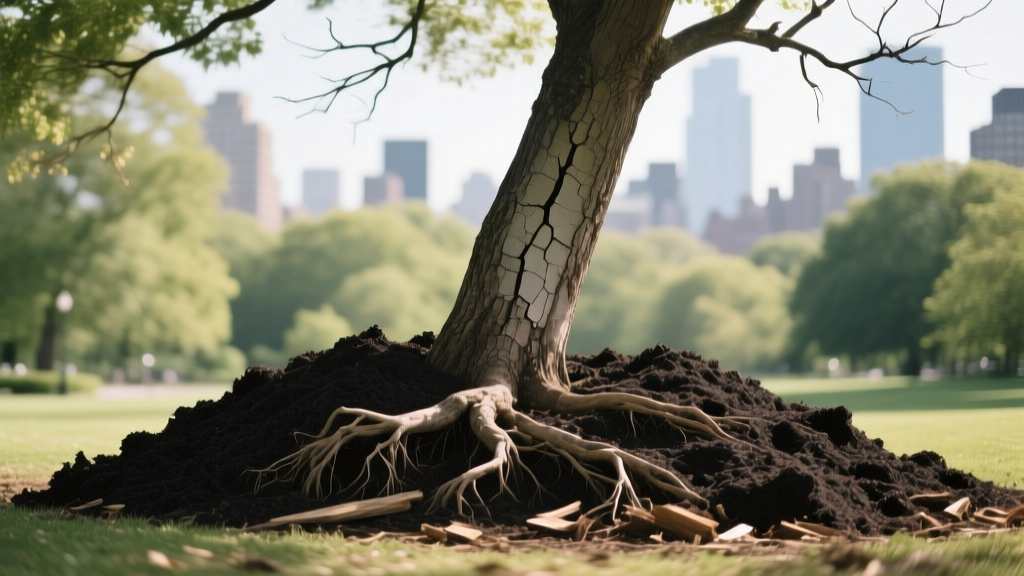
Hazard Tree Assessment: Mulch-Induced Leans, Cracks & Deadwood 2026
Sarah ChenPublished
The Hidden Danger: How Mulching Practices Create Tree Hazards
When homeowners and landscapers think of mulch, they often envision a neat, protective ring that conserves moisture and suppresses weeds. However, as we navigate the 2026 arboricultural season, certified arborists are increasingly sounding the alarm on a silent epidemic: mulch-induced structural failure. Improper mulching methods and the use of inappropriate materials are leading directly to severe tree hazards, specifically manifesting as dangerous leans, trunk cracks, and extensive deadwood. At LawnsGuide, we believe that effective hazard tree assessment must begin at the root collar. Understanding the intersection of mulching materials and tree biomechanics is critical for preventing catastrophic property damage and personal injury.
Hazard Tree Assessment: Evaluating Mulch-Induced Defects
Assessing a hazard tree requires a systematic approach to identifying defects that compromise its structural integrity. When these defects are rooted in poor mulching practices, the evaluation must focus on the root zone, the lower trunk, and the resulting canopy health.
Identifying Leans from Root Zone Asphyxiation
A tree lean is one of the most urgent hazards in urban forestry. While some leans are natural phototropic responses, a recent or accelerating lean is a primary indicator of root plate failure. Volcano mulching—the practice of piling mulch high against the trunk—creates an anaerobic environment. In 2026, soil scientists emphasize that fine-textured mulches applied thicker than four inches drastically reduce soil oxygen levels. This asphyxiates the fine feeder roots and promotes the growth of aggressive root-rot pathogens like Armillaria. During your hazard assessment, look for soil heaving on the tension side of the lean, fungal conks at the base, and a history of deep, suffocating mulch rings. If the root plate is compromised by mulch-induced decay, the tree's anchor system is failing.
Evaluating Trunk Cracks and Bark Inclusions
Trunk cracks are severe structural defects that often originate from the base upward. When mulch is placed in direct contact with the tree bark, it traps moisture against the cambium. Tree bark is designed to be exposed to air and sunlight; constant moisture leads to bark necrosis and invites wood-decaying fungi. Over time, the structural wood degrades, leading to vertical or spiral trunk cracks. According to the Penn State Extension guidelines on hazard trees, cracks that penetrate deep into the sapwood or cross multiple growth rings significantly reduce the tree's bending strength. In 2026, arborists utilize advanced sonic tomography and micro-drilling resistographs to measure the exact extent of internal decay hidden beneath mulch-damaged bark without causing further harm to the tree.
Deadwood Evaluation and Canopy Dieback
Deadwood in the canopy is a direct consequence of vascular restriction, frequently caused by girdling roots. When mulch is piled deeply around the trunk, it encourages adventitious roots to grow into the moist mulch layer rather than deep into the soil. These roots eventually circle and strangle the main trunk, cutting off the flow of water and nutrients. The resulting canopy dieback presents as significant deadwood, which poses a striking hazard during high winds or ice storms. Additionally, trees stressed by girdling roots and poor mulching practices emit volatile organic compounds that attract secondary pests. In 2026, arborists are noting a sharp increase in ambrosia beetle and bark borer infestations specifically localized to the trunks of volcano-mulched trees. These pests accelerate the formation of deadwood by introducing rapid-acting fungal pathogens directly into the compromised vascular system. A hazard tree assessment must quantify the percentage of deadwood; if more than 25 percent of the crown is deadwood and linked to a girdled, mulch-buried root flare, the tree is generally considered a high-risk candidate for removal.
Corrective Mulching Methods & Material Selection for 2026
If a hazard assessment reveals early-stage defects caused by poor mulching, immediate corrective action is required. The goal is to restore proper gas exchange, eliminate trunk moisture, and encourage outward root growth.
Root Collar Excavation and Air-Spading
The first step in corrective mulching is the complete removal of the offending material. In 2026, the industry standard for this is root collar excavation using high-pressure air tools. This safely blows away compacted, rotting mulch and excess soil without severing healthy roots. Exposing the root flare is non-negotiable for halting the progression of trunk cracks and girdling roots.
Selecting the Right Mulch Materials
Not all mulch is created equal. To prevent future structural hazards, you must select materials that promote soil structure and drainage rather than compaction and moisture retention. The International Society of Arboriculture (ISA) consistently recommends coarse, organic materials. In 2026, biochar-infused arborist chips have emerged as a premier choice, offering excellent moisture regulation while sequestering carbon and preventing the anaerobic conditions that lead to root rot.
Mulch Material Comparison Chart
| Mulch Material | Moisture Retention | Risk of Girdling Roots | Hazard Mitigation Suitability (2026) |
|---|---|---|---|
| Coarse Arborist Wood Chips | Moderate | Low | Excellent - Allows gas exchange, prevents trunk rot. |
| Biochar-Blended Chips | Low to Moderate | Very Low | Superior - Enhances soil microbiome, prevents anaerobic decay. |
| Shredded Hardwood | High | High | Poor - Mats together, restricts oxygen, promotes Armillaria. |
| Pine Bark Nuggets | Moderate | Low | Good - Stable, but can wash away on slopes near leaning trees. |
| Rubber Mulch | None | Moderate | Unacceptable - Traps heat, leaches toxins, kills fine roots. |
Seasonal Timing for Mulch Correction and Hazard Assessment
Timing your hazard tree assessment and corrective mulching is crucial for tree survival and accurate risk evaluation. In early spring 2026, as soil temperatures begin to rise, trees are actively pushing water and nutrients into the canopy. This is the optimal time to evaluate deadwood, as branches that fail to leaf out are clearly identifiable. However, major root collar excavation should be timed carefully. Late fall, after the tree has entered dormancy, is generally the safest window to perform aggressive air-spading and mulch removal. During this period, the tree's metabolic demands are low, and the stress of exposing previously buried roots is minimized. Furthermore, assessing leans in late winter after freeze-thaw cycles can reveal subtle soil shifts and root plate failures that were hidden under snow or dense summer vegetation. By aligning your mulching corrections with the tree's natural biological cycles, you maximize the chances of halting decay and restoring structural stability.
The 3-3-3 Rule for Safe Application
To ensure your mulching methods support tree stability rather than compromise it, adhere strictly to the 3-3-3 rule, which remains the gold standard in 2026 urban forestry management:
- 3 Inches Deep: Never exceed three inches of coarse mulch. Fine mulches should be limited to two inches.
- 3 Feet Radius: Extend the mulch ring at least three feet from the trunk to insulate the critical root zone from lawnmower damage and soil compaction.
- 3 Inches Away: Maintain a strict three-inch gap between the mulch and the tree trunk. The root flare must remain completely visible and dry.
When to Remediate vs. When to Remove
Corrective mulching can save a tree if the hazard assessment catches the defects early. However, mulch is not a cure-all for advanced structural failure. If your evaluation reveals a lean greater than 15 degrees accompanied by soil heaving, deep trunk cracks that intersect, or a canopy with over 30 percent deadwood, the structural integrity is irreversibly compromised. In these scenarios, the only safe course of action is professional removal and the subsequent chipping of the deadwood to be repurposed as coarse, disease-free arborist chips for future, safer landscaping projects. Always consult an ISA Certified Arborist with Tree Risk Assessment Qualification to make the final determination on high-risk trees.