Tree Care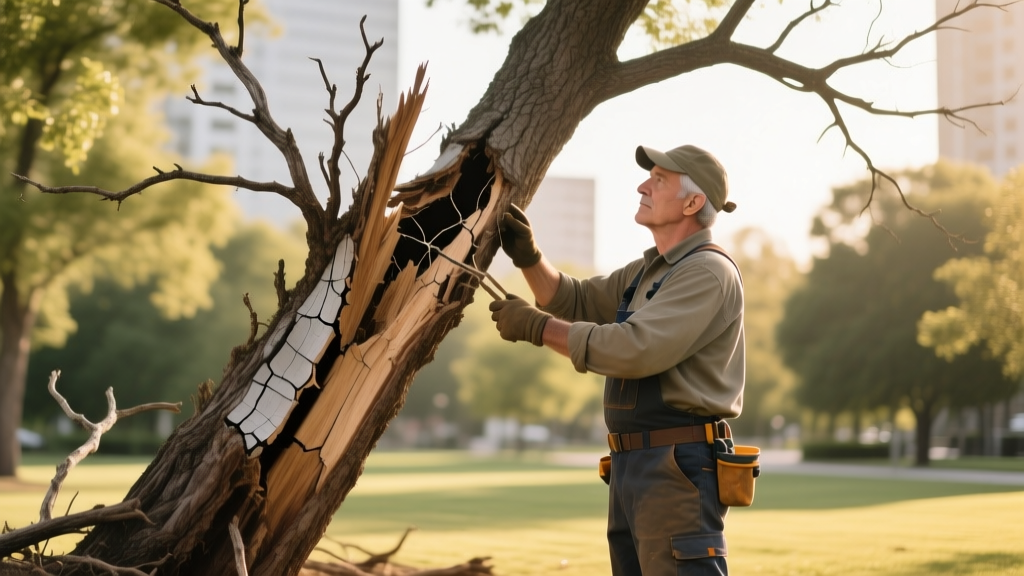
2026 Hazard Tree Assessment: Pruning Cracks & Deadwood
Emily WatsonPublished
Introduction to Hazard Tree Assessment in 2026
As we navigate the 2026 storm season, extreme weather events and shifting climate patterns have made proactive tree care more critical than ever. A compromised tree in your yard is not just an eyesore; it is a significant liability. Hazard tree assessment is the systematic process of evaluating trees for structural defects—specifically cracks, leans, and deadwood—that could lead to catastrophic failure. However, identifying the hazard is only the first step. The true art of arboriculture lies in applying the correct pruning methods and timing to mitigate these risks, extending the life of the tree while ensuring the safety of your property.
In this comprehensive guide, we will explore how to evaluate structural defects and leverage strategic pruning techniques to manage tree hazards effectively. Whether you are a homeowner looking to understand your landscape or a property manager planning your 2026 maintenance schedule, understanding the intersection of hazard assessment and pruning methodology is essential.
Evaluating Tree Hazards: Cracks, Leans, and Deadwood
Before any saw touches bark, a thorough visual tree risk assessment must be conducted. According to the University of Minnesota Extension, evaluating tree hazards requires a systematic look at the entire tree, from the root flare to the upper canopy.
Identifying Structural Cracks
Cracks are among the most dangerous defects because they indicate that the wood fibers have already failed under stress. When assessing a crack, you must determine its depth, length, and location. A crack that extends deep into the heartwood, especially one that runs vertically through a branch union (a "V-shaped" crotch), severely compromises the tree's structural integrity. If a crack is accompanied by fungal conks or sap flow, it indicates advanced internal decay. Measuring the crack width is crucial; in 2026 arboricultural standards, any crack wider than a quarter-inch that intersects with another defect often warrants immediate intervention.
Assessing Tree Lean and Root Plate Issues
Not all leans are hazardous. Trees that grow naturally toward a light source often develop reaction wood to support the lean. However, a recent or sudden lean is a massive red flag. Look for "root plate heaving"—soil mounding or cracking on the side opposite the lean. This indicates that the anchor roots are failing and the tree is actively uprooting. If the lean exceeds 15 degrees from vertical and shows signs of recent movement, pruning alone may not save the tree, but weight reduction can sometimes buy time for cabling or bracing systems to be installed.
Deadwood Evaluation and Crown Dieback
Deadwood is a natural part of a tree's lifecycle, but in a residential setting, it is a primary hazard. Large dead branches, often called "widowmakers," can drop without warning, especially during high winds or when weighed down by ice. Evaluate the size of the deadwood; branches larger than 3 inches in diameter pose a significant risk to targets below. Additionally, assess the overall crown. Extensive dieback (more than 30% of the canopy) suggests systemic health issues, meaning the tree lacks the energy to compartmentalize pruning wounds effectively.
Pruning Methods for Hazard Mitigation
Once hazards are identified, targeted pruning is the primary defense. The International Society of Arboriculture (ISA) emphasizes that pruning must be purposeful, especially when dealing with compromised trees.
Crown Cleaning and Deadwooding
Crown cleaning is the systematic removal of dead, diseased, detached, or broken branches. For hazard mitigation, deadwooding must be thorough. When removing a heavy dead limb, arborists use a three-cut method to prevent the bark from tearing down the trunk. In 2026, the use of specialized, lightweight battery-powered pole pruners allows for precise deadwooding high in the canopy without the soil compaction caused by heavy bucket trucks. Always cut just outside the branch collar to allow the tree to seal the wound properly.
Crown Thinning and Weight Reduction
If a tree has a hazardous lean or a heavily loaded, cracked limb, weight reduction pruning is vital. This involves selectively removing secondary and tertiary branches from the ends of the primary scaffolds. By reducing the "end weight" and the sail area of the canopy, you drastically decrease the leverage and wind load exerted on the cracked union or compromised root system. It is critical not to over-thin; removing more than 15% to 20% of the live foliage in a single season can stress the tree, triggering a flush of weak, fast-growing water sprouts that create new hazards.
Targeted Reduction Pruning for Crack Management
When a crack is identified in a specific limb, reduction pruning can alleviate the mechanical stress. By cutting the limb back to a smaller, lateral branch that is at least one-third the diameter of the removed portion, you redirect the growth and reduce the bending moment on the cracked area. This technique requires a deep understanding of tree biomechanics and should only be performed by an ISA Certified Arborist.
Timing Your Pruning for Maximum Safety
The timing of your pruning operations dictates how well the tree will recover and how effective the hazard mitigation will be.
- Dormant Season Pruning (Late Fall to Early Spring): This is the optimal time for major structural pruning, weight reduction, and crack management. Without leaves, the tree's architecture and defects are clearly visible. Furthermore, the risk of spreading pests and diseases (like oak wilt or Dutch elm disease) is minimal, and the tree has the entire spring growing season to compartmentalize the wounds.
- Summer Pruning (Active Growth): Light crown cleaning and deadwooding can be done in the summer. Summer pruning is also useful for slowing the growth of overly vigorous limbs that are contributing to a hazardous lean. However, avoid heavy reduction pruning during peak summer heat, as it can cause sunscald on previously shaded bark.
- Emergency Pruning: After a severe storm, immediate pruning is required to remove hanging or fractured limbs that pose an imminent threat to pedestrians or structures. Emergency cuts may not always be made at the ideal branch collar; the priority is immediate safety, with follow-up cleanup pruning scheduled for the dormant season.
2026 Hazard Assessment and Pruning Matrix
Use the following matrix to determine the appropriate pruning response based on your hazard assessment.
| Hazard Identified | Severity Level | Recommended Pruning Method | Optimal Timing |
|---|---|---|---|
| Minor Deadwood (< 3 inches) | Low | Routine Crown Cleaning | Anytime (Avoid spring sap flow) |
| Major Deadwood (> 3 inches) | High | Targeted Deadwooding with 3-cut method | Dormant Season |
| Vertical Crack in Branch Union | Severe | Weight Reduction & Subordination Pruning | Dormant Season (Immediate if target below) |
| Slight Lean (No root heaving) | Moderate | Asymmetrical Crown Thinning | Late Winter |
| Severe Lean (Root plate heaving) | Critical | None (Tree requires removal or cabling) | Immediate Assessment |
Advanced 2026 Tools for the Modern Arborist
The tools available for hazard assessment and pruning have evolved significantly. In 2026, sonic tomography devices are more accessible, allowing arborists to map internal decay and crack depth without drilling invasive holes. For the physical pruning, high-torque, lightweight lithium-ion chainsaws and pole pruners (such as the latest 2026 models from Stihl and Husqvarna) provide the power to drop heavy, cracked limbs safely while reducing operator fatigue and eliminating exhaust emissions in enclosed residential spaces. Hand pruning is still best achieved with high-carbon steel Japanese pull saws, which make exceptionally clean cuts that heal faster.
When Pruning Fails: Making the Tough Call
While pruning is a powerful tool for hazard mitigation, it is not a cure-all. If a tree features a massive trunk crack, extensive internal decay at the root flare, or a severe lean with failing anchor roots, no amount of pruning will make it safe. In these cases, the only responsible action is complete tree removal. Attempting to save a critically failed tree through excessive pruning often results in a dead, unstable snag that is far more dangerous and expensive to remove later.
Conclusion
Effective hazard tree assessment requires a keen eye for cracks, leans, and deadwood, coupled with a deep understanding of tree biomechanics. By applying the correct pruning methods—such as targeted deadwooding, crown cleaning, and strategic weight reduction—and timing these interventions correctly, you can mitigate risks and preserve your landscape's beauty and safety throughout 2026 and beyond. Always consult with an ISA Certified Arborist to ensure your hazard assessments and pruning plans meet the highest industry standards.