Tree Care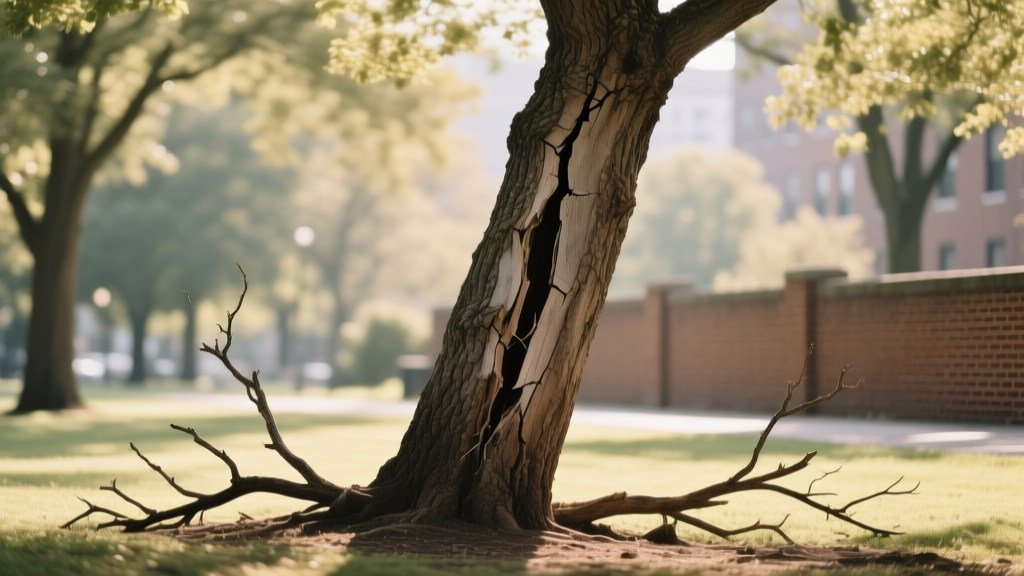
2026 Hazard Tree Assessment: Cracks, Leans & Fertilizer
Emily WatsonPublished
Introduction to Hazard Tree Assessment in 2026
As extreme weather events and shifting climate patterns continue to impact our landscapes in 2026, proactive tree care has never been more critical. A hazard tree assessment is the first line of defense against property damage and personal injury caused by failing trees. Homeowners and landscape professionals must regularly evaluate trees for structural defects such as trunk cracks, severe leans, and excessive deadwood. However, identifying the hazard is only half the battle. The underlying cause of many structural failures is directly tied to soil health and nutritional imbalances. By combining a rigorous visual risk assessment with a targeted, science-backed fertilizer schedule, you can mitigate risks, promote strong wood formation, and extend the safe lifespan of your most valuable canopy trees.
Identifying Structural Hazards: Cracks, Leans, and Deadwood
Before applying any soil amendments or fertilizers, you must accurately assess the physical condition of the tree. According to the Arbor Day Foundation, a tree becomes a hazard when it has a defect and a target (like a home, driveway, or play area) is present. Here is how to evaluate the three most common structural threats.
Evaluating Trunk Cracks and Splits
Cracks in the trunk or major scaffold branches indicate a severe compromise in the tree's structural integrity. These can be caused by frost damage, lightning strikes, or weak branch unions. In 2026, arborists emphasize that not all cracks are immediately fatal, but deep, penetrating cracks that cross the grain or are accompanied by fungal fruiting bodies (conks) require immediate attention. If a crack is superficial and the tree is otherwise vigorous, a targeted fertilization plan can help the tree compartmentalize the decay and produce reaction wood to stabilize the area.
Assessing Root Zone Leans
A sudden lean is a massive red flag, often indicating root failure or soil heaving. To assess a lean, look at the base of the trunk and the surrounding soil. If you see cracked, heaving soil on the side opposite the lean, or if the root flare is exposed and severed, the tree is likely uprooting. According to Penn State Extension, trees with a recent, severe lean and compromised root plates usually require removal. However, if a young or semi-mature tree has a gradual, natural lean and an intact root system, you can use specific root-stimulating fertilizers to encourage deeper anchorage and counteract the risk of windthrow.
Deadwood and Crown Dieback
Deadwood is a natural part of a tree's lifecycle, but excessive deadwood in the upper canopy (dieback) signals severe stress, often due to drought, root girdling, or nutrient starvation. Dead branches are highly susceptible to snapping during high winds. While pruning is the immediate remedy for deadwood, adjusting your fertilizer schedule is the long-term cure to restore canopy vigor and prevent future dieback.
The Link Between Soil Nutrition and Tree Hazards
It is a common misconception that all fertilizers make trees stronger. In reality, improper fertilization can directly cause structural hazards. For example, heavy applications of fast-release synthetic nitrogen (common in cheap lawn fertilizers) force trees to produce rapid, elongated, and weakly attached branches. This 'soft' growth is highly prone to cracking and splitting under the weight of snow or high winds. Conversely, a lack of essential nutrients like potassium and calcium leads to poor cell wall development, making the wood brittle and susceptible to disease-induced deadwood. In 2026, the best practice for hazard mitigation is to abandon high-nitrogen lawn feeds near the tree's dripline and instead utilize slow-release, low-nitrogen formulations paired with bio-stimulants.
2026 Fertilizer Types for Hazard Mitigation
When treating a tree that has shown early signs of structural stress (such as minor cracking or canopy thinning), the goal is to strengthen cell walls and promote deep root anchorage without triggering excessive top growth. Below is a comparison of the best fertilizer types for hazard mitigation in 2026.
| Fertilizer Type / NPK Ratio | Primary Benefit | Hazard Addressed | Estimated 2026 Cost |
|---|---|---|---|
| Mycorrhizal Root Inoculant | Expands root mass and improves soil anchorage | Gradual leans, shallow root systems, windthrow risk | $45 - $75 per treatment |
| Low-Nitrogen / High-Phosphorus (e.g., 5-10-10) | Stimulates deep root growth without weak top-growth | Uprooting risk, poor structural anchorage | $30 - $50 per 50lb bag |
| Potassium-Rich (e.g., 0-0-20 or Kelp Extract) | Thickens cell walls, improves drought/cold tolerance | Trunk cracking, frost splits, brittle deadwood | |
| Calcium & Boron Amendments | Essential for cell division and wood formation | Weak branch unions, included bark, splitting | $25 - $40 per application |
Strategic Fertilizer Schedules for Compromised Trees
To effectively reduce tree hazards, you must apply the right nutrients at the right time of year. A 2026 hazard-mitigation fertilizer schedule focuses on root health in the spring and wood hardening in the fall.
Early Spring (March - April): Soil Testing and Root Stimulation
Before applying any product, conduct a professional soil test. Once you have the results, address pH imbalances (most trees prefer a pH of 6.0 to 6.8). If the tree has a history of weak anchorage or minor leaning, apply a mycorrhizal root inoculant combined with a low-nitrogen, high-phosphorus fertilizer (like a 5-10-10 blend) via deep root injection. This encourages the tree to invest energy into its root plate rather than pushing out weak, vulnerable spring foliage.
Late Spring (May - June): Bio-Stimulants for Stress Recovery
If the tree has suffered from winter frost cracks or minor storm damage, apply a liquid kelp or humic acid bio-stimulant. These are not traditional NPK fertilizers; rather, they help the tree process nutrients more efficiently and produce the chemical compounds necessary to compartmentalize decay and seal off cracks.
Early Fall (September - October): Wood Hardening and Potassium Boost
As temperatures drop, trees naturally prepare for dormancy. This is the most critical time to apply a potassium-rich fertilizer (such as sulfate of potash or a specialized 0-0-20 arborist blend). Potassium regulates water uptake and strengthens the lignin in cell walls, directly reducing the risk of winter frost cracks and ensuring that the wood entering the harsh winter months is dense and resilient against ice loading.
When to Remove vs. When to Treat
While a precise fertilizer schedule can dramatically improve a tree's health and structural integrity over time, it cannot reverse severe mechanical failures. You must know when to call a certified arborist for removal. If a trunk crack extends deeper than the bark and into the heartwood, or if a lean has caused the soil to heave significantly, the tree is an imminent hazard. Similarly, if more than 30% of the canopy consists of deadwood, or if large fungal brackets are growing at the base, the internal decay is too advanced for nutritional intervention to save the tree. In 2026, the average cost for a TRAQ-certified (Tree Risk Assessment Qualification) arborist to conduct a formal hazard assessment ranges from $150 to $300. This is a worthwhile investment to determine whether your tree needs a specialized deep-root fertilization schedule or immediate, safe removal. By combining vigilant hazard assessment with targeted, low-nitrogen nutritional schedules, you can maintain a safer, healthier, and more resilient urban forest for decades to come.