Tree Care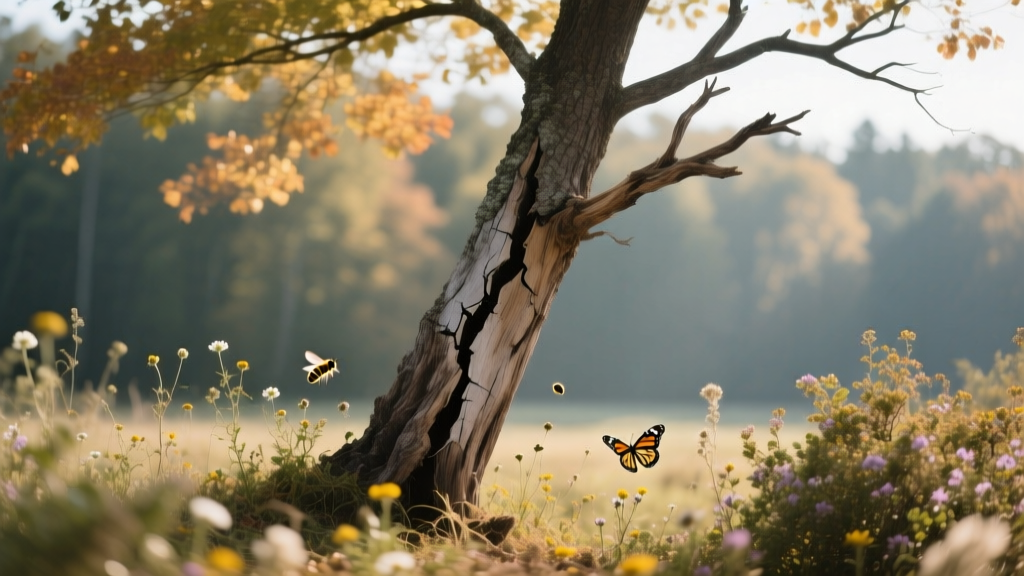
Hazard Tree Assessment 2026: Deadwood, Leans, and Pollinators
Emily WatsonPublished
Introduction to 2026 Hazard Tree Assessments
As we navigate the changing climate patterns of 2026, homeowners are increasingly recognizing that a perfectly manicured yard is often an ecological desert. The modern pollinator-friendly garden embraces the wild, the decaying, and the structurally imperfect. However, as extreme weather events become more frequent, balancing human safety with ecological stewardship is paramount. A hazard tree assessment is no longer just about identifying what to cut down; it is about evaluating cracks, leans, and deadwood to determine what can be safely preserved as vital habitat. In this comprehensive guide, we will explore how to conduct a thorough hazard tree assessment through the lens of pollinator-friendly garden design, ensuring your outdoor space is both safe for your family and welcoming to native bees, butterflies, and birds.
The Ecological Value of Flawed Trees
In traditional arboriculture, a tree with a significant lean, deep cracks, or extensive deadwood is immediately flagged for removal. But in a pollinator garden, these defects are often high-value real estate. The USDA Forest Service highlights that decaying wood and snags (standing dead trees) are essential for the life cycles of countless native species. Carpenter bees (Xylocopa) bore into deadwood to create nesting galleries, while bark beetles and fungi break down lignin, creating softwood that mason bees and solitary wasps utilize. Furthermore, peeling bark provides overwintering shelters for butterflies like the Mourning Cloak. When we evaluate a hazard tree in 2026, our goal is not automatic eradication, but rather risk mitigation. By understanding the mechanics of tree failure and manipulating the target zone—the area where a tree or branch would land if it fell—we can often retain ecologically crucial trees without compromising safety.
Step-by-Step Defect Evaluation
1. Assessing Structural Cracks
Cracks in a tree's trunk or major scaffold branches are primary indicators of structural failure. However, not all cracks are created equal. When conducting your assessment, differentiate between bark splitting (which is often superficial and caused by winter frost or rapid spring growth) and deep structural cracks that penetrate the cambium and heartwood. A structural crack that extends through more than one-third of the trunk's circumference is a severe hazard. In a pollinator garden, a cracked trunk is a haven for wood-boring insects, which in turn attract beneficial insectivorous birds. If the crack is localized to a single, heavy scaffold branch overhanging a patio or play area, the safest 2026 mitigation strategy is to selectively prune the offending branch back to the trunk collar. This removes the immediate target hazard while leaving the main trunk intact to serve as a towering pollinator hotel and vertical garden anchor.
2. Analyzing Tree Leans
A leaning tree can add dramatic architectural interest to a garden design, but it requires careful evaluation. First, determine if the lean is a natural growth response (phototropism) or a recent structural shift. Look at the base of the tree: is there soil heaving, root exposure, or cracking on the tension side of the lean? In 2026, with prolonged droughts followed by intense saturation events, root plate failures are increasingly common. If the lean is recent and the root plate is lifting, the tree is an imminent hazard. However, if the tree has grown with a gradual lean over decades and the root system is firmly anchored, it can be safely integrated into your landscape. To protect pollinator pathways, avoid planting dense, low-growing nectar plants directly beneath the leaning canopy. Instead, use the dripline edge to establish deep-rooted, drought-tolerant native shrubs like Ceanothus or Arctostaphylos, which stabilize the soil and provide blooms without placing human targets in the drop zone.
3. Deadwood and Snag Evaluation
Deadwood evaluation is the cornerstone of the pollinator-friendly hazard assessment. Dead branches, or widowmakers, hanging loosely in the canopy are unacceptable hazards and must be carefully removed by a professional. However, the main trunk of a declining or dead tree—a snag—is an ecological goldmine. According to the Xerces Society, leaving standing deadwood is one of the most impactful actions a gardener can take for native bee conservation. The challenge lies in the tree's height relative to its surroundings. A general rule of thumb for safe snag retention is that the height of the dead tree should not exceed the distance to the nearest human target (like a house, fence, or frequently used pathway). If a 60-foot dead oak is located 30 feet from your home, it is a hazard. In 2026, the preferred technique is snag creation or topping. An arborist can safely climb or use a crane to reduce the tree's height to 20 or 30 feet, well below the target distance, while leaving the lower trunk and major lower limbs intact for pollinators.
Matching Deadwood Types to Native Pollinators
Different pollinators require different stages of wood decay. Hard, recently dead wood (1 to 3 years) is preferred by carpenter bees and certain solitary wasps. Soft, punky wood (3 to 7 years) is utilized by bumblebees and beetles. By retaining a variety of deadwood stages in your garden's safe zones, you support a broader spectrum of biodiversity. When evaluating deadwood, note the species of the tree; native oaks, pines, and willows support the highest diversity of native insect life compared to non-native ornamentals.
2026 Climate Stressors and Sudden Branch Drop
Extreme heatwaves and erratic precipitation in 2026 have accelerated a phenomenon known as sudden branch drop, particularly in mature oaks, eucalyptus, and willows. This occurs when seemingly healthy, large branches fail without warning on hot, still afternoons. When assessing your trees, pay special attention to long, horizontal limbs with heavy end-weight. If these limbs extend over pollinator observation seating or high-traffic garden paths, they must be reduced or cabled. Do not rely on standard pruning; consult an arborist to perform weight-reduction cuts that maintain the limb's ecological value while shifting its center of gravity closer to the trunk.
Managing the Target Zone for Pollinator Safety
The target zone is the area that would be impacted if a tree or branch failed. By modifying the target zone, you can often save a hazardous tree. For example, if a leaning, decaying ash tree threatens a frequently used walkway, simply rerouting the walkway outside the tree's fall radius eliminates the human hazard. You can then plant a vibrant, pollinator-friendly meadow of native wildflowers (such as Solidago, Asclepias, and Echinacea) in the newly established drop zone. This transforms a liability into a thriving ecological sanctuary.
2026 Hazard Tree Assessment Matrix
| Defect Type | Risk to Target | Pollinator Value | 2026 Mitigation Strategy |
|---|---|---|---|
| Deep Trunk Crack | High if near structures | Moderate (bark crevices) | Cable/brace if possible, or remove branch over target |
| Recent Root Lean | Imminent Failure | High (exposed roots/soil) | Fell tree, retain trunk as ground-level nurse log |
| High Canopy Deadwood | Moderate (falling debris) | Low (too high for most bees) | Prune deadwood, leave lower trunk as snag |
| Gradual Natural Lean | Low (anchored roots) | Very High (sun exposure) | Keep tree, plant native shrubs at dripline edge |
When to Hire a TRAQ-Certified Arborist
While visual inspections are a great start, true hazard assessment requires professional expertise. The International Society of Arboriculture (ISA) offers the Tree Risk Assessment Qualification (TRAQ), a credential that ensures arborists are trained in the latest scientific methodologies for evaluating tree failure. In 2026, expect to pay between $150 and $350 for a comprehensive TRAQ assessment. This investment is crucial before making irreversible decisions about removing large, ecologically significant trees. An arborist can use advanced tools like sonic tomography to map internal decay without damaging the tree, providing a precise risk profile that balances safety with habitat preservation.
Conclusion
A pollinator-friendly garden in 2026 is a dynamic, living ecosystem that requires thoughtful management rather than sterile perfection. By mastering the principles of hazard tree assessment—evaluating cracks, analyzing leans, and strategically managing deadwood—you can protect your loved ones while providing indispensable sanctuary for native wildlife. Remember that a tree's structural flaws are often its greatest ecological assets. With careful target zone management and the guidance of certified professionals, your landscape can stand as a testament to the harmonious coexistence of human safety and environmental stewardship.