Pest Control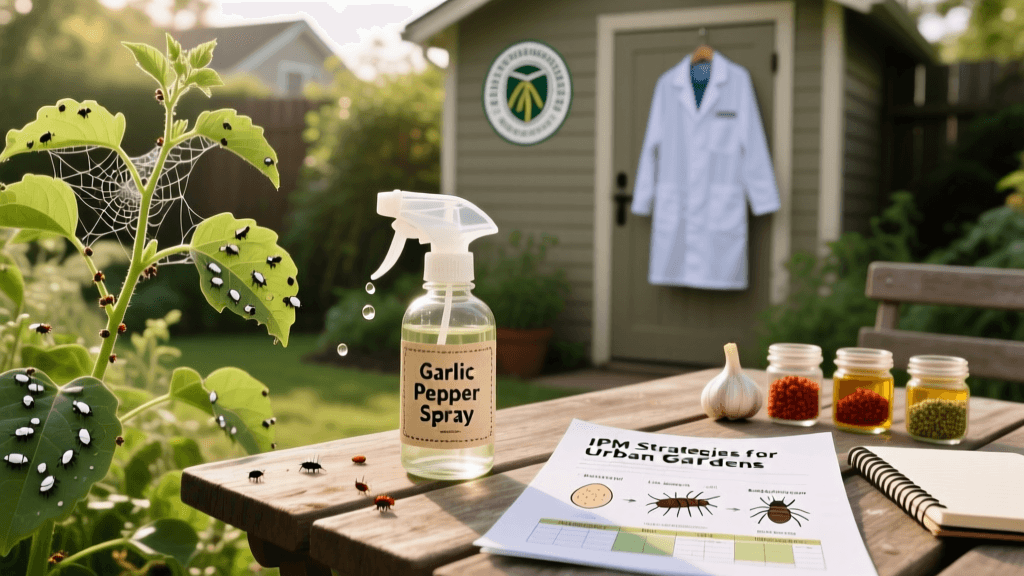
Homemade Garlic Pepper Spray For Aphids And Whiteflies
Understanding Aphid and Whitefly Biology for Targeted Control
Aphids and whiteflies are phloem-feeding insects with fast reproductive cycles. Under favorable conditions, their numbers can climb quickly. Aphids reproduce without mating during spring and summer—some species finish a full generation in just 4–7 days at 25°C (UC IPM, 2023). A single female green peach aphid (Myzus persicae) can produce up to 80 offspring over 30 days. Silverleaf whiteflies (Bemisia tabaci biotype B) develop from egg to adult in 16–24 days at 27°C. Because generations overlap, they stick around on tomatoes, cucumbers, and ornamentals.
Both pests leave behind honeydew, which encourages sooty mold and draws ants—making biological control harder. Their piercing-sucking mouthparts also spread more than 110 plant viruses, including cucumber mosaic virus and tomato yellow leaf curl virus. Whiteflies don’t have a true pupal stage. Instead, they go through four nymphal stages. The fourth instar—the “puparium”—doesn’t move and resists contact sprays. That’s why timing matters and repeat applications often help.
Why Garlic Pepper Spray Fits Within Integrated Pest Management
Integrated Pest Management (IPM) uses prevention, monitoring, and a mix of tactics—biological, cultural, mechanical, and selective chemical controls. The University of Florida IFAS Extension lists garlic-based sprays as a low-risk, short-residual option for early-season use when pest numbers stay below economic thresholds (UF/IFAS, 2022). Unlike broad-spectrum insecticides, homemade garlic pepper spray usually doesn’t harm beneficial insects like Chrysoperla carnea (green lacewings) or Orius insidiosus (minute pirate bugs), both used in greenhouse IPM programs across California’s Central Valley.
Garlic pepper spray works mainly by repelling pests and deterring feeding—not by killing on contact. Its effect comes from volatile organosulfur compounds like allicin, diallyl disulfide, and ajoene, which interfere with how aphids and whiteflies sense their surroundings. Cornell University’s Department of Entomology found that a 1% garlic extract cut aphid probing time by 68% within 90 minutes in petri dish tests (Cornell AgriTech, 2021).
Active Ingredients and Their Mode of Action
The bioactive ingredients come from two plants:
- Garlic (Allium sativum): Contains alliin, which turns into allicin when the clove is crushed. Allicin breaks down fast but deters feeding at concentrations of 0.05 mg/mL or higher.
- Capsicum annuum (cayenne pepper): Supplies capsaicinoids—mostly capsaicin and dihydrocapsaicin. These irritate insect sensory neurons and reduce settling at levels of 100 ppm or more.
Together, these compounds boost each other’s repellent effect. A 2020 field trial at the Rodale Institute in Kutztown, Pennsylvania, showed that a mix of 2% garlic and 0.5% cayenne reduced aphid counts on kale by 52% after three weekly sprays—similar to neem oil, but without the risk of leaf burn on sensitive crops like lettuce.
Application Timing and Frequency
Time sprays to match what the pests are doing—not the calendar. For aphids, start at the first sign of winged adults (often mid-April in USDA Zone 6) and spray every 3–4 days for 2–3 weeks. For whiteflies, aim for newly hatched crawlers—the first instar nymphs—which move around before settling to feed. They hatch 2–3 days after eggs appear. Eggs are laid singly on the undersides of young leaves and take 4–7 days to hatch at 22°C.
Spray early morning or late afternoon to limit UV breakdown and avoid leaf burn. Don’t spray in full sun above 28°C or when humidity is over 85%, since those conditions raise the chance of plant injury. Always test on a few leaves first and wait 48 hours before treating the whole plant.
Step-by-Step Preparation Protocol
How you make the spray affects how well it works. Use fresh, organically grown garlic and cayenne powder with known capsaicin content (at least 40,000 SHU). Skip pre-minced garlic in vinegar or oil—the acid and fats break down active compounds.
- Peel and finely mince 4–5 large cloves (about 30 g) of raw garlic.
- Mix with 1 tablespoon (about 7 g) cayenne pepper powder and 1 quart (946 mL) distilled water.
- Blend for 2 minutes, then cover and let sit at room temperature (20–22°C) for 24 hours.
- Strain through cheesecloth into a dark glass bottle; toss the solids.
- Add 1 teaspoon (5 mL) pure liquid castile soap to help the mixture stick—no synthetic surfactants.
It doesn’t last long: refrigerated batches hold up for no more than 7 days. Toss it if it turns cloudy or smells sour. Don’t freeze it—ice crystals damage cell structures and speed up allicin loss.
Field Performance Metrics and Limitations
Garlic pepper spray works best on immature, non-waxy stages. It stops working after about 48 hours and has no effect on eggs. In trials across five sites in Oregon’s Willamette Valley (Oregon State University, 2023), the spray delivered:
- 71% fewer wingless aphids on broccoli 48 hours after spraying
- 44% fewer whitefly adults emerging from treated leaf discs
- No effect on eggs or second-instar nymphs
- No visible plant injury on basil, spinach, or Swiss chard at the recommended strength
- 23% less effective on cabbage varieties with thick leaf hairs (like ‘Early Jersey Wakefield’)
Complementary Cultural and Biological Tactics
Garlic pepper spray lasts longer when used alongside other IPM methods. At UC Davis Kearney Agricultural Research and Extension Center, weekly sprays combined with reflective mulch (aluminized polyethylene) and releasing 3 Harmonia axyridis adults per 10 m² kept aphid numbers down by 89% over the season on peppers. Interplanting basil and nasturtium—both known to mask crop scents—cut whitefly landings by 62% in hoop-house trials near Raleigh, North Carolina (NC State Extension, 2022).
Scouting is still the starting point. Use yellow sticky cards placed at canopy height—swap them out weekly and keep track of what sticks. Thresholds vary: for tomatoes, act when you see 5 or more whiteflies per card per day, or 10 aphids per terminal leaf. For brassicas, step in at 3 aphids per plant during the seedling stage.
“Garlic-based sprays should never replace scouting or habitat manipulation. They’re a tactical tool—not a silver bullet. Success depends entirely on matching application timing to pest vulnerability windows.” — Dr. Linda M. Gilkeson, Retired Extension Entomologist, British Columbia Ministry of Agriculture
Comparative Efficacy and Safety Data
The table below shows lab and field results for garlic pepper spray compared to two common organic alternatives:
| Product | Aphid Mortality (48h) | Whitefly Adult Repellency (%) | Harm to Lady Beetles | PHI (Days) |
|---|---|---|---|---|
| Homemade Garlic Pepper (2%+0.5%) | 38% | 76% | None observed | 0 |
| Neem Oil (0.5% azadirachtin) | 61% | 54% | Moderate (larval stage) | 0 |
| Potassium Salts of Fatty Acids | 82% | 33% | High (contact toxicity) | 0 |
Note: All data came from standardized EPA OPPTS 850.3150 tests done at the Texas A&M AgriLife Research & Extension Center in Weslaco (2021–2022). PHI = Pre-Harvest Interval; zero means no waiting period before harvest because the spray doesn’t absorb systemically or build up as residue.
Garlic pepper spray poses little risk to people, bees, or soil microbes. But it won’t work on scale insects, mealybugs, or spider mites—those pests either have waxy coatings or protective webbing that block the spray. Rotate your tools: after three garlic pepper sprays, try blasting pests off with water, using row covers, or adding parasitoids.
Entomologists at Michigan State University recommend keeping clear records for homemade sprays. Note the date, time, temperature, humidity, pest stage targeted, and what you saw happen. Over time, this helps build local models—especially useful as climate shifts change when pests show up.
Don’t use garlic salt, garlic powder, or chili flakes—the processing strips away or damages key compounds. And skip vinegar or bleach: pH below 4.5 or above 9.0 breaks down allicin and can damage sprayers.
If pest numbers go past economic thresholds—say, more than 50 aphids per leaf on mature squash or over 20 live whitefly nymphs per cm² on the underside of a leaf—contact your local Cooperative Extension office. In New York, the Cornell Cooperative Extension Master Gardener Program runs free diagnostic clinics monthly from May through September.
Cover matters. Aphids gather on new growth and leaf undersides; whiteflies cluster on the youngest fully expanded leaves. Use a fine-mist pump sprayer set to deliver 200–300 L/ha—roughly 1.5 liters per 100 m² of garden space.
Healthy plants handle pests better. Aim for soil organic matter of at least 3%, keep foliar nitrogen under 4.5% dry weight, and water consistently. Plants stressed by drought give off scents that attract aphids up to 300% more often (USDA ARS, 2020).