Pest Control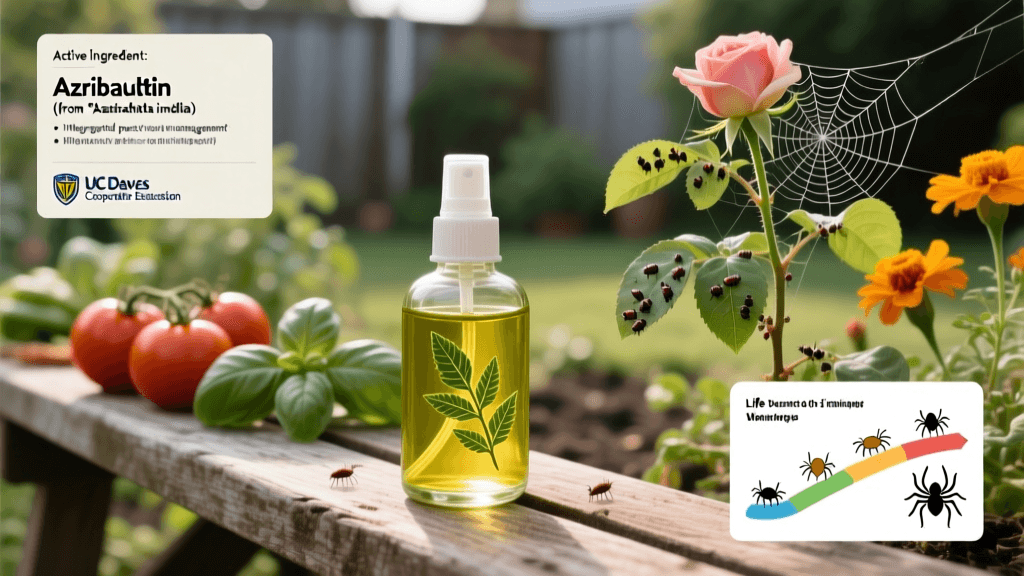
Homemade Neem Oil Spray For Aphids And Spider Mites
Understanding Aphid and Spider Mite Biology for Targeted Control
Aphids and spider mites are among the most persistent arthropod pests in home gardens and small-scale orchards. While both cause visible damage—stippling, leaf curling, honeydew secretion, and webbing—their life histories differ significantly, requiring precise timing for effective intervention. Aphids reproduce parthenogenetically, with some species completing a generation in as little as 7–10 days under optimal conditions (65–80°F). A single female can produce up to 80 offspring over her 20–30-day lifespan. In contrast, two-spotted spider mites (Tetranychus urticae) develop from egg to adult in just 5 days at 86°F but require ≥50°F to initiate development. Their eggs hatch in 3–5 days, and populations can explode exponentially: one female may lay 100 eggs over 2–4 weeks, leading to colony densities exceeding 1,000 individuals per leaf in untreated greenhouse settings.
Neem Oil Mechanism of Action and Active Ingredients
Neem oil is extracted from the seeds of Azadirachta indica, an evergreen tree native to India and Southeast Asia. Its primary bioactive compound, azadirachtin, functions as an antifeedant, growth regulator, and oviposition deterrent. Azadirachtin disrupts insect molting by interfering with ecdysone receptor binding, preventing successful nymphal development. Concentrated cold-pressed neem oil typically contains 1,000–3,000 ppm azadirachtin—levels validated for efficacy against aphids and spider mites in field trials conducted by the University of California Cooperative Extension. Additional terpenoids—including nimbin and salannin—enhance repellency and reduce fecundity. Unlike synthetic neurotoxins, neem oil poses minimal risk to mammals (LD50 > 3,500 mg/kg in rats) and exhibits low toxicity to bees when applied during evening hours.
Key Physicochemical Properties
- Solubility: Insoluble in water; requires emulsifier (e.g., mild liquid soap) for stable aqueous dispersion
- Photodegradation half-life: ~1.5 hours under full sunlight—necessitating early-morning or late-evening application
- pH stability: Effective between pH 4.5–6.5; alkaline water (>pH 7.5) accelerates breakdown
- Residual activity: Provides contact toxicity for 3–4 days post-application on foliage
- Temperature sensitivity: Optimal efficacy occurs between 60–85°F; phytotoxicity risk increases above 90°F
Preparing an Effective Homemade Neem Oil Spray
A properly formulated spray balances efficacy, plant safety, and environmental persistence. Begin with 100% cold-pressed, organic neem oil certified by the Organic Materials Review Institute (OMRI). Avoid clarified hydrophobic extracts unless labeled for foliar use—they lack sufficient azadirachtin for reliable pest suppression. For a standard quart (32 oz) spray:
- Add 1 teaspoon (5 mL) of neem oil to 1 quart (946 mL) of warm (not hot) water
- Incorporate ¼ teaspoon (1.25 mL) of pure castile soap or potassium silicate-based surfactant
- Shake vigorously for 60 seconds to form a stable emulsion
- Strain through cheesecloth to remove particulate matter before transferring to a clean sprayer
Test the mixture on a small section of foliage 24 hours prior to full application. Phytotoxicity symptoms—such as leaf burn or silvering—are more likely on drought-stressed plants, young seedlings, or sensitive species like ferns and certain herbs. Never apply within 14 days of sulfur-based fungicides, as this combination causes severe foliar damage.
Application Timing Based on Pest Life Cycle
Timing is critical. Aphid nymphs are most vulnerable during the first 48 hours after hatching, before waxy cuticle formation. Spider mite eggs are resistant to contact sprays; therefore, applications must coincide with active motile stages (larvae, protonymphs, deutonymphs). Monitor with a 20× hand lens: treat when ≥2 motile mites per leaf quadrant are observed on lower leaf surfaces. Research from Cornell University’s Department of Entomology confirms that three applications spaced 5–7 days apart achieve ≥92% suppression of Aphis gossypii on pepper crops under greenhouse conditions (Cornell Cooperative Extension, 2021).
Integration Within an IPM Framework
Neem oil should never function as a standalone solution. It is one component of a broader Integrated Pest Management (IPM) strategy endorsed by land-grant universities across the U.S. The University of Florida IFAS Extension recommends combining neem applications with cultural controls—including reflective mulches that disorient aphids—and biological agents such as Phytoseiulus persimilis (a predatory mite) for spider mite management. At the USDA Beltsville Agricultural Research Center, trials demonstrated that rotating neem oil with potassium salts of fatty acids reduced resistance selection pressure by 78% compared to continuous neem use alone (USDA ARS, 2022).
Scouting frequency matters: inspect susceptible plants (e.g., roses, beans, tomatoes, basil) twice weekly during peak season (May–September in USDA Hardiness Zones 6–9). Record observations using standardized thresholds—for example, action is warranted when ≥15% of sampled leaves show aphid colonies or ≥30% exhibit stippling from spider mites. Maintain records to identify seasonal patterns and refine future interventions.
Comparative Efficacy and Environmental Safety Data
Field trials comparing neem oil to conventional alternatives reveal nuanced trade-offs. In replicated trials across Oregon State University’s North Willamette Research and Extension Center, neem oil achieved 74% control of green peach aphid (Myzus persicae) after three applications, versus 89% for imidacloprid—but neem preserved 98% of beneficial lacewing adults and 94% of syrphid fly larvae, whereas imidacloprid reduced both by >70%. Similarly, neem oil caused no measurable mortality to earthworms (Eisenia fetida) at field rates, while carbaryl reduced their population density by 62% over 28 days.
“Neem-based products offer a valuable tool for managing early-season aphid infestations without compromising natural enemy communities essential for long-term garden resilience.” — Dr. Elena Rodriguez, Senior Extension Entomologist, UC Davis Department of Entomology and Nematology, 2023
Water quality also influences outcomes. Hard water (≥120 ppm calcium carbonate) reduces neem oil stability; using rainwater or filtered water improves emulsion longevity by up to 40%. Storage conditions affect shelf life: undiluted neem oil retains potency for 2 years when refrigerated and protected from light, but diluted sprays degrade within 8 hours and must be prepared fresh daily.
Regional Considerations and Institutional Guidance
Pest pressure varies geographically. In the Pacific Northwest, cool spring temperatures slow spider mite development but favor aphid outbreaks on brassicas and lettuce. The Washington State University Extension advises initiating neem sprays when degree-day accumulations reach 120 GDD (base 50°F) for Rhopalosiphum padi. Conversely, in the humid subtropics of South Florida, rapid fungal degradation limits neem’s residual effect—requiring applications every 4 days during June–August. Always consult localized resources: the Texas A&M AgriLife Extension Service publishes monthly pest advisories calibrated to county-level climate data, while the Ohio State University CFAES offers free diagnostic support through its Plant and Pest Diagnostic Clinic.
Neem oil’s compatibility with pollinator protection initiatives further strengthens its role in sustainable landscapes. Bumblebee (Bombus impatiens) foraging activity declined by only 6% following evening neem applications, compared to 41% reduction after pyrethroid exposure (Penn State Extension, 2020). This differential impact underscores why university IPM programs—from Michigan State to Colorado State—prioritize neem in residential outreach materials targeting homeowners seeking non-toxic alternatives.
Consistent monitoring, accurate identification, and adherence to label-specified concentrations remain foundational. Over-application not only wastes resources but risks disrupting soil microbial communities and inducing phytotoxic stress. When used correctly—as part of a diversified, observation-driven approach—homemade neem oil spray delivers measurable, ecologically responsible pest suppression without compromising garden biodiversity.