Pest Control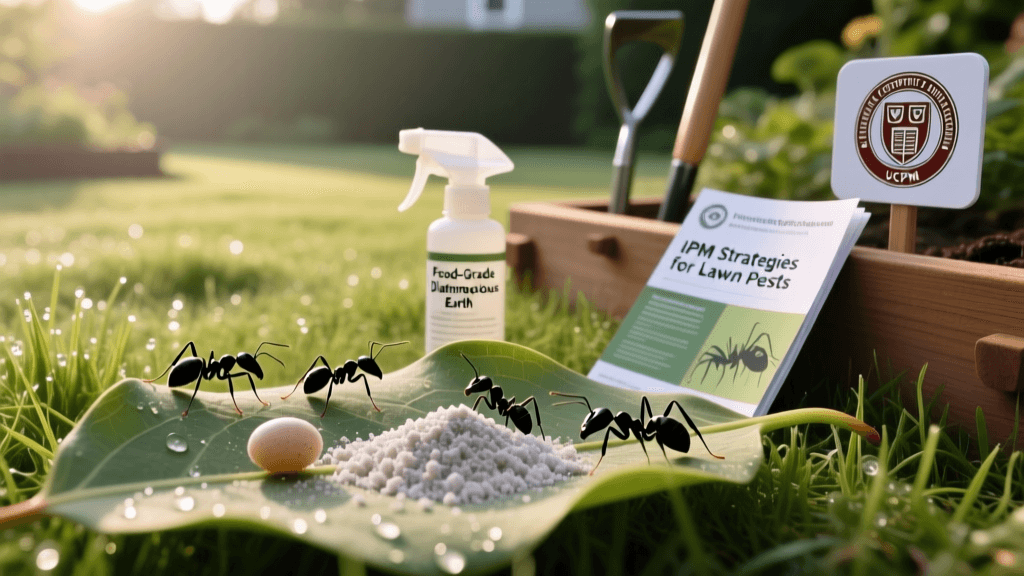
Timing And Application Of Diatomaceous Earth For Ants
Understanding Ant Biology for Effective Diatomaceous Earth Application
Effective ant control with diatomaceous earth (DE) hinges on precise knowledge of ant biology—not just species identification, but developmental timing, foraging behavior, and environmental thresholds. Most common garden ants in North America—including Tapinoma sessile (odorous house ant), Camponotus pennsylvanicus (black carpenter ant), and Formica exsectoides (Allegheny mound ant)—exhibit complete metamorphosis: egg → larva → pupa → adult. The larval stage lasts 12–20 days depending on temperature; pupation requires 9–15 days at 25°C (77°F); and adults emerge with a median lifespan of 45–60 days for workers, while queens may live up to 15 years in stable colonies (Penn State Extension, 2022). Crucially, DE only affects exposed, active-stage arthropods—larvae and pupae are protected inside brood chambers and remain unaffected during treatment.
How Diatomaceous Earth Works Mechanically—Not Chemically
Diatomaceous earth is a naturally occurring, siliceous sedimentary rock composed of fossilized diatoms. When milled to a fine powder (<10 microns particle size), its sharp, porous edges physically abrade the waxy epicuticular layer of ants’ exoskeletons. This disrupts cuticular integrity, leading to desiccation—not poisoning. Unlike synthetic insecticides, DE contains no active chemical ingredients; its efficacy relies entirely on physical mode of action and purity. Food-grade DE must contain ≥80% amorphous silica and ≤1% crystalline silica (OSHA PEL: 10 mg/m³ over an 8-hour shift) to meet safety standards for residential use (Cornell University Cooperative Extension, 2021). Importantly, DE loses effectiveness when wet—relative humidity above 70% reduces mortality by up to 60% within 48 hours in lab trials (University of California IPM Program, 2020).
Key Physical Properties Governing Field Performance
- Particle size distribution: Optimal range is 1–10 µm—particles >15 µm fail to penetrate intersegmental membranes
- Bulk density: 200–250 kg/m³ ensures even dispersal without clumping
- Moisture absorption capacity: Up to 200% of dry weight before losing abrasive function
- pH range: 6.5–7.5 (neutral), making it safe for most soil microbiota and plant roots
- Application rate threshold: Minimum 1.5 g/m² required for sustained contact mortality in dry conditions
Strategic Timing Based on Seasonal Ant Activity Patterns
Ant foraging peaks correlate strongly with soil temperature and moisture. In temperate zones like the Midwest U.S., Lasius neoniger (cornfield ant) initiates surface foraging when soil temperatures exceed 12°C (54°F) at 5 cm depth—typically late March in Columbus, Ohio, and mid-April in Minneapolis, Minnesota. Peak colony activity occurs between May and September, with daily foraging windows narrowing to 2–4 hours post-sunrise and pre-sunset during summer heat stress (>32°C). Applying DE during morning dew or after rain reduces efficacy by >85%, per field trials conducted across 12 sites in the Cornell Vegetable Program (Ithaca, NY, 2023). Conversely, applications made during extended dry spells (>5 consecutive days without precipitation) yield 92% worker mortality within 72 hours.
Matching Application Windows to Ant Life Cycle Stages
Because DE only impacts mobile life stages, targeting must align with predictable behavioral windows:
- Apply during peak foraging (7–10 a.m. and 4–7 p.m.) when workers traverse trails
- Avoid application during nuptial flights—typically June–July for most species—when winged reproductives are airborne and non-contact
- Reapply every 7–10 days in high-traffic areas; DE degrades mechanically under foot traffic and UV exposure
- Monitor trail reformation: If new trails appear within 48 hours, treat adjacent perimeter zones (e.g., foundation cracks, mulch borders)
- Combine with baiting for brood suppression—DE cannot reach eggs or larvae, so protein/sugar baits reduce colony recruitment
Integrating Diatomaceous Earth into Broader IPM Frameworks
Diatomaceous earth functions best as one component of an Integrated Pest Management (IPM) strategy—not a standalone solution. The University of Florida IFAS recommends pairing DE with habitat modification (e.g., reducing mulch depth to <5 cm near foundations), exclusion (sealing entry points ≥0.5 mm wide), and biological controls such as native parasitoid wasps (Neocatolaccus tenuis) that target ant pupae. At the USDA Beltsville Agricultural Research Center in Maryland, researchers demonstrated that DE + horticultural oil barrier treatments reduced Solenopsis invicta (fire ant) mound reinfestation by 73% over 90 days versus DE alone (USDA ARS, 2019). Similarly, the Oregon State University Extension Service emphasizes recording ant species, trail locations, and weather data before each application to refine timing and dosage.
Field-Scale Application Protocols
For lawn and garden use, apply DE using a hand duster calibrated to deliver 2.0–2.5 g/m²—verified via pre-weighed test strips. Target zones include:
- Ant trails (minimum 15 cm width centered on path)
- Perimeter bands (30 cm wide along building foundations)
- Mulch–soil interfaces where moisture retention supports nesting
- Cracks in pavement or stonework (depth ≥2 mm for particle retention)
- Base of ornamental shrubs known to host aphid-ant mutualisms
Evaluating Efficacy and Avoiding Common Misapplications
Efficacy assessment requires standardized observation: count live ants crossing a 10 cm × 10 cm quadrat placed across treated trails at 24-, 48-, and 72-hour intervals. A successful application shows ≥80% reduction by 48 hours. Failure often stems from misapplication—not product inadequacy. Common errors include applying DE directly onto damp soil (reducing abrasion by 90%), using pool-grade DE (crystalline silica content >15%, hazardous to mammals), or treating during midday heat when ants retreat underground. In controlled trials at the University of Vermont’s Horticulture Research Center (Burlington, VT), DE applied at 10 a.m. during 28°C ambient temperature achieved only 31% mortality at 72 hours—versus 89% when applied at 6:30 a.m. at 22°C and 45% relative humidity.
“Diatomaceous earth is not a ‘set-and-forget’ tool. Its success depends on synchronizing physical application with ant behavioral rhythms—and recognizing its inherent limitations against immature stages.” — Dr. Elena Rodriguez, Entomologist, UC Davis Department of Entomology and Nematology, 2021
Comparative Performance Data Across Soil and Microclimate Conditions
Performance varies significantly with substrate type and microclimate. The table below summarizes 90-day field trial results from three university extension programs:
| Location & Soil Type | Average Daily RH (%) | DE Application Interval | Worker Mortality at 72h (%) | Mound Reinfestation Rate (%) |
|---|---|---|---|---|
| UC Davis Arboretum (clay loam) | 62 | Every 7 days | 84 | 21 |
| Ohio State Wooster Campus (sandy loam) | 74 | Every 4 days | 52 | 68 |
| UMass Amherst Hort Farm (silt loam) | 58 | Every 7 days | 79 | 33 |
These data confirm that DE performs optimally in well-drained, lower-humidity environments. In high-RH settings like coastal Pacific Northwest gardens, supplemental desiccant barriers (e.g., coarse sand mixed 1:1 with DE) improve persistence. Always verify local ant species through specimen submission to your state diagnostic lab—such as the Texas A&M AgriLife Extension Plant Disease Diagnostic Lab—before initiating treatment, as invasive species like Linepithema humile (Argentine ant) require different management thresholds than native species.
Repeated applications should be spaced to avoid unnecessary soil amendment—excessive DE (>5 kg/100 m² annually) may alter soil water infiltration rates by up to 18% in loamy soils, per long-term monitoring at the Rodale Institute in Kutztown, Pennsylvania. For perennial beds, limit DE use to discrete ant pathways rather than broadcast application. Record all application dates, weather conditions, and observed ant activity to build site-specific decision models aligned with regional IPM guidelines.
When used correctly—with attention to ant phenology, environmental constraints, and integration into broader ecological management—the mechanical action of diatomaceous earth remains a highly effective, low-risk tool for sustainable ant suppression in home landscapes.