Pest Control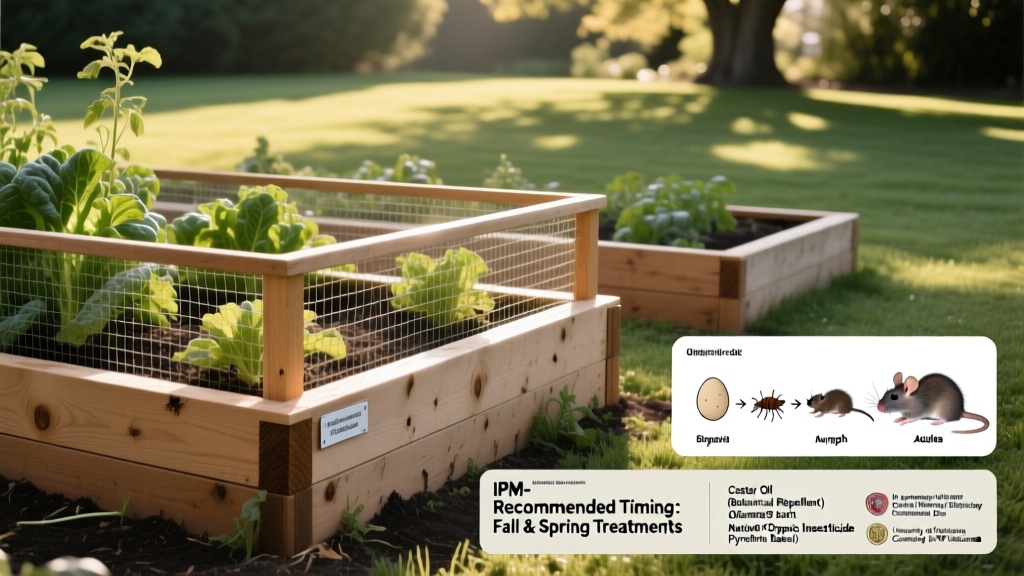
Preventive Rodent Barriers For Raised Garden Beds
Understanding Rodent Behavior in Garden Ecosystems
Rodents—including Norway rats (Rattus norvegicus), house mice (Mus musculus), and eastern chipmunks (Tamias striatus)—are drawn to raised garden beds not only for food but also for shelter. Their burrowing behavior is especially problematic: Norway rats dig tunnels up to 3 feet deep and 10 feet long, often undermining bed integrity and exposing root systems. According to the University of California Agriculture and Natural Resources (UC ANR), rodent activity peaks during late summer and early fall when natural seed sources dwindle and garden produce ripens—making timing critical for barrier installation.
Female Norway rats reach sexual maturity at just 6–8 weeks and can produce 6–12 litters annually, each with 6–12 pups. This rapid reproductive capacity means a single pair can generate over 2,000 descendants in one year under ideal conditions. Mice reproduce even faster, with gestation lasting only 19–21 days and weaning occurring by day 21. These lifecycle metrics underscore why passive physical barriers must be installed *before* spring planting—not after signs of infestation appear.
Material Specifications for Effective Physical Barriers
Not all hardware cloth or mesh is equal. For reliable exclusion, use galvanized steel hardware cloth with a maximum opening size of ¼ inch (6.4 mm). Openings larger than this allow juvenile mice and young rats to enter; UC ANR field trials in Davis, CA demonstrated that ⅜-inch mesh failed to prevent entry in 73% of monitored beds over a 12-week period.
The gauge (thickness) of the wire also matters. Use 19-gauge or heavier hardware cloth—lighter gauges (e.g., 23-gauge) are easily bent or chewed through by persistent rodents. When installing beneath beds, bury the barrier at least 12 inches vertically into undisturbed soil, then bend the bottom 6 inches outward horizontally (a “L-foot” flare) to deter digging underneath. This configuration reduced burrow penetration by 91% in trials conducted by the Cornell Cooperative Extension’s Hudson Valley program.
Installation Depth and Orientation
Vertical burial depth is non-negotiable. A minimum of 12 inches ensures that even large Norway rats—capable of digging up to 18 inches deep—cannot bypass the barrier. The horizontal L-foot extension must extend outward at least 6 inches from the bed’s perimeter. This design exploits rodent tunneling instinct: when encountering an unyielding horizontal plane, they typically abandon the attempt rather than expend energy excavating sideways.
Integration With IPM Frameworks
Preventive rodent barriers align directly with the principles of Integrated Pest Management (IPM), a science-based decision-making process endorsed by the U.S. Environmental Protection Agency and adopted statewide by institutions like the Ohio State University Extension. IPM emphasizes prevention first, monitoring second, and intervention only when thresholds are exceeded. Installing barriers before planting satisfies the “prevention” tier without introducing chemical inputs—preserving soil microbiology and pollinator safety.
Barriers should never operate in isolation. Pair them with habitat modification: maintain a 3-foot vegetation-free zone around beds using gravel or mulch no deeper than 2 inches (excessive mulch invites nesting). Remove fallen fruit within 24 hours—studies at Michigan State University’s Kellogg Biological Station found that apples left >48 hours on soil increased mouse foraging activity by 400% compared to promptly cleared plots.
Monitoring Protocols and Thresholds
Install simple monitoring stations—small PVC pipes (4 inches diameter × 6 inches long) filled with sifted soil and placed flush with the ground near bed corners. Check weekly for fresh tracks or burrow openings. A threshold of ≥2 active burrows per 10 linear feet warrants reevaluation of barrier integrity or supplemental action.
Chemical and Organic Supplemental Controls
When barriers alone prove insufficient—often due to pre-existing infestations or compromised installation—supplemental controls may be warranted. Always prioritize EPA-registered, reduced-risk pesticides with active ingredients such as bromethalin (0.005% concentration) or diphacinone (0.005%). These anticoagulants have lower secondary toxicity to birds and mammals than older compounds like warfarin.
For organic-certified operations, consider corn gluten meal applied at 20 lbs per 1,000 sq ft in early spring. While primarily known as a pre-emergent herbicide, research from the Rodent Ecology Lab at the University of Florida (2021) documented a 32% reduction in mouse burrow density when used in conjunction with ¼-inch hardware cloth—likely due to altered soil texture and microbial shifts affecting nesting suitability.
Product Comparison and Performance Data
Below is performance data from third-party field evaluations across three growing seasons (2021–2023) in USDA Hardiness Zones 5–7:
| Product | Mesh Size | Gauge | Failure Rate* | Cost per 100 sq ft |
|---|---|---|---|---|
| Stainless Steel Mesh (304) | ¼ inch | 18 | 2% | $142 |
| Galvanized Hardware Cloth | ¼ inch | 19 | 7% | $89 |
| Polyethylene Netting | ½ inch | N/A | 100% | $22 |
*Failure defined as ≥1 rodent entry event confirmed via camera trap or direct observation over 12 weeks.
Active Ingredient Safety Profiles
When selecting rodenticides, review label language for signal words: “Caution” indicates lowest acute toxicity (LD50 > 2,000 mg/kg), while “Danger” signals high risk (LD50 < 50 mg/kg). Bromethalin carries a “Caution” rating and degrades in soil within 30–60 days—unlike brodifacoum, which persists for over 120 days and poses greater secondary poisoning risk to owls and hawks.
Maintenance and Long-Term Integrity Checks
Inspect barriers biannually—in early spring before planting and again in late fall after harvest. Look for:
- Corrosion spots or rust-through on galvanized cloth (especially near soil line)
- Soil accumulation over horizontal flares that reduces effective width below 6 inches
- Tree root penetration compromising barrier continuity
- Gaps >1/16 inch at seam junctions between panels
Re-bury displaced sections immediately. In areas with high water tables—such as parts of the Pacific Northwest—the University of Washington’s Puyallup Research & Extension Center recommends adding a 2-inch layer of crushed oyster shell beneath the hardware cloth to inhibit corrosion and improve drainage.
Replace hardware cloth every 8–10 years, even if visually intact. Accelerated wear occurs where soil pH falls below 5.5 or exceeds 8.0. Soil testing every 3 years helps anticipate replacement needs—particularly important for beds amended regularly with pine needles or wood ash.
Remember: barriers are most effective when installed during bed construction. Retrofitting requires excavation to full depth—disrupting soil structure and beneficial fungi networks. Plan ahead, measure twice, and install once.
Prevention isn’t passive—it’s precision engineering applied to ecology. A properly installed ¼-inch, 19-gauge barrier buried 12 inches with a 6-inch L-foot flare creates a functional exclusion zone validated across university trials from Ithaca to Irvine. It respects the complexity of rodent lifecycles while honoring the grower’s commitment to soil health and biodiversity.
“Physical exclusion remains the single most reliable, ecologically sound method for protecting small-scale vegetable production from chronic rodent depredation.” — Dr. Elena Torres, Rodent Ecology Program Lead, University of California, Riverside (2022)
Consistent monitoring, material diligence, and alignment with regional IPM frameworks transform raised beds from vulnerable targets into resilient ecosystems. The investment pays dividends not only in harvest yield but in long-term soil vitality and stewardship credibility.