
Landscaping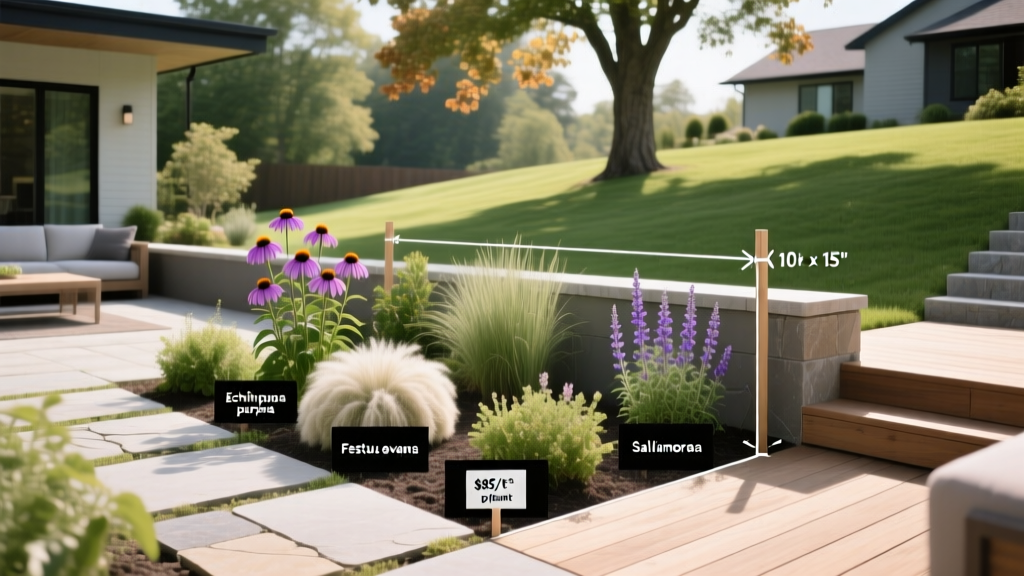
How To Add Curb Appeal With Simple Landscaping
First Impressions Start at the Property Line
Curb appeal is everything a visitor or passerby sees before they reach your front door. It includes the lawn, plants, walkways, lighting, and how those elements fit with the house itself. A well-designed front yard doesn’t need to be expensive or fancy — it just needs to feel thought out. Small, focused changes can lift a home’s perceived value by 5 to 11 percent, according to a 2018 study from the American Society of Landscape Architects (ASLA). That kind of return puts landscaping near the top of home improvement investments.
The same design ideas landscape architects use — unity, balance, proportion, rhythm, and focal points — work just as well in a modest suburban front yard as they do at places like the Chicago Botanic Garden or the Getty Center. Knowing even a few of these helps you make choices that look planned, not haphazard.
Assess What You Already Have
Before buying a single plant or paver, walk your property and take note of what’s already there. Mark which spots get full sun (6 or more hours of direct light), partial shade (3 to 6 hours), or deep shade (under 3 hours). Measure how wide your planting beds are and how far it is from the house foundation to the sidewalk or street. Those numbers will shape every plant choice and hardscaping decision you make.
A standard front foundation bed is usually 3 to 5 feet deep. Anything narrower than 3 feet cuts down your plant options and often looks squeezed. If your beds are shallow, consider widening them by cutting into the lawn — it costs little more than a flat spade and a few hours of work. Widening a 20-foot-long bed from 3 feet to 5 feet adds 40 square feet of planting space and gives the landscape more visual presence.
Also check your lawn. Patchy or thin grass in the front yard can weaken even the best-planned beds. Overseeding with a grass mix suited to your area — like tall fescue (Festuca arundinacea) in transitional zones or buffalo grass (Bouteloua dactyloides) where it’s dry — costs about $0.05 to $0.15 per square foot for seed alone and can improve the look within one growing season.
Choosing Plants That Do the Heavy Lifting
Plant selection is where most homeowners hit a snag — or get it right. The biggest mistake is picking plants based on how they look at the nursery instead of how they’ll grow in your yard over time. A plant root-bound in a one-gallon pot might reach 12 feet tall and 8 feet wide in ten years. Matching a plant’s mature size to the space you have is one of the first rules of landscape design.
Foundation Plantings
Foundation plantings tie the house to the ground and soften the hard line between structure and lawn. For a classic, low-maintenance setup, try layering: taller evergreen shrubs at the corners, mid-height flowering shrubs along the middle sections, and low-growing groundcovers at the front edge.
Inkberry holly (Ilex glabra) works well at corners in eastern and midwestern climates. It handles wet soil, grows 5 to 8 feet tall, and keeps its shape year-round. Pair it with 'Little Lime' hydrangea (Hydrangea paniculata 'Jane'), which stays 3 to 5 feet tall, and creeping phlox (Phlox subulata) up front. This combo delivers color and texture from spring through fall without constant pruning.
Trees as Structural Anchors
A single well-placed tree can do more for curb appeal than almost anything else. The ASLA suggests planting street trees at least 3 to 4 feet from the curb and checking the tree’s mature spread against overhead wires and the roofline. In small to medium front yards, serviceberry (Amelanchier canadensis) fits well — it grows 15 to 25 feet tall, has white spring flowers, edible summer berries, and bright orange-red fall color. A 6- to 8-foot balled-and-burlapped tree usually runs $150 to $350 at a regional nursery.
For a cleaner, more formal look, Japanese tree lilac (Syringa reticulata) offers a rounded canopy, fragrant cream flowers in early summer, and smooth, cherry-like bark in winter. It also resists the powdery mildew that often hits common lilacs.
Groundcovers and Lawn Alternatives
Turf grass isn’t always the best pick for every part of the front yard. Slopes, dry strips between sidewalk and street, and shady spots under trees often do better with groundcovers. Pennsylvania sedge (Carex pensylvanica) forms a fine-textured, semi-evergreen mat in shade and only needs mowing once or twice a year. Wild ginger (Asarum canadense) is another native option for shade — it spreads slowly to make a dense, weed-suppressing cover.
Hardscaping: Structure That Lasts
Hardscaping — walkways, edging, walls, driveways — gives the landscape its framework. A cracked, meandering concrete path can undercut even the nicest plantings. Upgrading or replacing hardscape is often the fastest way to lift the whole front yard.
A typical front walkway is about 3 feet wide, but landscape architects usually suggest at least 4 feet so two people can walk side by side comfortably. Widening a 20-foot walkway from 3 to 4 feet and resurfacing it with tumbled concrete pavers runs $8 to $15 per square foot installed, depending on material and local labor. For a 20-foot by 4-foot walkway (80 square feet), that’s roughly $640 to $1,200.
Edging is a cheaper fix with strong visual impact. Clean lines between lawn and beds signal care and attention. Steel or aluminum edging set 4 to 6 inches deep holds back grass and costs about $1.50 to $3.00 per linear foot installed.
"The landscape is not a backdrop for the house — it is an extension of it. The most successful residential landscapes treat the outdoor space as a series of rooms, each with a defined purpose and a clear relationship to the interior." — Landscape Architecture Foundation, Residential Design Principles, 2020
Color, Texture, and Seasonal Interest
A front yard that looks great in June but bare and brown by September hasn’t quite done its job. Designing for year-round interest means choosing plants for bloom times, leaf color, bark texture, and seed heads or berries.
The following sequence shows how to keep things lively in a mixed border across USDA Hardiness Zones 5 through 7:
- Early spring: Siberian squill (Scilla siberica) and glory-of-the-snow (Chionodoxa luciliae) pop up from bulbs planted the previous fall, offering blue and white color before most shrubs leaf out.
- Late spring: Creeping phlox (Phlox subulata) and serviceberry (Amelanchier canadensis) bloom together, layering color from ground level to the canopy.
- Summer: 'Little Lime' hydrangea and black-eyed Susan (Rudbeckia fulgida 'Goldsturm') carry color through the hottest months.
- Fall: Serviceberry leaves turn orange-red, while black-eyed Susan seed heads stick around and feed goldfinches.
- Winter: Inkberry holly holds its dark berries, and serviceberry branches show clean silhouette against snow or a light-colored house.
Lighting and Finishing Details
Landscape lighting extends your front yard’s appeal into the evening and adds a bit of security. Low-voltage LED path lights along a walkway cost $20 to $60 each and can be installed by a homeowner in an afternoon. Uplighting a specimen tree with one well-placed ground fixture creates strong nighttime focus for under $100 in materials.
The University of Illinois Extension suggests spacing path lights no more than 8 to 10 feet apart to avoid dark gaps or a runway effect. Aim them at the path surface, not eye level — glare makes it harder to see.
Mulch ties the landscape together. A 2- to 3-inch layer of shredded hardwood mulch in planting beds keeps weeds down, holds moisture, and evens out soil temperature. It also gives a clean contrast against plant stems and the lawn edge. One cubic yard covers about 100 square feet at a 3-inch depth and costs $30 to $60 delivered, depending on where you live.
A Realistic Budget Framework
Homeowners often ask how much a front yard refresh should cost. It depends on how much you’re doing, local labor rates, and whether you’re installing things yourself. The table below gives a general idea for a typical suburban front yard of about 1,000 square feet.
| Project Element | DIY Cost Estimate | Professionally Installed |
|---|---|---|
| Lawn overseeding (1,000 sq ft) | $50–$150 | $200–$400 |
| Foundation planting (3 shrubs, 6 perennials) | $150–$300 | $500–$900 |
| Specimen tree (serviceberry, 6–8 ft) | $150–$350 | $400–$700 |
| Walkway resurfacing (80 sq ft, pavers) | $300–$500 | $640–$1,200 |
| Steel edging (60 linear feet) | $60–$120 | $90–$180 |
| Mulch (3 cubic yards) | $90–$180 | $200–$350 |
| Path lighting (6 fixtures) | $120–$360 | $300–$600 |
| Total | $920–$1,960 | $2,330–$4,330 |
These figures line up with the National Association of Realtors’ 2023 Remodeling Impact Report: Outdoor Features, which found that standard lawn care and landscape upgrades recoup 83 to 100 percent of their cost when selling. A professionally designed and installed landscape at the higher end of the budget range can sometimes recoup even more — especially if it helps your home stand out in a crowded market.
Spreading the work over two or three seasons is a practical option if your budget is tight. Start with the changes that make the biggest visual difference — lawn condition, edging, and mulch — in the first season. Add structural plants and a specimen tree in the second, then finish with hardscape upgrades and lighting in the third. This lets you watch how light and water move through your yard before making permanent decisions.
Working With What Your Region Offers
Regional plant choices aren’t a limitation — they’re a strength. Native plants, adapted to your local climate and soil, usually need less watering, fewer inputs, and less upkeep than species that struggle in your conditions. The Lady Bird Johnson Wildflower Center in Austin, Texas, hosts a searchable database of native plants sorted by state and growing condition, making it easy to find species that suit your yard.
In the Pacific Northwest, red-flowering currant (Ribes sanguineum) brings early spring color and draws hummingbirds. In the Southeast, native oakleaf hydrangea (Hydrangea quercifolia) thrives in partial shade and delivers interest all year — through flowers, exfoliating bark, and long-lasting seed heads. In the Great Plains, prairie dropseed (Sporobolus heterolepis) forms graceful, fine-textured clumps that sway in the wind and need almost no care once settled.
Choosing plants that belong in your region also supports local pollinators. The Xerces Society for Invertebrate Conservation notes that a single front yard planted with native species can support 30 to 50 kinds of native bees — compared to fewer than 5 in a conventional lawn with non-native ornamentals. That ecological role adds value beyond looks.
- Find your USDA Hardiness Zone and average annual rainfall before visiting any nursery.
- Check your state’s native plant society or the Lady Bird Johnson Wildflower Center database for local options.
- Pick plants with more than one season of interest — flowers, fruit, fall color, or winter form.
- Match the plant’s mature size to the space you have, not the size it is when you buy it.
- Group plants in threes or fives — odd numbers tend to look more natural and balanced.
The front yard is the most public part of your property, and the care you put into it says something about how you live in your home. A landscape that feels considered — even if it’s simple — signals attention and pride. It also makes the street a nicer place for neighbors, passersby, and the wider community. That mix of personal satisfaction and shared benefit is why residential landscaping remains one of the most rewarding home projects you can take on.

