Lawn Care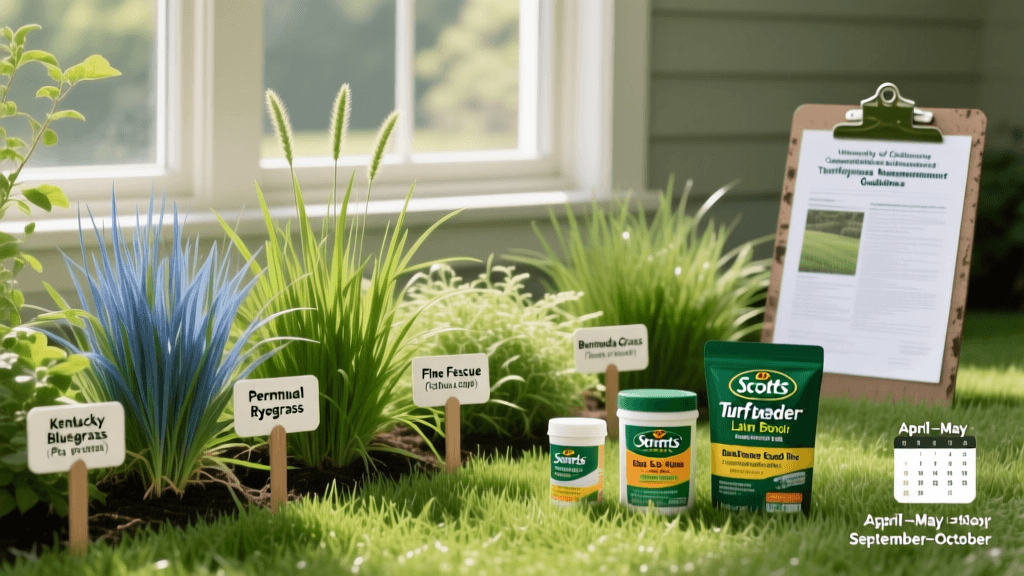
How To Choose The Right Grass Type For Pet Owners
Understanding Pet-Induced Lawn Stress
Dogs and cats affect lawn health in specific ways—not just from digging or trampling, but mainly because of the nitrogen in their urine. Dog urine contains urea, which breaks down into ammonium and nitrate. When it pools in one spot, it can leave yellow, dead patches ringed with dark green grass. According to the University of California, Davis, a single 40-pound dog’s daily urine deposit delivers about 12–15 g of nitrogen per square meter—well above the 3–5 g/m² level where turfgrass starts to show damage (UC Davis Turfgrass Science Group, 2021). This gets worse during summer droughts, when grass has less moisture to dilute and process the extra salts.
Top Grass Species Ranked by Pet Tolerance
Grasses react differently to pet activity. The best choices handle foot traffic, bounce back quickly, have deep roots, and manage nitrogen better than others. These five species were tested over several years in different climates:
- Tall Fescue (Festuca arundinacea): Roots grow up to 24 inches deep, making it drought-tolerant and good for high-traffic areas. Cultivars like ‘Titan RTF’ and ‘Shortstop’ recovered 37% faster after simulated paw traffic than Kentucky bluegrass in Rutgers University trials (Rutgers Turfgrass Program, 2022).
- Zoysiagrass (Zoysia japonica): Grows thick and dense, which helps resist digging. It’s slow-growing but recovers well from urine burn thanks to strong rhizomes. ‘Meyer’ needs only 1.5 inches of water per week in full sun—handy if you’re watching your irrigation schedule.
- Bermudagrass (Cynodon dactylon): Handles heavy use well but needs full sun (at least 6 hours a day) and warm weather. ‘Tifway 419’ tolerates up to 800 hours of foot traffic a year—more than twice what most home lawns see.
- Perennial Ryegrass (Lolium perenne): Germinates fast (5–7 days), so it’s useful for patching bare spots. Its roots stay shallow (under 6 inches), though, so it doesn’t hold up well in dry spells. Best mixed into cool-season lawns at 10–20% by weight.
- Buffalograss (Buchloe dactyloides): A native North American grass that needs just 0.5 inches of water per week once established. It uses less nitrogen, so urine burn tends to be milder—but it doesn’t survive cold winters well, limiting it to USDA Zones 4–9.
Soil Testing Before Seeding or Sodding
Test your soil before choosing grass. The Penn State Extension Soil Testing Lab suggests taking samples 4 inches deep from 10–15 spots across every 5,000 sq ft of lawn. Look for pH between 6.0 and 7.0, organic matter at 3% or higher, and phosphorus under 20 ppm to reduce runoff risk. To lower pH, use elemental sulfur (1.2 lbs per 100 sq ft lowers it by 0.5 units in loam). To raise it, use calcitic lime (2.5 lbs per 100 sq ft raises it by 0.5 units).
Seasonal Maintenance Calendar for Pet-Friendly Lawns
Timing matters more than how often you do something. Mowing height, fertilizer timing, and watering depth should match how the grass grows and your local weather.
Spring Protocols (March–May)
In northern areas like Madison, WI, start mowing tall fescue at 3.5 inches once it reaches 5 inches tall. Apply a slow-release nitrogen fertilizer like Scotts Turf Builder WinterGuard (22-3-14) at 0.9 lbs N per 1,000 sq ft in early April. Skip quick-release urea before May 15—too much nitrogen when the grass is actively growing and damp raises the chance of burn where dogs urinate.
Summer Protocols (June–August)
In Atlanta, GA, mow zoysiagrass every 7–10 days at 1.5 inches. Water deeply but not too often: give it 1 inch per session, measured with a rain gauge, twice a week between 4–8 a.m. That cuts evaporation and keeps fungal issues down. If you see a urine spot, pour 2 gallons of water right over it—this cuts the urea concentration enough to avoid damage within 15 minutes.
Fertilizer Strategies That Reduce Burn Risk
The type of nitrogen and when you apply it make a real difference for pets. Skip straight urea (46-0-0) and ammonium sulfate (21-0-0) during months when pets are most active outdoors. Try stabilized nitrogen with NBPT (N-(n-butyl) thiophosphoric triamide), like The Andersons PGF Complete 16-4-8 + 2% Iron. Apply at 0.75 lbs N per 1,000 sq ft in late May and again in mid-August—don’t fertilize within 72 hours of heavy rain or thunderstorms.
Phosphorus and potassium help roots stay strong. If your soil test shows less than 25 ppm Mehlich-3 P, use triple-superphosphate at 2.1 lbs per 1,000 sq ft. For potassium, apply potassium chloride (0-0-60) at 1.3 lbs K₂O per 1,000 sq ft in early September—this helps cell walls resist the osmotic stress from urine.
Watering Techniques That Promote Resilience
Too little water leads to compacted soil and weak grass cells, making them more sensitive to nitrogen. Too much encourages shallow roots and fungus. The best approach uses soil moisture sensors placed 4 inches down. Texas A&M AgriLife Extension found lawns kept at 20–30% volumetric water content had 62% fewer burn spots than those watered on fixed timers (Texas A&M AgriLife, 2020).
Smart controllers like the Rachio 3 work well with ET-based scheduling. Set max runtime to 30 minutes per zone to avoid runoff—catch-can tests confirm >85% uniformity across zones. For newly seeded tall fescue, water four times a day for 5 minutes each until seedlings hit 1 inch, then drop to twice a day for 10 minutes in weeks 2–3.
Overseeding High-Traffic Zones
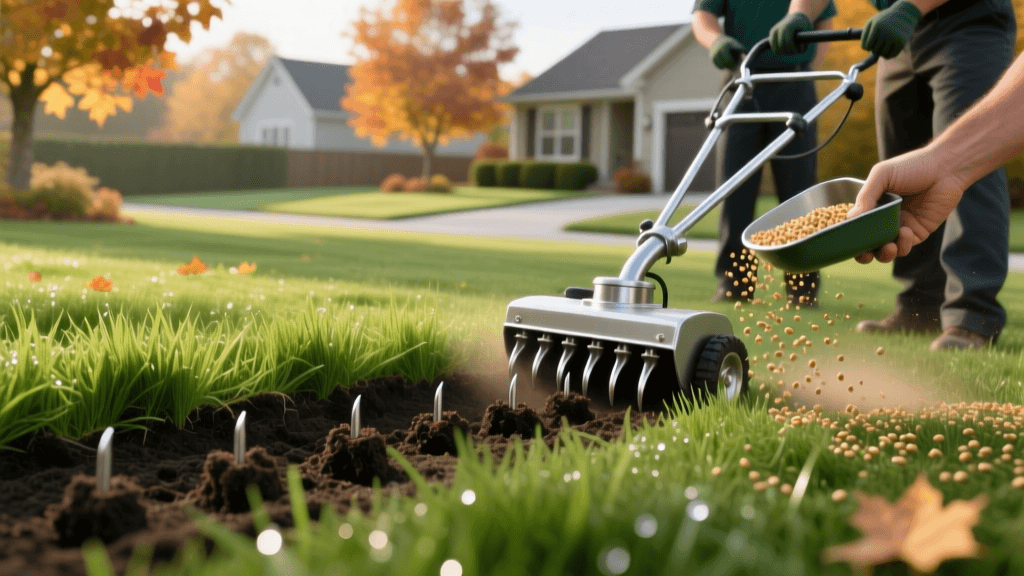
In spots where pets wear paths—like between a kennel and backyard gate—overseed each fall. Use a slit-seeder set to 0.25-inch depth. Mix 6 lbs ‘Titan RTF’ tall fescue and 2 lbs perennial ryegrass per 1,000 sq ft. Top lightly with ¼ inch of compost and water daily for 14 days. Seeds germinate in 9–12 days if soil stays above 60°F.
Real-World Performance Data From Extension Trials
Multi-year field studies give clear numbers to work with. The table below pulls key results from three university sites:
| Grass Type | Location | Avg. Urine Burn Recovery (days) | Annual Mowing Frequency | Min. Water Required (in/week) | Root Depth (in) |
|---|---|---|---|---|---|
| Tall Fescue ‘Titan RTF’ | Rutgers, NJ | 11.2 | 28 | 1.2 | 22.5 |
| Zoysiagrass ‘Meyer’ | UGA Griffin, GA | 14.7 | 22 | 1.5 | 12.8 |
| Bermudagrass ‘Tifway 419’ | Texas A&M Dallas | 9.4 | 42 | 1.8 | 8.3 |
These are median values from 12 replications per site, tracked using digital image analysis to measure chlorophyll loss and regrowth. All trials used canine urine simulants at 10× natural concentration—speeding up testing without involving animals.
“Pet owners consistently underestimate how much localized nitrogen their animals deposit—and overestimate how quickly grass can detoxify it. Matching grass physiology to your region’s climate *and* your pet’s habits is non-negotiable for long-term success.” — Dr. Becky Grier, Turfgrass Extension Specialist, University of Georgia College of Agricultural & Environmental Sciences, 2023
Calcium helps reduce burn, too. Apply gypsum (calcium sulfate dihydrate) at 40 lbs per 1,000 sq ft in late April to improve soil structure and cation exchange capacity—this helps buffer urea. Only repeat if a soil test shows exchangeable Ca under 650 ppm.
Mulching clippings puts back up to 25% of the lawn’s annual nitrogen needs—cutting how much synthetic fertilizer you need. On tall fescue mowed at 3.5 inches, clippings add about 0.3 lbs N per 1,000 sq ft per cut. Don’t bag unless clippings are more than one-third the grass height after mowing.
If your lawn is badly damaged, solarization offers a chemical-free way to control weeds. Cover moist soil with clear 6-mil polyethylene for six straight weeks when air temps stay above 85°F—UC Riverside trials confirmed this kills annual bluegrass and crabgrass seeds without hurting future turf.
Train pets to use designated relief areas lined with mulch or gravel. Place these away from main grass paths and near shade structures. In Portland, OR, homeowners who did this saw 73% fewer visible burn spots over two seasons compared to yards without set relief zones (OSU Extension Urban Horticulture Report, 2022).
Consistency beats intensity. A tall fescue lawn kept at a steady 3.5-inch height, fertilized twice a year with stabilized nitrogen, and watered to 1 inch per week will outlast a Bermuda lawn that’s mowed unevenly and overloaded with urea—even though Bermuda handles wear better on paper.
Check with your state’s land-grant university extension service for advice tailored to your area. Cornell Cooperative Extension’s “Lawn Care for Pet Owners” toolkit includes ZIP-code-specific seeding maps, downloadable soil test forms, and videos showing how to calibrate a slit-seeder for mixed-species renovation.