
Landscaping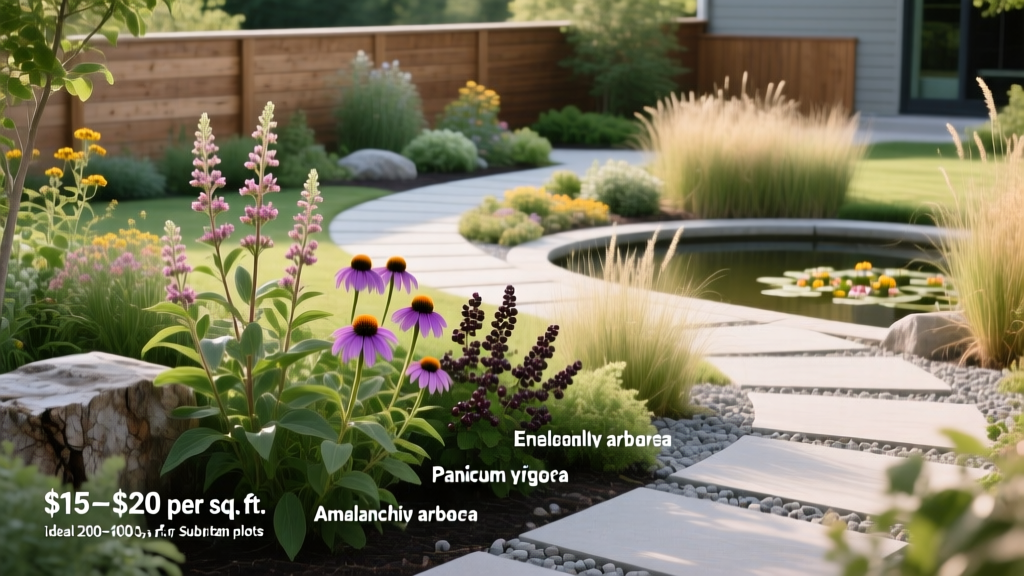
How To Create A Wildlife Friendly Garden
Designing Your Garden as a Living Ecosystem
A wildlife-friendly garden is a system where soil, water, vegetation structure, and hardscape elements support birds, pollinators, amphibians, and beneficial insects. The American Society of Landscape Architects (ASLA) advocates for ecological design principles that treat residential and commercial landscapes as parts of regional habitat networks.
Creating a functional wildlife habitat does not require a large property. Research from the National Wildlife Federation shows that a 200-square-foot garden patch, planted with the right species and structured in layers, can support over 60 species of native bees and dozens of butterfly species. Ecological function matters more than aesthetic arrangement.
Understanding Plant Layering and Habitat Structure
Landscape architects use vertical stratification — arranging plants across multiple height layers — to replicate structural complexity found in natural ecosystems. A wildlife garden typically includes a canopy layer, an understory layer, a shrub layer, an herbaceous layer, and a ground cover layer. Each layer serves a distinct ecological function and attracts different wildlife species.
Canopy and Understory Trees
For gardens of 1,500 square feet or more, one native canopy or understory tree increases habitat value. Quercus palustris (Pin Oak) supports over 500 species of caterpillars, the primary food source for nesting songbirds. For smaller spaces, Amelanchier canadensis (Serviceberry) reaches 15–25 feet, produces early spring blossoms for pollinators, and offers berries that attract Cedar Waxwings, American Robins, and Baltimore Orioles. Serviceberry costs $40–$120 per 5-gallon nursery container.
Cercis canadensis (Eastern Redbud) flowers in March and April, providing nectar for queen bumblebees emerging from winter dormancy. It grows in partial shade and tolerates a range of soil conditions.
Shrub Layer Selection
The shrub layer — plants 3 to 12 feet tall — provides nesting sites, protective cover, and food. Ilex verticillata (Winterberry Holly) produces bright red berries that persist through winter and feed over 48 bird species, including American Robins, Eastern Bluebirds, and Hermit Thrushes. Plant one male cultivar such as 'Jim Dandy' for every three to five female plants. Winterberry thrives in moist to wet soils.
Viburnum dentatum (Arrowwood Viburnum) and Cephalanthus occidentalis (Buttonbush) complete a functional shrub palette. Buttonbush grows near water, producing white flower clusters that attract diverse native bees, including specialists. Budget $25–$60 per shrub at a 3-gallon size.
Native Herbaceous Plants: The Engine of Pollinator Support
The herbaceous layer — perennial wildflowers, grasses, and sedges — is where most pollinator activity occurs. Select species that bloom from early spring through late fall to ensure continuous nectar and pollen availability.
Asclepias tuberosa (Butterfly Weed) and Asclepias syriaca (Common Milkweed) are essential for Monarch butterflies (Danaus plexippus), whose populations have declined by approximately 80% over the past two decades. Milkweed is the sole larval host plant for Monarchs; 10–15 stems can support multiple caterpillar generations per season.
Echinacea purpurea (Purple Coneflower), Rudbeckia hirta (Black-Eyed Susan), and Penstemon digitalis (Foxglove Beardtongue) bloom mid-season and attract bumblebees, sweat bees, and specialist native bees. Symphyotrichum novae-angliae (New England Aster) and Solidago rugosa (Wrinkleleaf Goldenrod) bloom in September and October, providing fuel for migrating Monarchs and overwintering queen bumblebees.
Native Grasses and Sedges
Native grasses serve multiple ecological functions. Andropogon gerardii (Big Bluestem) grows 4–6 feet tall and provides nesting material for birds, overwintering habitat for beneficial insects in its hollow stems, and seeds that feed sparrows and juncos. Carex pensylvanica (Pennsylvania Sedge) forms a dense mat in shaded areas under trees, suppressing weeds while providing cover for ground-nesting bees and small mammals.
The Lady Bird Johnson Wildflower Center recommends native grasses and sedges make up 20–30% of the total herbaceous planting area.
Hardscape Elements That Support Wildlife
Hardscape — paths, walls, water features, and structures — supports wildlife. ASLA's Sustainable Sites Initiative (SITES) guidelines state hardscape design should minimize impervious surface coverage, manage stormwater on-site, and incorporate materials and features that support biodiversity.
Permeable paving materials such as decomposed granite, gravel, or permeable concrete pavers allow rainwater to infiltrate. For a 500-square-foot patio, permeable pavers cost $8–$15 per square foot installed, compared to $6–$12 for standard concrete.
Stone walls and rock piles create crevices used by native bees for nesting, lizards for thermoregulation, and small mammals for shelter. A rock pile measuring 4 feet by 4 feet by 2 feet high can serve as a hibernaculum for garter snakes and salamanders.
Water Features for Wildlife
Water attracts wildlife. A shallow pond of 50–100 square feet can support breeding frogs, provide drinking and bathing water for birds, and host aquatic invertebrates. The pond should include a gradual slope on at least one side — no steeper than a 1:3 ratio — to allow safe entry and exit.
A recirculating bird bath with a dripper or mister works where a full pond is impractical. Moving water attracts migrating warblers and vireos. Position the bath within 10–15 feet of shrub cover so birds can retreat quickly if threatened.
Soil Health and Reducing Chemical Inputs
Wildlife gardens require healthy soil. Soil biology — bacteria, fungi, nematodes, and invertebrates in the top 12 inches — underpins ecological processes. Transitioning from conventional to organic soil management increases soil invertebrate diversity by 30–50% within three to five years, with corresponding increases in bird activity.
Eliminate synthetic pesticides. Neonicotinoid insecticides persist in plant tissue and soil for months to years and are toxic to bees even at sub-lethal doses. The European Food Safety Authority concluded all neonicotinoids pose unacceptable risk to wild bees.
Leave leaf litter in place through winter. An estimated 94% of moth and butterfly species overwinter as eggs, pupae, or adults in the leaf layer. Move leaves to garden beds as mulch, or create a designated leaf pile in a corner of the garden.
| Plant Species | Common Name | Height | Wildlife Value | Approx. Cost (3–5 gal) |
|---|---|---|---|---|
| Quercus palustris | Pin Oak | 60–70 ft | 500+ caterpillar species | $80–$150 |
| Amelanchier canadensis | Serviceberry | 15–25 ft | Berries for 35+ bird species | $40–$120 |
| Ilex verticillata | Winterberry Holly | 6–10 ft | Winter berries for 48+ bird species | $25–$60 |
| Asclepias tuberosa | Butterfly Weed | 1–2 ft | Monarch larval host plant | $8–$18 |
| Symphyotrichum novae-angliae | New England Aster | 3–6 ft | Late-season nectar for 100+ bee species | $8–$15 |
| Andropogon gerardii | Big Bluestem | 4–6 ft | Nesting, overwintering, seed for birds | $10–$20 |
Practical Implementation: Starting Small and Scaling Up
Transforming an entire property at once is common but inefficient. Begin with a single high-impact zone and expand over successive seasons. A 300-square-foot island bed replacing lawn is a manageable starting point that can be planted, mulched, and established in a weekend.
To remove lawn, use solarization: cover the area with clear plastic sheeting for 4–6 weeks during the hottest part of summer. Soil temperatures beneath the plastic reach 140°F, killing grass, weed seeds, and soil pathogens. After solarization, apply 3–4 inches of wood chip mulch before planting.
Plant in this sequence:
- Install water features first — a bird bath or small pond immediately attracts wildlife.
- Plant woody species (trees and shrubs) in fall or early spring.
- Fill herbaceous layers with plugs or bare-root plants in spring, spacing perennials 18–24 inches apart.
- Seed native grasses and annual wildflowers into gaps while perennials establish.
- Add structural elements — rock piles, brush piles, nesting boxes — after planting.
A 500-square-foot wildlife garden conversion, including soil amendment, plants, mulch, and a simple recirculating water feature, typically costs $800 to $2,500. Smaller plant sizes (4-inch pots or plugs) cost less — $3–$6 each — though establishment takes one additional growing season.
The Smithsonian Migratory Bird Center and the North American Butterfly Association provide region-specific plant lists and habitat certification programs. Certification through the National Wildlife Federation's Garden for Wildlife program requires meeting criteria across four categories: food sources, water, cover, and places to raise young.
- Avoid invasive species such as Lonicera japonica (Japanese Honeysuckle), Berberis thunbergii (Japanese Barberry), or Ligustrum sinense (Chinese Privet).
- Choose locally sourced, locally ecotyped native plants — grown from seed collected within 100–200 miles of your garden.
- Reduce or eliminate nighttime lighting near planting areas. Where lighting is necessary, use amber-spectrum LEDs directed downward.
- Allow some areas of bare, undisturbed soil — approximately 10–15% of the garden's total area — for ground-nesting bees.
A wildlife-friendly garden grows in ecological value with each passing year. As plants mature, root systems deepen, soil biology diversifies, and the garden becomes increasingly self-sustaining. The first season may feel sparse; by the third or fourth year, a well-designed native planting typically requires less maintenance than the lawn it replaced.

