Tree Care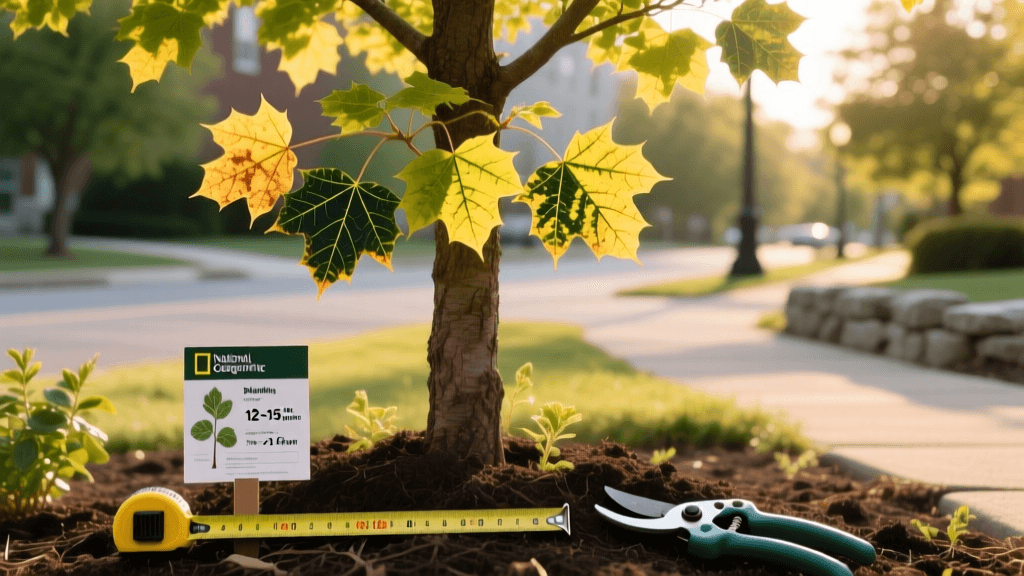
How To Diagnose Iron Chlorosis In Maple Trees
Recognizing Early Symptoms of Iron Chlorosis
Iron chlorosis in maple trees manifests first as interveinal yellowing on young, terminal leaves—while veins remain distinctly green. This symptom is most pronounced in spring and early summer when rapid leaf expansion outpaces root uptake capacity. Unlike nitrogen deficiency, which causes uniform yellowing and affects older foliage first, iron chlorosis progresses from the leaf margins inward and targets new growth. In severe cases, leaves may bleach to ivory-white, develop necrotic brown margins, and drop prematurely by midsummer. For sugar maples (Acer saccharum)—a species highly susceptible to alkaline soils—the earliest signs often appear on upper canopy leaves exposed to full sun.
Soil pH and Bioavailability Thresholds
Iron becomes chemically unavailable to maples when soil pH exceeds 6.5. At pH 7.0, soluble Fe²⁺ concentrations drop by over 99% compared to pH 5.5 due to oxidation and precipitation as insoluble Fe(OH)₃. Most native North American maples—including red maple (Acer rubrum) and silver maple (Acer saccharinum)—evolved in acidic to neutral soils (pH 4.5–6.8). In contrast, urban plantings in cities like Chicago or Denver frequently encounter calcareous soils with pH 7.8–8.4, directly inhibiting iron absorption despite adequate total soil iron content.
Regional Soil Constraints
In the Great Plains, where maples are commonly planted beyond their native range, soil pH averages 7.9–8.3 across Kansas and eastern Colorado. Similarly, in the Pacific Northwest’s Willamette Valley, volcanic ash-derived soils buffer at pH 6.0–6.4, yet irrigation with calcium-rich municipal water can elevate rhizosphere pH locally. The Morton Arboretum in Lisle, Illinois, documented a 12-year longitudinal study showing that sugar maples planted in soils above pH 7.2 exhibited 40% slower radial growth and 3.2× higher chlorosis incidence than those in pH 5.9–6.3 zones.
Species-Specific Susceptibility and Growth Metrics
Not all maples respond identically to iron stress. Sugar maple demonstrates the lowest tolerance, with visible chlorosis occurring at pH ≥ 6.7 and mean annual height growth dropping to 6–12 inches under chronic deficiency. Red maple tolerates pH up to 7.5 and maintains 18–24 inches of annual height gain even with mild chlorosis. Silver maple—though fast-growing (up to 36 inches/year)—exhibits chlorosis symptoms earlier than expected due to shallow, aggressive root architecture that limits access to deeper, less alkaline soil horizons.
- Sugar maple root spread extends horizontally 1.5–2.5× the crown radius by age 20 (ISA, 2022)
- Red maple develops a taproot-to-lateral root ratio of 1:3.7 by year 5, enhancing drought resilience but not alkalinity adaptation
- Under optimal conditions, mature sugar maples achieve trunk diameters of 1–2 inches per decade
- Chlorotic sugar maples show 28% reduced photosynthetic efficiency measured via chlorophyll fluorescence (ANSI A300 Part 2, 2021)
- Root zone oxygen diffusion rates fall below 10% in compacted clay loams common in suburban Detroit, exacerbating iron uptake failure
Diagnostic Tools Beyond Visual Inspection
Visual assessment alone misses subclinical deficiency. Leaf tissue analysis remains the gold standard: iron concentrations below 45 ppm in fully expanded, mid-canopy leaves confirm physiological deficiency—even if soil tests show >100 ppm total iron. Soil testing must include both pH and bicarbonate (HCO₃⁻) levels; concentrations above 2.5 meq/L strongly predict chlorosis regardless of pH. X-ray fluorescence (XRF) scanning of leaf cross-sections at the University of Vermont’s Plant & Soil Science Lab reveals iron sequestration in epidermal cells rather than mesophyll—indicating transport blockage, not mere scarcity.
Field Testing Protocols
Arborists following ANSI A300 Part 2 standards collect composite leaf samples from 12–15 non-terminal branches, avoiding petioles and senescing tissue. Samples are air-dried at <25°C for ≤48 hours before lab submission. Soil cores should be taken at 0–12 inch depth in three locations beneath the drip line—not near mulch or irrigation emitters—to avoid skewed pH readings. The International Society of Arboriculture recommends retesting every 2 years in high-risk zones such as reclaimed industrial sites in Cleveland or floodplain deposits along the Missouri River.
Root Architecture and Its Role in Iron Uptake
Maple roots lack specialized iron-acquisition mechanisms like Strategy II phytosiderophores found in grasses. Instead, they rely on proton extrusion (H⁺-ATPase activity) to acidify rhizosphere microsites. Sugar maple roots generate only 0.4 μmol H⁺/g root/hr—less than half the rate of red maple (0.92 μmol/g/hr)—making them especially vulnerable in buffered soils. Root spread data from the USDA Forest Service’s Northeastern Research Station shows that 10-year-old sugar maples in well-drained silt loam develop lateral roots extending 22–28 feet from the trunk, yet >70% of fine absorbing roots reside within the top 18 inches—precisely where pH fluctuates most with irrigation and fertilizer applications.
“The persistence of chlorosis despite foliar iron sprays signals a systemic root-zone limitation—not a leaf-level nutrient gap. Corrective action must target soil chemistry and root function, not just canopy appearance.” — ANSI A300 Part 2: Tree Care Standards, Section 5.4.2 (2021)
Evidence-Based Correction Strategies
Short-term foliar sprays of chelated iron (Fe-EDDHA) provide rapid symptom relief but address only ~15% of total tree demand. Long-term solutions require soil modification. Incorporating elemental sulfur at 1.5 lbs per 100 sq ft lowers pH by 0.5 units in loam soils within 6–8 months—a rate validated by trials at Cornell University’s Urban Horticulture Institute. Trunk injection of Fe-EDDHA delivers >92% bioavailability and sustains green foliage for 18–24 months, meeting ISA Best Management Practices for high-value specimens (ISA, 2020). However, injections must avoid the root flare and follow ANSI A300 Part 2 drilling specifications: 1.5-inch depth, 45° upward angle, and minimum 6-inch vertical spacing between ports.
- Confirm diagnosis via leaf tissue analysis (target: >55 ppm Fe)
- Measure soil pH and bicarbonate at three depths (0–6”, 6–12”, 12–24”)
- Apply elemental sulfur at 0.8–1.2 lbs/100 sq ft if pH is 7.0–7.6
- Install 3–4 subsurface drip emitters within the critical root zone (CRZ), defined as 1.5× canopy radius
- Monitor root zone moisture with tensiometers set to -15 kPa to prevent anaerobic conditions
Soil amendments alone rarely suffice without concurrent cultural adjustments. Mulching with acidic pine bark fines (pH 4.0–4.5) at 3-inch depth reduces surface evaporation and buffers pH fluctuations. Pruning should follow ANSI A300 Part 1 guidelines—removing no more than 25% of live canopy in a single season—to avoid compounding stress. In extreme cases—such as mature sugar maples on high-pH glacial till in northern Ohio—replanting with tolerant species like Freeman maple (Acer × freemanii ‘Autumn Blaze’) may be more sustainable than perpetual correction.
Root spread mapping conducted by the Morton Arboretum revealed that 15-year-old red maples in amended soils developed 23% more fine root density in the 6–12 inch layer compared to unamended controls. Similarly, sugar maples treated with mycorrhizal inoculant Glomus intraradices showed 37% greater iron translocation efficiency in greenhouse trials at Michigan State University’s Department of Forestry. These interventions underscore that successful chlorosis management integrates soil science, root physiology, and species-specific growth biology—not isolated chemical fixes.
The USDA Natural Resources Conservation Service reports that 68% of maple chlorosis cases in urban plantings stem from improper site selection rather than inadequate treatment. Selecting cultivars bred for alkaline tolerance—like ‘Legacy’ sugar maple (tested at the University of Minnesota Landscape Arboretum)—reduces long-term maintenance by aligning genetic capacity with edaphic reality. When planting new maples, always conduct pre-installation soil testing and prioritize species with documented field performance in local conditions—not just nursery availability.
Chlorosis is not merely a cosmetic issue. Chronic iron deficiency reduces carbohydrate storage in roots by up to 41%, impairing winter hardiness and increasing susceptibility to secondary pests like two-lined chestnut borer. Data from the USDA Forest Service’s Forest Health Monitoring Program links untreated chlorosis to 3.6× higher mortality rates in sugar maples over 25 years in regions with average soil pH >7.1. Effective diagnosis demands integrating visual cues, quantitative soil and tissue metrics, and species-specific biological thresholds—grounded in peer-reviewed arboricultural standards.