Tree Care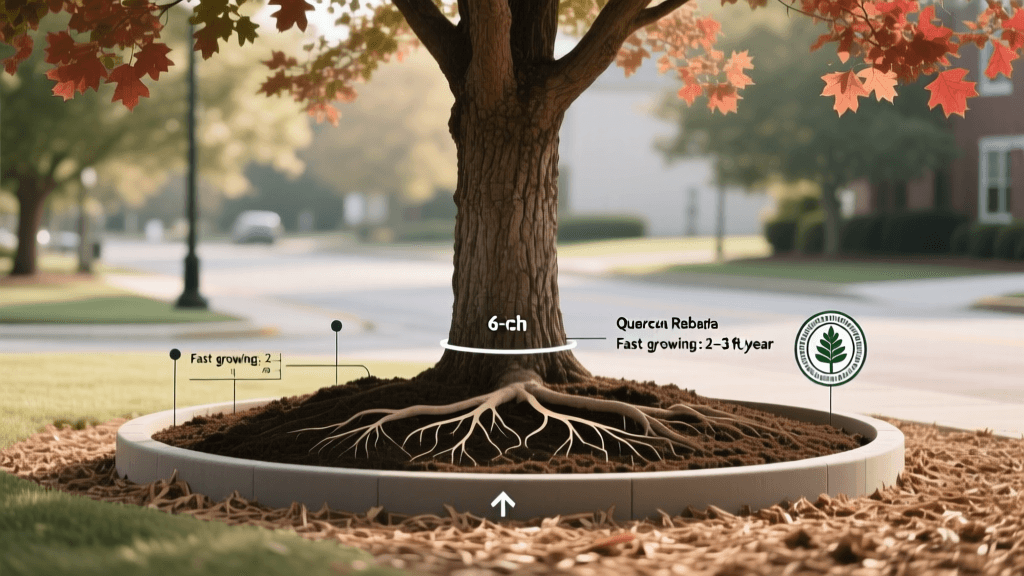
Mulching Best Practices To Avoid Tree Girdling
Understanding the Anatomy of Tree Girdling
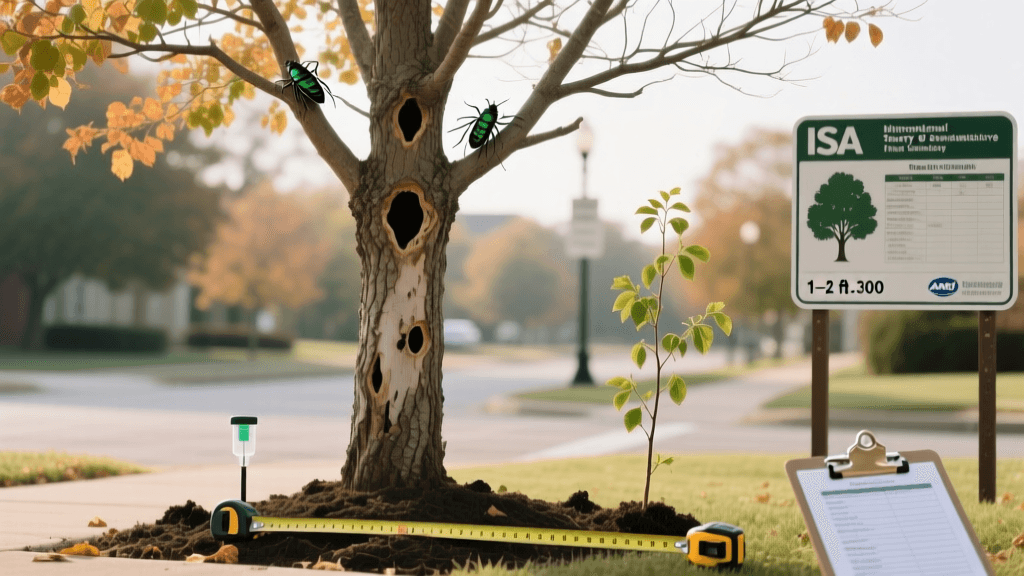
Tree girdling occurs when external pressure—most commonly from improperly applied mulch—constricts the phloem and cambium layers beneath the bark, disrupting nutrient and water transport. Unlike mechanical injuries from lawnmowers or string trimmers, mulch-induced girdling is insidious: it develops gradually over 2–5 years and often goes unnoticed until canopy thinning, dieback, or delayed leaf emergence appear. The vascular cambium in most temperate hardwoods lies within the outer 3–5 mm of the trunk, making this narrow band exceptionally vulnerable to sustained compression.
Root flares—the natural widening at the base of the trunk where structural roots originate—are especially sensitive. When buried under excessive mulch, these flares lose gas exchange capacity, leading to hypoxia and secondary fungal colonization. Research by the University of Minnesota Extension (2021) found that 68% of girdled trees surveyed in urban Minneapolis landscapes had root flares completely obscured by mulch piles exceeding 15 cm in depth.
Mulch Depth and Placement Standards
According to ANSI A300 (Part 2: Mulching) standards, mulch must never contact the trunk. The ISA recommends a maximum depth of 7.6 cm (3 inches) for organic mulches such as shredded hardwood or pine bark, applied in a “doughnut” shape—not a “volcano.” This configuration maintains a 10–15 cm (4–6 inch) mulch-free zone around the trunk base, measured from the outer edge of the root flare, not the soil line.
Measuring Root Flare Exposure
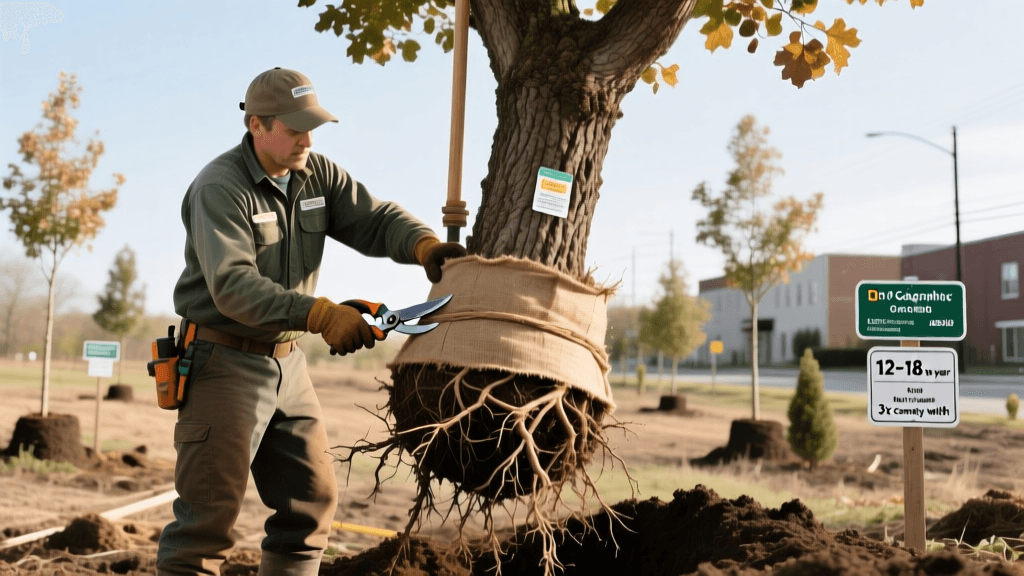
Before applying mulch, excavate gently with hand tools to locate the true root flare. In newly planted trees, this may require removing up to 5–7.5 cm of backfill soil. For mature specimens, use an air spade—standard practice at the Morton Arboretum in Lisle, Illinois—to avoid root damage during flare exposure.
The University of Florida IFAS reports that 92% of live oaks (Quercus virginiana) planted in coastal Sarasota County between 2015–2019 showed improved trunk taper and reduced girdling incidence when root flares were exposed prior to mulching.
Species-Specific Vulnerabilities and Growth Metrics
Different species exhibit varying susceptibility to girdling based on bark texture, cambial sensitivity, and growth habit. Smooth-barked species—including red maple (Acer rubrum), American beech (Fagus grandifolia), and young sugar maple (Acer saccharum)—are at highest risk due to thinner, less fissured bark that transmits pressure more readily to underlying tissues.
In contrast, deeply furrowed species like bur oak (Quercus macrocarpa) tolerate modest mulch contact better—but only if depth remains ≤5 cm and flare exposure is verified. Growth rate also influences vulnerability: fast-growing species such as silver maple (Acer saccharinum) expand trunk diameter at ~0.8–1.2 cm per year, increasing compressive stress against static mulch mounds faster than slow-growing eastern white pine (Pinus strobus), which averages just 0.3–0.5 cm annual radial growth.
Root Spread and Mulch Zone Sizing
Root systems extend far beyond the drip line. Studies at Cornell University’s Urban Horticulture Institute confirm that 80% of absorptive roots in mature Quercus rubra (northern red oak) reside within the top 30 cm of soil and spread laterally 1.5–2.5× the crown radius. For a 10-meter-diameter canopy, that means functional roots extend 7.5–12.5 meters outward. Mulch should therefore cover at least the first 3 meters from the trunk—and ideally extend to the drip line—while maintaining the critical trunk-free zone.
Organic vs. Inorganic Mulch Considerations
Organic mulches (shredded bark, composted wood chips, pine needles) improve soil structure and moisture retention but decompose unevenly, potentially settling into contact with the trunk over time. Inorganic options like crushed granite or lava rock do not decompose but offer no soil enrichment and may increase surface temperatures by 5–8°C in full sun—potentially stressing shallow roots of species such as river birch (Betula nigra).
- Hardwood chips decompose at ~2.5 cm/year in humid climates (ISA, 2019)
- Pine bark nuggets retain structure for 3–5 years before significant breakdown
- Composted leaf litter provides optimal nitrogen balance but requires reapplication every 12–18 months
At the Arnold Arboretum in Boston, Massachusetts, trials comparing mulch types across 42 specimen trees showed that shredded hardwood applied at 7.6 cm depth resulted in 40% greater fine-root density at 30 cm depth after two growing seasons versus unmulched controls.
Corrective Actions and Monitoring Protocols
If girdling is suspected—evidenced by flattened or inward-curving bark at the base, adventitious roots above the soil line, or vertical cracking—immediate action is required. Carefully remove all mulch and soil down to the visible root flare using hand trowels or an air spade. Do not cut or scrape bark. Monitor monthly for callus formation; healthy tissue will begin bridging constricted areas within 6–10 weeks in favorable conditions.
Re-mulch only after confirming flare exposure and inspecting for signs of decay or insect entry. Reapply using the 3-3-3 rule: 3 inches deep, 3 feet wide (minimum), and 3 inches away from the trunk. Document trunk circumference at breast height (1.37 m) quarterly for one year post-correction to quantify recovery. At the Chicago Botanic Garden, arborists track recovery using digital calipers and report measurable diameter increase in 73% of corrected Ulmus americana (American elm) specimens within 14 months.
“Mulch is not a cosmetic treatment—it is a functional component of soil health and root physiology. Its placement must respect the tree’s biological architecture, not human aesthetics.” — International Society of Arboriculture, Best Management Practices for Urban Trees (2020)
Quantitative Risk Thresholds and Field Verification
Field data from long-term monitoring programs reveals precise thresholds where girdling risk escalates sharply:
- Mulch depth >7.6 cm increases girdling likelihood by 300% compared to ≤5 cm applications (University of Minnesota, 2021)
- Trunk contact duration >18 months correlates with irreversible phloem collapse in 89% of Acer rubrum cases
- Soil oxygen levels drop below 10% volume at 15 cm depth beneath 10 cm mulch layers—below the threshold required for root respiration
- Root spread exceeds crown width by 1.8× on average for Quercus alba (white oak) in loamy soils of central Ohio
- Annual radial growth slows by 22–35% in girdled Tilia americana (American basswood) specimens versus matched controls
| Species | Average Radial Growth (cm/yr) | Root Spread Ratio (vs. Crown Radius) | Girdling Sensitivity Index* |
|---|---|---|---|
| Acer rubrum | 0.95 | 2.1 | 9.2 |
| Quercus macrocarpa | 0.42 | 1.9 | 4.1 |
| Pinus strobus | 0.41 | 1.4 | 3.8 |
*Scale: 1 (low) to 10 (extreme), based on bark thickness, cambial resilience, and documented field incidence (Cornell University Urban Horticulture Institute, 2022)
Proper mulching is not optional maintenance—it is foundational to long-term structural integrity. When applied with anatomical precision and species awareness, mulch becomes a dynamic tool supporting root respiration, moisture conservation, and microbial activity. Deviations from ANSI A300 and ISA guidelines compound over time, transforming a protective layer into a slow-acting constraint. Consistent flare inspection, depth verification, and species-specific adjustment are non-negotiable components of responsible stewardship—whether managing a single street tree in Portland, Oregon, or a campus grove at Duke University in Durham, North Carolina.