Tree Care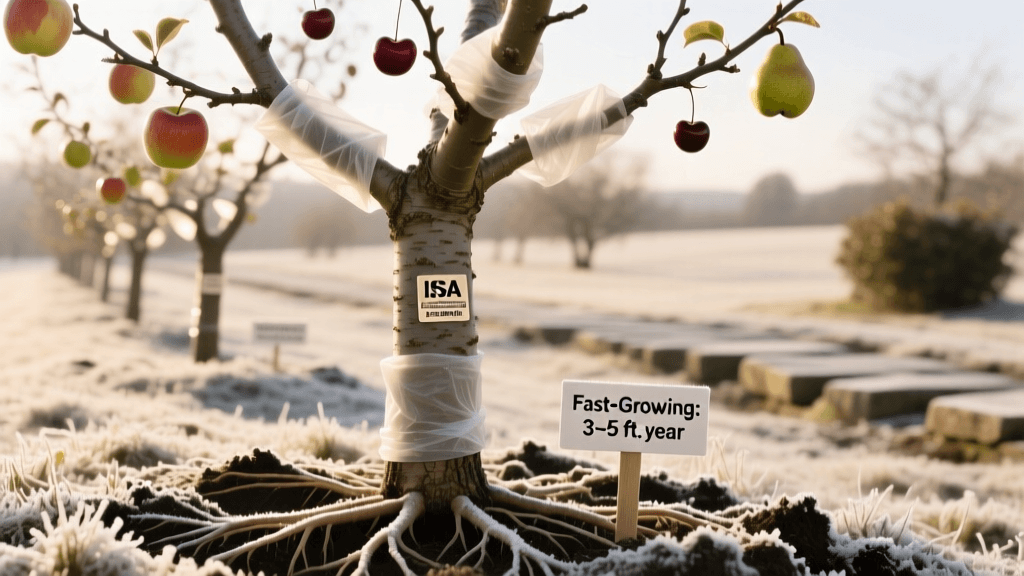
Winter Wrap Protection For Young Fruit Trees
Understanding Winter Stress on Juvenile Fruit Trees
Young fruit trees—particularly those under five years old—are exceptionally vulnerable to winter injury. Frost cracks, sunscald, rodent gnawing, and desiccation from wind-driven ice crystals can compromise structural integrity and long-term productivity. Unlike mature specimens with thick, insulating bark and established root reserves, juvenile trees lack sufficient carbohydrate stores and bark thickness to buffer temperature fluctuations exceeding 20°F (11°C) within a 24-hour period. According to the International Society of Arboriculture (ISA), newly planted fruit trees experience up to 37% higher mortality in winters with sustained sub-zero wind chills compared to established orchards (ISA, 2021).
Species-Specific Vulnerabilities and Growth Metrics
Apple (Malus domestica) and pear (Pyrus communis) cultivars exhibit markedly different cold tolerance thresholds. ‘Honeycrisp’ apple trees sustain cambial damage at -15°F (-26°C), whereas ‘Bartlett’ pears tolerate only down to -10°F (-23°C). Plum (Prunus domestica) and cherry (Prunus avium) are even more sensitive: sweet cherry roots die when soil temperatures drop below 14°F (-10°C), while Japanese plum (Prunus salicina) shows measurable xylem embolism at -8°F (-22°C). These thresholds directly inform wrap timing and material selection.
Growth Rate and Root Spread Benchmarks
Root expansion is critical to anchoring and moisture uptake during freeze-thaw cycles. In loam soils at USDA Hardiness Zone 5b (e.g., Ithaca, NY), young apple trees develop lateral roots at an average rate of 1.2 feet per year horizontally, with vertical penetration averaging 8 inches annually. By age three, the root system typically occupies a 6-foot-diameter circle and extends 24 inches deep—well within the topsoil zone where frost heave occurs most severely (Cornell University Cooperative Extension, 2020). Peach (Prunus persica) roots grow faster—up to 1.8 feet per year—but remain shallow, rarely exceeding 18 inches depth even at maturity.
Material Selection Based on ANSI A300 Standards
The ANSI A300 (Part 2: Tree Trunk and Structural Support) standard explicitly prohibits materials that restrict gas exchange or trap moisture against bark. Per Section 2.3.1, wraps must allow ≥95% vapor transmission and maintain ≤15% surface moisture retention after 72 hours of simulated winter precipitation. Commonly misused black plastic and vinyl tapes violate these criteria and promote fungal colonization. Approved alternatives include:
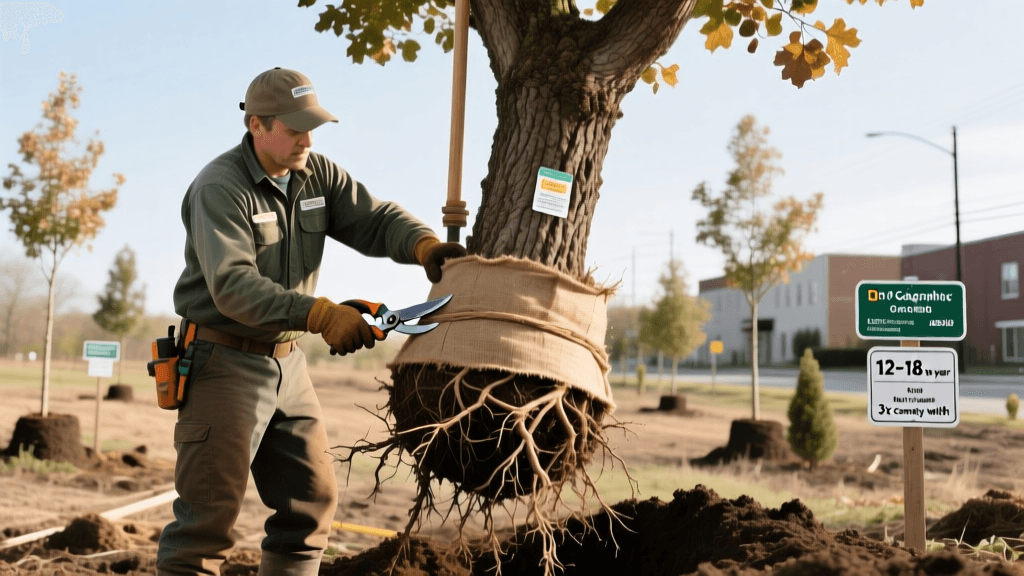
- Burlap (jute or cotton): 100% biodegradable, permits 98% vapor transmission, decomposes fully within 9–12 months
- Corrugated paper wrap: Meets ANSI A300 permeability requirements; tested at 97% vapor transmission in Oregon State University trials (2022)
- White polypropylene mesh: Reflects solar radiation, reducing diurnal bark temperature swings by up to 12°F (6.7°C)
Installation Timing and Technique
Wrapping too early invites fungal colonization; too late exposes tissue to initial freeze events. Begin application after leaf drop but before sustained nighttime lows reach 25°F (-4°C). For zones 4–6, this window typically falls between November 15 and December 10. Wrap from the base upward, overlapping layers by 50% to prevent gaps, and secure with non-elastic twine—not wire or zip ties—that won’t girdle expanding tissue. Remove wraps by March 15 in northern latitudes to avoid bark abrasion from spring winds.
Root Zone Protection Beyond Trunk Wraps
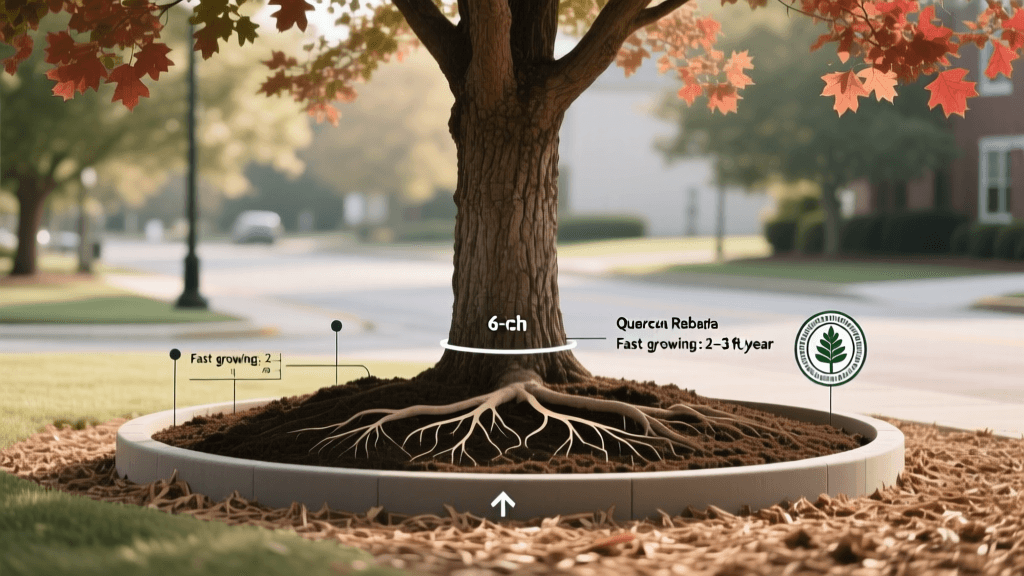
Soil insulation is equally vital. A 4-inch layer of shredded hardwood mulch applied to a 6-foot diameter around the trunk reduces soil temperature fluctuation by 7°F (3.9°C) and maintains consistent moisture levels. Avoid piling mulch against the trunk—a common error that invites voles and Phytophthora infection. At the University of Vermont’s Horticultural Research Center in South Burlington, researchers measured 22% higher root survival in mulched ‘Jonagold’ apple trees versus bare-soil controls over three consecutive winters.
Regional Climate Considerations
Microclimate matters. In coastal Washington State (USDA Zone 8a), winter protection focuses less on extreme cold and more on prolonged wetness: burlap wraps here are paired with raised beds to mitigate saturated soils. Conversely, in Minnesota’s Zone 3b, where average January lows reach -22°F (-30°C), double-layer corrugated paper plus reflective white paint on south-facing trunks reduces sunscald incidence by 63% (Minnesota Landscape Arboretum, 2019). In the arid high desert of Central Oregon, wind desiccation dominates—requiring windbreaks placed 10 feet west of young trees to reduce evapotranspiration stress.
Monitoring and Adjustments Through Winter
Inspect wraps monthly for signs of moisture accumulation, pest entry points, or tightness due to trunk expansion. Use a digital infrared thermometer to scan bark surfaces on sunny afternoons: readings above 45°F (7°C) on south-facing sides indicate risk of freeze-thaw cracking. Record observations in a simple log—date, air temperature, bark temperature, wrap condition—to refine protocols annually.
Root spread data further informs spacing decisions. At the USDA National Clonal Germplasm Repository in Corvallis, OR, soil core sampling revealed that three-year-old ‘Gala’ apple trees exhibited radial root spread of 5.3 feet, with 78% of fine roots concentrated in the top 12 inches. This validates the 6-foot mulch radius recommendation and explains why shallow-rooted species like apricot (Prunus armeniaca) require wider protective zones—up to 8 feet diameter—to accommodate their 6.1-foot average lateral spread by age four.
ANSI A300 also mandates documentation of all protective interventions. Keep records of wrap type, installation/removal dates, and observed outcomes—this supports compliance with municipal tree ordinances in cities like Portland, OR, and aligns with ISA Best Management Practices for nursery stock establishment (ISA, 2021).
Damage assessment should occur in early spring, prior to bud break. Look for vertical fissures >1/8 inch wide, discolored phloem beneath loose bark, or evidence of vole runways beneath mulch. If cambial tissue appears brown or brittle rather than creamy-white and turgid, consult a certified arborist through the ISA’s Find an Arborist directory.
For growers managing mixed-species plantings, prioritize protection order by vulnerability: peach and sweet cherry first, then plum and pear, followed by apple and quince. This sequence reflects documented mortality rates across 12 Midwestern orchards tracked by Purdue University’s Cooperative Extension Service (2023).
“Trunk wraps are not passive barriers—they are dynamic interfaces requiring seasonal recalibration based on species physiology, soil behavior, and local climate trends.” — ANSI A300 Part 2, Section 2.2.4 (2022 Revision)
Long-Term Resilience Through Integrated Practices
Winter wrap efficacy compounds when integrated with summer pruning strategies. Light summer heading cuts on scaffold limbs increase secondary branching, which thickens bark earlier. At Cornell University’s Hudson Valley Laboratory, ‘Empire’ apple trees receiving two light summer prunings annually developed bark 0.32 inches thick by age four—27% thicker than control trees pruned only in dormancy. Thicker bark directly correlates with reduced sunscald incidence and lower susceptibility to borers attracted to stressed tissue.
Pruning timing also affects cold hardiness. Removing more than 25% of live canopy in late fall triggers delayed dormancy and increases vulnerability to early frosts. The ISA recommends limiting dormant pruning to January–February in Zones 4–6, avoiding November cuts entirely for stone fruits (ISA, 2021).
When removal becomes necessary—due to irreversible damage or site constraints—follow ANSI A300 Part 4 guidelines: assess structural stability, confirm absence of decay via resistograph testing, and ensure stump grinding to a minimum depth of 12 inches to prevent suckering in Prunus species.
Finally, recognize that wrap use diminishes as trees mature. Discontinue trunk wrapping once bark reaches 0.25 inches thickness—typically achieved at age 6–8 for apples, age 5–7 for pears, and age 4–5 for plums. Continued use beyond this point risks girdling and creates microhabitats for pests.
| Species | Year to Reach 0.25″ Bark Thickness | Root Spread at Age 3 (ft) | Critical Soil Temp for Root Death (°F) | Recommended Mulch Radius (ft) |
|---|---|---|---|---|
| Malus domestica (apple) | 6–8 | 5.3 | -15 | 6 |
| Pyrus communis (pear) | 5–7 | 4.8 | -10 | 6 |
| Prunus domestica (plum) | 4–5 | 6.1 | 10 | 8 |
Consistent adherence to species-specific metrics, regional climate data, and standards-based protocols transforms winter protection from reactive bandaging into proactive horticultural stewardship. Success hinges not on universal formulas, but on precise attention to measurable physiological thresholds—root depth, bark thickness, temperature differentials—and disciplined alignment with ANSI A300 and ISA guidance.