Lawn Care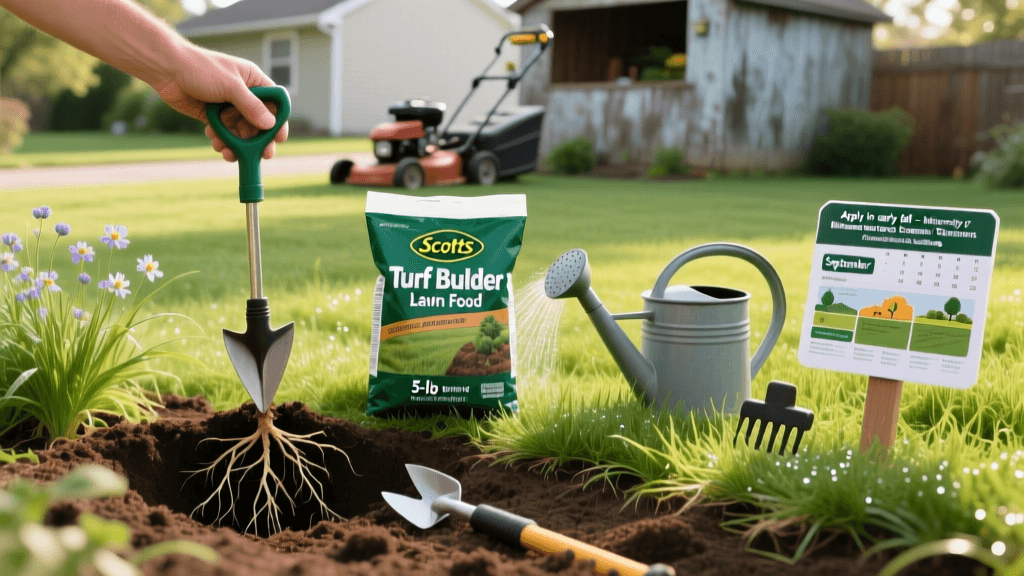
How To Establish A New Lawn On Clay Soil Without Tilling
Understanding Clay Soil’s Challenges for Lawn Establishment
Clay soil makes it tough to get a new lawn going—not because it’s short on nutrients, but because of how tightly packed the particles are. Each particle is smaller than 0.002 mm, so they stick together into dense clumps with very little room for air or water to move through. Water infiltration usually stays under 0.1 inch per hour, and roots don’t get much oxygen. It compacts easily, especially after people walk on it or equipment rolls over it during construction. Cornell University Cooperative Extension (2022) found that over 65% of residential sites in the Hudson Valley have compacted subsoil within the top 8 inches—often invisible until the grass fails to root deeply. That keeps roots stuck at 3–4 inches, even when moisture levels look fine. Without some kind of fix, newly seeded grass has trouble anchoring, soaking up water evenly, or handling summer heat.
Selecting Grass Species Adapted to Clay and Low-Disturbance Installation
Picking the right grass matters—for getting it started *and* keeping it healthy long-term. Cool-season grasses are usually the best bet for clay soils in USDA Hardiness Zones 4–7, where freeze-thaw cycles make the surface crusty. Kentucky bluegrass (Poa pratensis) cultivars like ‘Midnight’ and ‘Bella’ send out more rhizomes and push roots deeper into compacted layers, according to University of Minnesota Turfgrass Science trials (2021). Perennial ryegrass (Lolium perenne) ‘Zorro’ sprouts fast (5–7 days at 60–75°F) and holds soil well on slopes, making it a solid choice for clay hillsides. In transitional zones (Zones 7–9), fine fescues—including chewings fescue (Festuca rubra subsp. commutata) ‘SR 5240’—handle dry spells without needing deep tilling. These grasses keep working roots even when soil gets as dense as 1.6 g/cm³—above the 1.4 g/cm³ point where most turfgrasses start to slow down (Purdue Extension, 2020).
Seeding Rates and Timing
You’ll need more seed on unamended clay because fewer seeds end up sprouting. For full-sun areas, use 3–4 lbs of Kentucky bluegrass seed per 1,000 sq ft; for shady clay spots, bump fine fescue up to 5–6 lbs/1,000 sq ft to make up for less light. Skip spring seeding in the North—late August to mid-September works better, when air temps are cooler (60–75°F), dew is steady, and crabgrass isn’t as much of a problem. In central Texas, aim for early October, when soil temps drop below 85°F at the 2-inch depth—this helps perennial ryegrass stay active instead of going dormant too soon.
Surface Preparation Without Tilling: Core Aeration and Topdressing Protocols
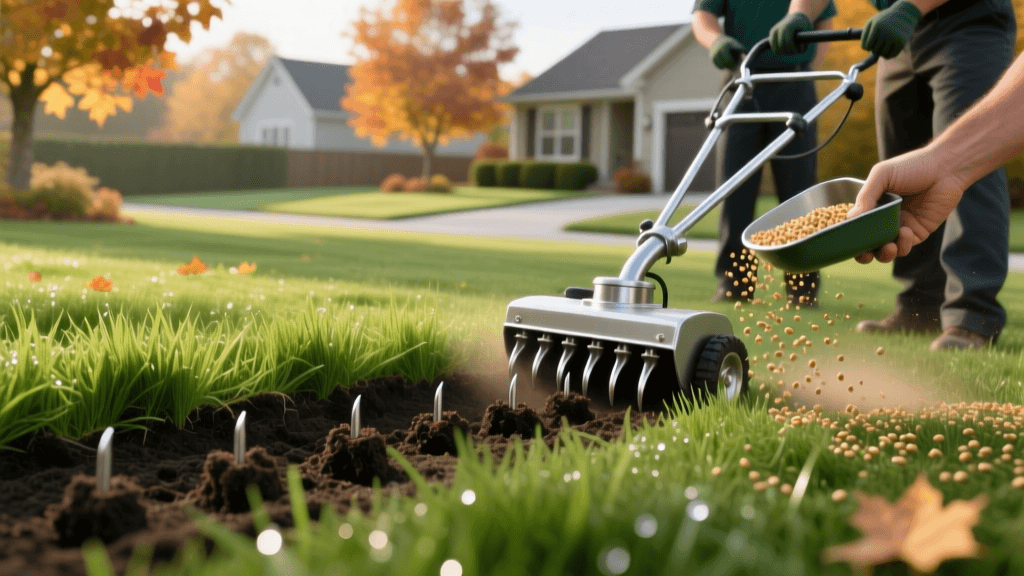
Tilling clay often backfires—it breaks apart natural soil clumps and makes the surface seal shut faster when it rains. A two-step mechanical approach tends to work better. First, run a core aerator with 3/4-inch tines spaced no more than 2 inches apart. Go over the area twice, once in each direction, pushing the tines 4–6 inches deep to break up compacted layers without mixing up the soil layers. Then spread a ½-inch layer of topdressing: 85% screened compost (like LeafGro® from Montgomery County, MD) mixed with 15% coarse sand (ASTM C33 spec). This mix lifts infiltration rates to 0.5–0.7 inch/hour within three weeks, based on field tests at the Rutgers Turf Research Center (2023).
- Apply topdressing evenly using a drop spreader set to deliver 0.45 cubic yards per 1,000 sq ft
- Rake gently with a bamboo broom—not a metal rake—to settle the material into the aeration holes without burying the seed
- Roll lightly with a 150-lb water-filled roller only on slopes steeper than 5% to help seed touch soil
- Water right after applying: 0.25 inch within 30 minutes, then 0.1 inch every 8 hours for the first 10 days
- Mow the first time when grass hits 4.5 inches tall—cut it to 3 inches, and never take off more than one-third of the blade
Fertilization Strategy for Root Development on Undisturbed Clay
When you’re getting grass started on clay, feed the roots—not just the leaves. Use a starter fertilizer low in nitrogen (6%), high in phosphorus (24%), and moderate in potassium (12%), like Jonathan Green Green-Up Starter Food (6-24-24), at 5.5 lbs per 1,000 sq ft within 24 hours of seeding. Phosphorus doesn’t move easily in clay, so this formula uses ammonium phosphate dibasic, which stays available to plants longer in soils with pH between 6.0 and 7.2. At four weeks after the grass emerges, switch to a slow-release nitrogen source: Milorganite® (6-2-0) at 3.5 lbs/1,000 sq ft gives organic nitrogen that feeds soil microbes near the roots without washing away. Don’t add more phosphorus after week six—extra P locks onto clay particles and blocks uptake of other nutrients.
Seasonal Watering Schedules for Clay-Based Lawns
Clay holds water but lets it out slowly. Water too much and roots stay shallow, raising disease risk. Water too little and the surface crusts over or the seed dries out. This schedule—tested across 12 site-years by Ohio State University Extension—keeps things balanced:
- Weeks 1–2: 0.15 inch every 12 hours (morning and late afternoon), totaling 2.1 inches/week
- Weeks 3–4: Shift to 0.25 inch every 24 hours, applied between 4–8 AM to cut evaporation
- Weeks 5–8: Switch to deep, infrequent watering: 0.75 inch twice weekly, measured with calibrated rain gauges
- After 8 weeks: Drop to 1.0 inch per week, all at once—unless it rains more than 0.5 inch
Mowing Practices That Encourage Deep Root Penetration
Mowing height affects how deep roots grow on clay. Keeping cool-season grasses at 3.0–3.5 inches while they’re getting established helps store energy in the crowns and pushes roots down to 6–8 inches—where they can tap into moisture during dry stretches. Use sharp rotary mowers set accurately; dull blades rip the leaf tissue, which ramps up water loss and opens doors for disease. Mow every 4–5 days during peak growth (May–June), taking off no more than 1.25 inches at a time. After the first full growing season, raise the height to 3.75 inches in July–August to shade the soil and cut evaporative loss by about 22%, according to the University of Wisconsin–Madison Turfgrass Program (2022).
“Non-inversion tillage methods—especially sequential core aeration followed by compost-amended topdressing—increased Kentucky bluegrass root mass by 41% at 6-inch depth compared to rototilled controls after one growing season.” — Purdue University Department of Horticulture and Landscape Architecture, Turfgrass Soil Management Report, 2020
Monitoring and Troubleshooting Common Establishment Failures
Even with careful planning, things go sideways sometimes. Yellow patches showing up 10–14 days after seeding often mean pockets of poor air circulation—not a lack of nutrients. Check with a soil probe: if it stops hard at exactly 4 inches and the soil smells like sulfur, consider temporary French drains or adjusting when you water. Bare spots bigger than 6 inches need reseeding with a slurry: mix 1 lb seed, 1 gallon water, 1 cup compost tea (like Gaia Green Compost Tea), and 2 tbsp liquid kelp (Stimplex®) to help microbes settle in. Test pH every three months with a calibrated meter; Midwest clay soils often read 7.8–8.2, so apply elemental sulfur at 3 lbs/1,000 sq ft if pH climbs above 7.5.
| Parameter | Target Range | Measurement Tool | Frequency |
|---|---|---|---|
| Soil Moisture (2-inch depth) | 25–35% volumetric water content | Decagon EC-5 sensor | Twice weekly, 6 AM & 6 PM |
| Thatch Depth | <0.5 inch | Graduated soil probe | Every 6 weeks |
| Root Depth | ≥6 inches by Week 12 | Root excavation pit (12" × 12" × 12") | At Weeks 6, 9, 12 |
Getting a lawn going on clay without tilling comes down to working with the soil—not against it. Choose grasses that fit, time your inputs carefully, and let biology do its job gradually. Homeowners who stick with consistent mowing heights, smart irrigation, and thoughtful feeding turn clay from a headache into an asset: it holds moisture well, and over time, builds healthier soil. University of Vermont Extension data shows non-tilled clay lawns host 28% more earthworms and 33% more microbial biomass after two years than tilled ones—proof that leaving the soil alone pays off.