Tree Care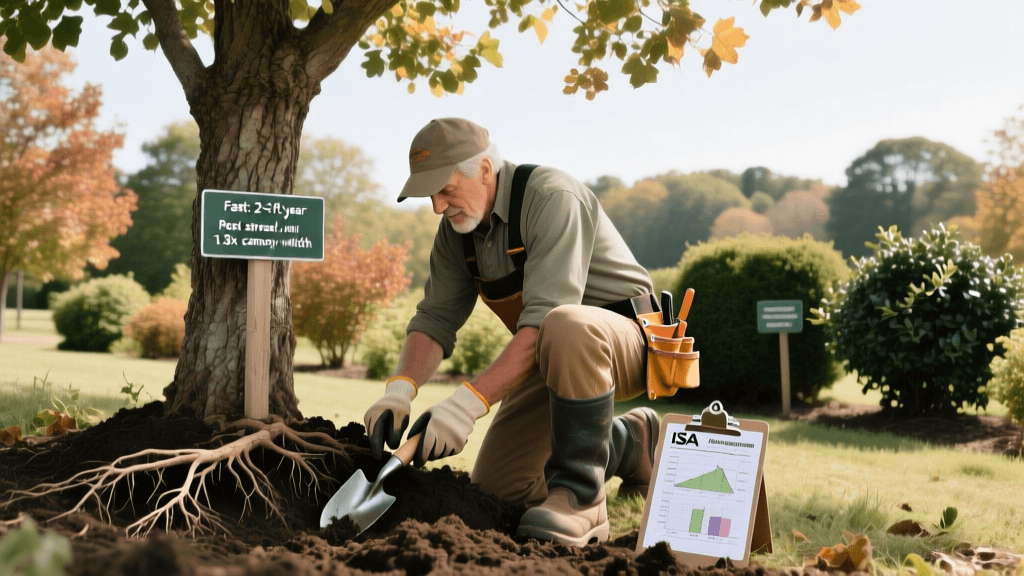
How To Fertilize Trees And Shrubs Correctly
Understanding What Trees and Shrubs Actually Need From Fertilizer
Most trees and shrubs growing in natural forest settings never receive supplemental fertilizer — they thrive on decomposing organic matter, mycorrhizal networks, and nutrient cycling. The moment a tree is planted in a lawn or landscape, however, that system breaks down. Grass competes aggressively for nitrogen, fallen leaves get raked away before they can decompose, and compacted soils restrict root access to minerals. Fertilization, done correctly, makes up for these changes. Done incorrectly, it can speed up disease, burn roots, or push lush vegetative growth at the expense of structural wood.
Before reaching for a fertilizer bag, the single most important step is a soil test. The University of Massachusetts Amherst Soil and Plant Nutrient Testing Laboratory, one of the most widely used testing services in the northeastern United States, recommends testing every three to five years for established landscape trees. A basic test costs between $15 and $30 and reveals pH, organic matter percentage, and levels of phosphorus, potassium, calcium, and magnesium. Without this baseline, fertilization is guesswork.
Reading Soil and Tissue Tests Before You Apply Anything
Nitrogen is the nutrient most commonly deficient in managed landscapes, but it is also the one most easily over-applied. The International Society of Arboriculture (ISA, 2023) notes that excessive nitrogen fertilization is a leading contributor to succulent shoot growth that is highly susceptible to fire blight in susceptible species like crabapple (Malus spp.) and pear (Pyrus spp.). Nitrogen also leaches rapidly through sandy soils, making split applications more efficient than a single heavy dose.
Phosphorus deficiency is less common in established landscapes than many homeowners assume. Most soils in the mid-Atlantic and southeastern United States already contain adequate to excessive phosphorus levels from decades of lawn fertilization. Applying phosphorus where it is not needed contributes to waterway eutrophication and can suppress mycorrhizal colonization — the fungal partnerships that help tree roots absorb water and micronutrients.
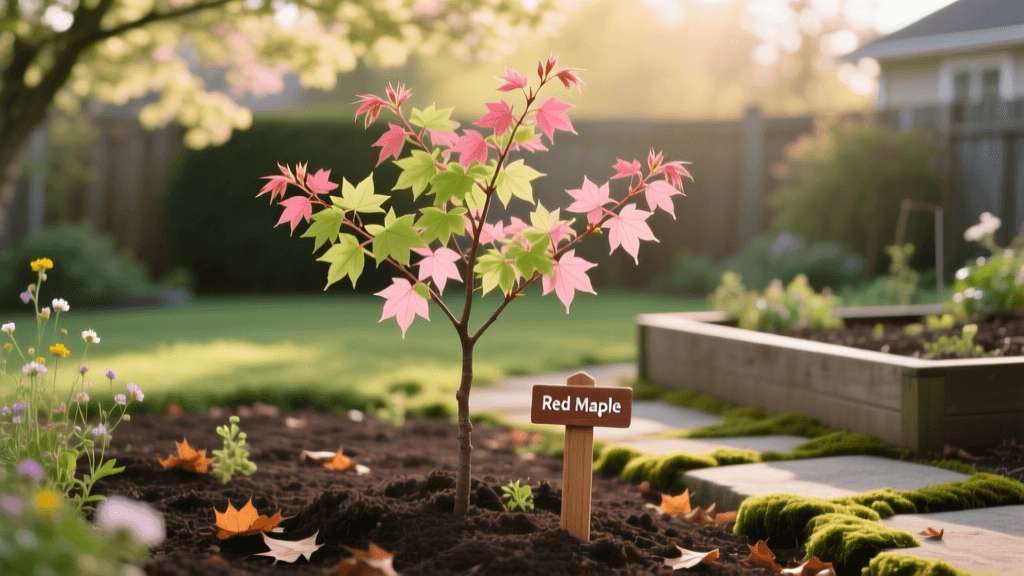
Tissue testing, sometimes called foliar analysis, provides a more direct picture of what a tree is actually taking up versus what is present in the soil. The Bartlett Tree Research Laboratories in Charlotte, North Carolina, offer tissue testing services and publish species-specific sufficiency ranges. For red maple (Acer rubrum), for example, adequate foliar nitrogen falls between 1.8% and 2.5% dry weight. Values below 1.8% indicate deficiency; values above 2.5% may indicate luxury consumption or over-fertilization.
Fertilizer Formulations and Application Methods
Fertilizers for trees and shrubs come in several forms, each with distinct advantages depending on soil conditions, tree size, and the urgency of the nutrient need.
Granular Broadcast Fertilizers
Granular fertilizers are the most practical option for most homeowners and are well-suited to shrub beds and young trees with root zones that are largely accessible. The standard application method is surface broadcast over the entire root zone, which for most trees extends well beyond the dripline. Research from the University of Florida Institute of Food and Agricultural Sciences (UF/IFAS, 2021) confirms that the functional root zone of a mature tree typically extends 1.5 to 3 times the crown radius, meaning a tree with a 20-foot crown spread may have roots reaching 30 to 60 feet from the trunk.
Slow-release granular formulations — those using sulfur-coated urea, polymer-coated urea, or methylene urea — are preferred over quick-release products for woody plants. They reduce the risk of root burn, minimize leaching losses, and provide a more consistent nutrient supply over 8 to 16 weeks. ANSI A300 Part 2 (Fertilization), the industry standard for tree fertilization practices, specifies that slow-release nitrogen sources should make up at least 50% of the total nitrogen in any fertilizer applied to trees.
Deep Root Fertilization
Deep root fertilization — injecting liquid or dissolved granular fertilizer under pressure into the soil at depths of 6 to 12 inches — is particularly useful in compacted urban soils where surface-applied nutrients may not penetrate effectively. Injection points are typically spaced 18 to 24 inches apart in a grid pattern across the root zone. This method also helps break up compaction and improve water infiltration, providing a secondary benefit beyond nutrient delivery.
The term "deep root feeding" is somewhat misleading. The majority of a tree's feeder roots — the fine, absorptive roots responsible for nutrient uptake — are concentrated in the top 12 to 18 inches of soil. Deep injection still delivers nutrients to this zone; the depth simply helps bypass surface compaction and turf competition.
Trunk Injections and Implants
Trunk injection delivers nutrients or micronutrients directly into the xylem tissue, bypassing the soil entirely. This method is most appropriate for correcting specific micronutrient deficiencies — particularly iron chlorosis in pin oak (Quercus palustris) growing in high-pH soils, or manganese deficiency in palms. The Arbor Systems Wedgle Direct-Inject system and similar tools allow arborists to deliver chelated iron or other micronutrients with minimal wounding. However, repeated trunk injections can cause cumulative wound tissue, so this approach should be reserved for situations where soil application is ineffective.
Species-Specific Fertilization Guidance
Different tree and shrub species have markedly different nutrient requirements, growth rates, and sensitivities. A one-size-fits-all approach leads to poor results.
| Species | Annual Growth Rate | Nitrogen Need | Special Considerations |
|---|---|---|---|
| Red maple (Acer rubrum) | 13–24 inches/year | Moderate (2–4 lbs N/1,000 sq ft) | Sensitive to high-pH soils; may show iron chlorosis |
| Pin oak (Quercus palustris) | 12–15 inches/year | Low to moderate | Prone to iron chlorosis above pH 6.5; avoid phosphorus |
| Eastern white pine (Pinus strobus) | 8–12 inches/year | Low | Prefers acidic soils; over-fertilization causes needle burn |
| Rhododendron spp. | 3–6 inches/year | Low; acid-forming fertilizer preferred | Requires pH 4.5–6.0; avoid lime applications nearby |
| Crape myrtle (Lagerstroemia spp.) | 12–24 inches/year | Moderate in spring only | Late-season nitrogen delays hardening; increases cold injury risk |
Oaks as a group are notably conservative in their nutrient requirements. The Morton Arboretum in Lisle, Illinois, advises against routine annual fertilization of established oaks, noting that excessive nitrogen can stimulate rapid, soft growth that is more susceptible to oak wilt and bacterial leaf scorch. For oaks showing no signs of nutrient deficiency, fertilization every three to five years is generally sufficient.
Fruit-bearing trees and shrubs require a more nuanced approach. Blueberries (Vaccinium spp.) are among the most pH-sensitive landscape plants, requiring soil pH between 4.5 and 5.5 for adequate iron and manganese availability. Ammonium sulfate is the preferred nitrogen source because it acidifies the soil slightly with each application. Applying calcium nitrate — a common lawn fertilizer — to blueberries can raise pH and trigger rapid micronutrient deficiency.
Timing Fertilizer Applications to the Tree's Growth Cycle
Timing is as important as rate and formulation. Trees are not uniformly receptive to fertilizer throughout the year; their ability to take up and use nutrients tracks closely with root and shoot growth cycles.
For most deciduous trees in temperate climates, the two most effective fertilization windows are early spring (before bud break) and late fall (after leaf drop but before the ground freezes). The late-fall window is particularly valuable because roots continue to grow and absorb nutrients well after shoots have gone dormant — often until soil temperatures drop below 40°F (4°C). Nutrients taken up in fall are stored in root and stem tissue and become immediately available to support the following spring's flush of growth.
Fertilizing in midsummer, when trees are under heat and drought stress, is generally counterproductive. Stressed trees have reduced metabolic capacity to process nutrients, and soluble nitrogen applied during drought can accumulate to phytotoxic concentrations in the root zone if irrigation is insufficient. The ISA Best Management Practices for Tree and Shrub Fertilization (ISA, 2023) explicitly caution against fertilizing drought-stressed trees without concurrent irrigation.
- Early spring (March–April in USDA zones 5–7): Best for trees showing nitrogen deficiency symptoms; supports rapid canopy development
- Late fall (October–November): Preferred timing for slow-release granular applications; nutrients stored for spring use
- Avoid July–August: Heat stress reduces uptake efficiency; soluble nitrogen risk increases
- Evergreens: Fertilize in early spring only; late-season applications delay hardening and increase winter injury
- Newly planted trees: Delay fertilization for 6 to 12 months after planting to avoid root burn while establishment roots are forming
Calculating Application Rates and Avoiding Over-Fertilization
The standard recommendation for nitrogen application to established landscape trees is 2 to 4 pounds of actual nitrogen per 1,000 square feet of root zone area per year, as specified in ANSI A300 Part 2. For trees showing significant deficiency symptoms or recovering from stress, rates up to 6 pounds per 1,000 square feet may be appropriate for a single application cycle, but this should not become routine.
Calculating actual nitrogen from a fertilizer bag requires reading the first number in the N-P-K analysis. A 50-pound bag of 12-4-8 fertilizer contains 6 pounds of actual nitrogen (50 × 0.12 = 6). To treat a root zone of 2,000 square feet at a rate of 3 pounds of nitrogen per 1,000 square feet, you need 6 pounds of actual nitrogen — exactly one bag of this formulation.
"Fertilization should be based on documented need, not on a calendar schedule. Soil and tissue testing, combined with visual assessment of growth rate and foliage color, should drive fertilization decisions for individual trees." — ANSI A300 Part 2: Tree, Shrub, and Other Woody Plant Management — Standard Practices (Fertilization), American National Standards Institute, 2022
Over-fertilization is a genuine and underappreciated risk. Excess nitrogen stimulates rapid shoot elongation at the expense of root development, producing trees with poor structural taper and high wind-throw susceptibility. In shrubs like forsythia and viburnum, over-fertilization produces rank, floppy growth that requires constant pruning to maintain form. Excess potassium can interfere with magnesium and calcium uptake, while excess phosphorus, as noted earlier, suppresses mycorrhizal activity.
- Conduct a soil test before any fertilization program begins
- Calculate the root zone area (π × radius²) using a root spread estimate of 1.5× the crown radius
- Select a slow-release formulation with at least 50% slow-release nitrogen
- Apply at the rate indicated by soil test results, not exceeding 4 lbs N/1,000 sq ft for established trees
- Water thoroughly after granular application to move nutrients into the root zone
- Document application date, product, and rate for future reference
Shrubs in foundation plantings present a particular challenge because they are often growing in highly disturbed fill soils with erratic pH and nutrient levels. Boxwood (Buxus spp.), one of the most widely planted foundation shrubs in North America, is sensitive to both nitrogen excess and magnesium deficiency. Yellowing of older interior leaves in boxwood often indicates magnesium deficiency rather than nitrogen deficiency — a distinction that a soil test makes immediately clear and that matters for choosing the right amendment.
Proper fertilization is ultimately an act of observation as much as application. A tree that is growing 12 or more inches per year, producing deep green foliage of normal size, and showing no dieback or chlorosis is almost certainly meeting its nutritional needs from the existing soil. Intervening with fertilizer in that situation adds cost and risk without benefit. Reserve fertilization for trees and shrubs that are genuinely struggling — and when you do apply, apply with precision.