Pest Control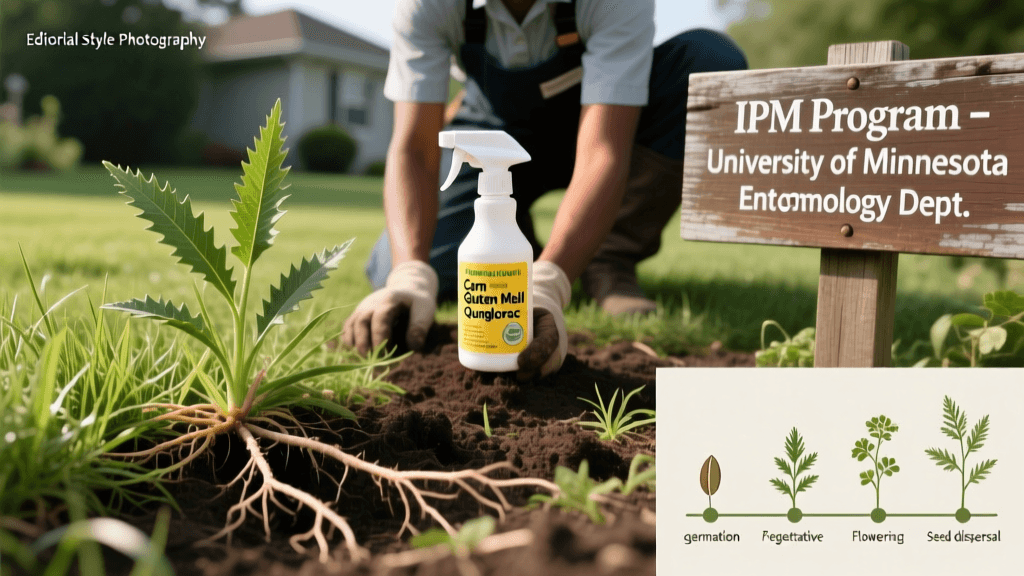
How To Get Rid Of Crabgrass Permanently
Understanding Crabgrass and Its Life Cycle
Crabgrass (Digitaria sanguinalis and Digitaria ischaemum) is a warm-season annual grassy weed that shows up in lawns across North America, Europe, and Australia. Unlike perennial weeds, it grows, sets seed, and dies all in one season — sprouting in spring, growing through summer, dropping seed in late summer, and dying after the first hard frost. A single plant can drop up to 150,000 seeds before it’s gone, so skipping control one year often means dealing with much more of it the next.
You’re not really fighting the crabgrass plant itself — you’re fighting the seeds already sitting in your soil. Those seeds can stay alive for three years or longer, according to the University of Maryland Extension. That’s why getting rid of crabgrass usually takes several seasons of steady work, not just one treatment.
Soil temperature drives germination. Crabgrass seeds start to sprout when the soil at 2 inches deep hits 55°F (13°C) for several days straight, and they germinate most heavily between 60°F and 70°F (15–21°C). In most of the northern U.S., that happens from mid-April to mid-May. In the South, it can begin as early as late February or early March.
The Seed Bank Problem
A single square foot of badly infested lawn might hold thousands of crabgrass seeds in just the top two inches of soil. The University of Illinois Extension estimates each mature plant produces 150,000 to 700,000 seeds in a season, depending on conditions. Even if you stop new plants from coming up one year, the seeds already in the ground will keep sprouting the next. That’s why it usually takes three to five years of consistent effort to get it under control.
Two Species, One Problem
Large crabgrass (Digitaria sanguinalis) and smooth crabgrass (Digitaria ischaemum) look slightly different — large crabgrass has hairy leaf sheaths and blades, while smooth crabgrass is mostly hairless — but they act the same way in your lawn. Both respond to the same treatments, so for practical purposes, you don’t need different plans for each.
Pre-Emergent Herbicides: Your First Line of Defense
Pre-emergent herbicides form a barrier in the soil that stops crabgrass seeds from taking root once they sprout. They don’t kill existing plants or dormant seeds — they interfere with cell division in the tiny seedlings just as they break ground. Timing matters a lot. Apply too early and the barrier breaks down before most seeds sprout; apply too late and the seedlings are already growing.
The Penn State Extension recommends applying pre-emergents when soil temperatures at 2 inches deep hit 50–55°F for three or more days in a row. Many turf managers use forsythia as a rough guide — when the flowers are fully open and starting to fall, the soil is usually warm enough.
- Prodiamine (Barricade): One of the longest-lasting options, giving 3–5 months of control at standard rates. It stops root and shoot growth in emerging seedlings. Safe for both cool-season and warm-season turf once it’s established.
- Dithiopyr (Dimension): Works both as a pre-emergent and on very young crabgrass — up to the 1–2 tiller stage. Its window of effectiveness is a bit shorter than prodiamine’s.
- Pendimethalin (Scotts Halts, Pre-M): A common dinitroaniline herbicide. Needs 0.5 inches of rain or irrigation within 14 days of application to activate.
- Indaziflam (Specticle): A newer ingredient with strong, long-lasting activity. Often used in commercial settings and controls more types of weeds than older products.
Water in pre-emergent herbicides within 14 days of applying them unless the label says otherwise. If you skip this step, the product often won’t work as expected.
"Pre-emergent herbicides are the cornerstone of crabgrass management programs. A single well-timed application can reduce crabgrass populations by 85–95% in a given season, but the seed bank requires multi-year commitment to deplete." — North Carolina State University Turfgrass Science Program, 2022
Split Applications for Extended Coverage
In places with long, warm springs — especially USDA Hardiness Zones 7 and warmer — one pre-emergent application may wear off before the last round of crabgrass seeds sprouts in late spring. Applying half the seasonal rate at the usual time, then the other half 6–8 weeks later, stretches out protection without going over the label limits. Clemson University Cooperative Extension recommends this for lawns in the Southeast.
Post-Emergent Herbicides: Dealing With Established Plants
If crabgrass is already up and growing, you’ll need a post-emergent herbicide. These work best on young plants — ideally when they have 1–4 tillers (side shoots). Once they reach 5+ tillers or start forming seed heads, chemical control becomes much less dependable.
The two main active ingredients for post-emergent crabgrass control in cool-season lawns are quinclorac and fenoxaprop-p-ethyl. Quinclorac (Drive XLR8, Quinstar) works well on young crabgrass, especially when mixed with a methylated seed oil (MSO) adjuvant at 1% v/v. Fenoxaprop-p-ethyl (Acclaim Extra) targets grassy weeds selectively and won’t harm broadleaf plants, so it fits well in mixed landscapes.
For warm-season lawns like bermudagrass or zoysia, options are tighter — many graminicides can damage the turf itself. MSMA (monosodium methanearsonate) used to be common but has been pulled from most residential markets due to arsenic concerns. Check with your local cooperative extension office for what’s currently labeled for your area.
Cultural Controls: The Foundation of Long-Term Success
Herbicides alone won’t get rid of crabgrass for good. A thick, healthy lawn is your best long-term defense. Crabgrass takes hold where the grass is thin and stressed — places where sunlight reaches bare soil. When turf covers 80% or more of the ground, crabgrass has little room to grow, even if plenty of seeds are present.
- Mowing height: Set your mower to 3–4 inches for cool-season grasses (tall fescue, Kentucky bluegrass, perennial ryegrass). Taller grass shades the soil, cools it down, and cuts down on light for crabgrass seeds. Rutgers University found mowing tall fescue at 3.5 inches cut crabgrass establishment by 60% compared to mowing at 2 inches.
- Overseeding: Fill in bare or thin spots with grass seed each fall. For cool-season lawns, late August through mid-September is usually the best window. Don’t apply pre-emergent herbicides the same season you overseed — most will also block your new grass seed from sprouting.
- Fertilization timing: Hold off on heavy nitrogen applications in spring for cool-season lawns. Spring nitrogen encourages soft, shallow growth that struggles in summer heat and opens the door for crabgrass. Put most of your nitrogen down in fall (September–November), when cool-season grasses are actively building roots.
- Irrigation: Water deeply and less often — about 1 inch per week, all at once or split into two sessions — instead of light daily sprinkles. Frequent shallow watering keeps the top inch of soil damp, which crabgrass loves. Deep watering pushes roots down and lets the surface dry between sessions.
- Soil health: Compacted or acidic soil gives crabgrass an edge. Core aerate cool-season lawns every fall, and aim for a soil pH between 6.0 and 7.0. A soil test every 2–3 years from your local extension service helps you decide whether and how much lime or fertilizer to add.
Integrated Pest Management and the Multi-Year Plan
Integrated Pest Management (IPM) is a practical approach developed by university extension programs and the USDA. It combines cultural, mechanical, biological, and chemical tools to manage pests with less environmental impact. For crabgrass, that means using herbicides when needed — but also building a lawn healthy enough to crowd it out over time.
The idea is to wear down the seed bank over 3–5 years while improving turf density, so you eventually need fewer or no herbicides. Here’s a realistic IPM timeline for a cool-season lawn in the northern U.S.:
| Year | Spring Action | Summer Action | Fall Action | Expected Outcome |
|---|---|---|---|---|
| Year 1 | Apply pre-emergent at 50–55°F soil temp; spot-treat escapes with quinclorac | Mow at 3.5 inches; water deeply 1x/week | Core aerate; overseed thin areas; apply 1 lb N/1,000 sq ft | 70–85% reduction in crabgrass coverage |
| Year 2 | Apply pre-emergent; fewer escapes expected | Continue cultural practices; minimal spot treatment | Overseed remaining thin spots; soil test and amend | 90–95% reduction; turf density improving |
| Year 3 | Apply pre-emergent at reduced rate if turf is dense | Monitor; treat only if needed | Maintenance overseeding; fall fertilization | Near-elimination; seed bank significantly depleted |
| Year 4+ | Pre-emergent optional based on monitoring | Cultural controls sufficient in most cases | Routine maintenance | Permanent suppression through turf competition |
The EPA’s IPM in Schools program and the National IPM Database — run by land-grant universities — offer free resources for homeowners and turf managers. Many state extension offices, including Cornell University, the University of Georgia, and Michigan State University, publish crabgrass calendars tailored to local weather and grass types.
Keep track of where crabgrass appears each year — note how thick it is and where. That helps you spot problem spots (like thin areas near driveways, sidewalks, or south-facing slopes where the soil warms fastest) and focus your work instead of treating the whole yard.
Organic and Low-Input Control Options
If you’d rather avoid synthetic herbicides, there are organic and low-input options that help reduce crabgrass — though they usually take more regular effort and may not match the first-year results of synthetic pre-emergents.
Corn gluten meal (CGM) is the best-known organic pre-emergent. It’s a byproduct of corn processing that interferes with root development in germinating seeds. Research from Iowa State University — where CGM was first studied as a natural herbicide in the early 1990s — found that applying CGM at 20 lbs per 1,000 square feet cut crabgrass germination by 50–60% after two or three years of consistent use. It also supplies about 10% nitrogen, so it doubles as a light fertilizer. But CGM needs to stay dry after application to work well, and wet springs can weaken its effect.
Solarization means covering bare or heavily infested soil with clear plastic for 4–6 weeks during the hottest part of summer. The sun heats the soil underneath to 140°F (60°C) or more at the surface — hot enough to kill most weed seeds in the top 2–3 inches. It’s best for small, targeted areas being renovated, not full lawns.
Hand-pulling works for a few scattered plants, as long as you catch them before they set seed — usually before late July in northern areas. Pull after rain when the soil is soft, and try to get as much of the root as possible. If a plant already has seed heads, bag it and throw it away — don’t compost it, since the seeds might survive.
No matter which method you choose — chemical, organic, or cultural — consistency is what makes it stick. Skipping one year of pre-emergent, letting seed heads ripen, or ignoring thin patches can refill the seed bank and undo years of progress. Think of crabgrass control as regular lawn care, not a one-time job — and the results will build up over time.