Pest Control
How To Get Rid Of Grubs In Your Lawn Naturally
Few lawn problems are as frustrating — or as invisible — as a grub infestation. By the time you notice the spongy turf, the brown patches, or the raccoons tearing up your yard at night, the damage is already done. The good news is that natural control methods have improved over the past two decades, and with the right timing and approach, you can protect your lawn without using broad-spectrum chemical insecticides.
Identifying the Grubs in Your Lawn
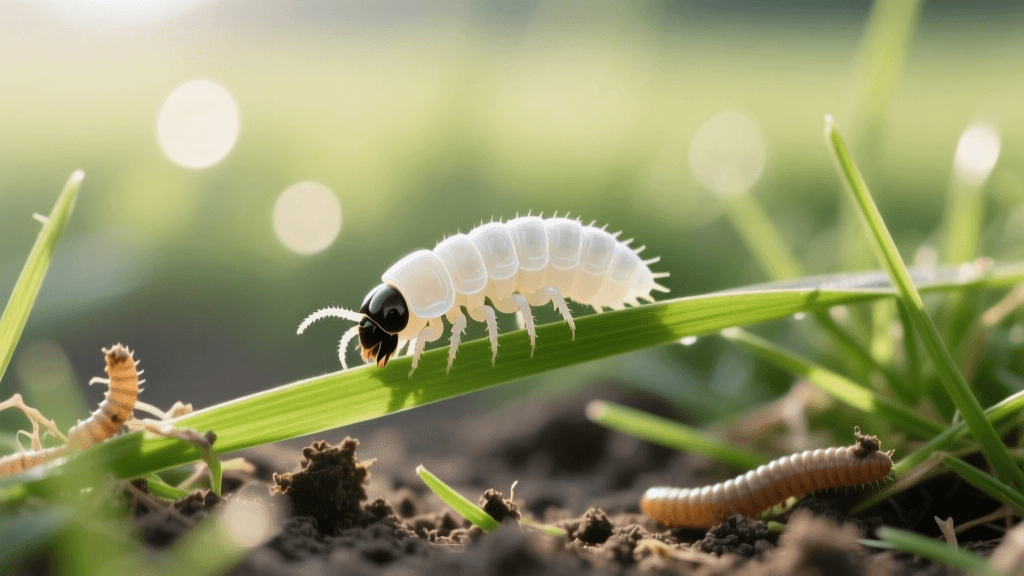
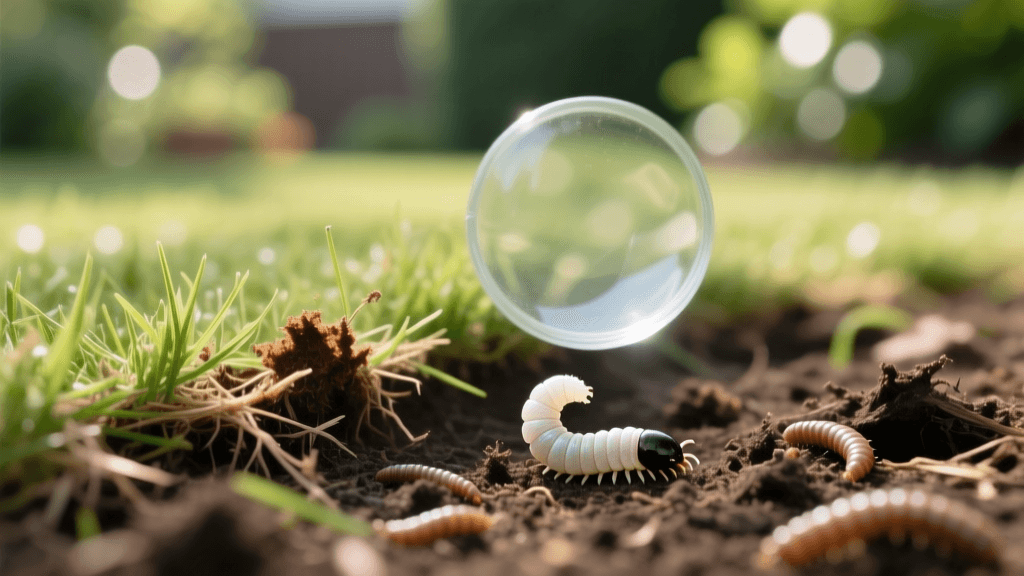
Not every white, C-shaped larva you dig up is the same pest, and knowing which one you have matters because different species respond differently to control methods. The most common lawn-damaging grubs in North America belong to the family Scarabaeidae. The three species you're most likely to encounter are the Japanese beetle (Popillia japonica), the European chafer (Rhizotrogus majalis), and the masked chafer complex, which includes the northern masked chafer (Cyclocephala borealis) and the southern masked chafer (Cyclocephala lurida).
Japanese beetle grubs are the most widespread, having spread from their original introduction point in southern New Jersey around 1916 to now occupying most of the eastern United States and parts of the Midwest. They are creamy white with a tan head capsule and measure roughly 25–32 mm at maturity. The most reliable way to tell them apart is by examining the raster pattern — the arrangement of spines on the underside of the last abdominal segment. Japanese beetle grubs display a distinctive V-shaped raster pattern, while masked chafer grubs show a scattered, random arrangement.
How to Conduct a Grub Inspection
Timing your inspection correctly matters. Grubs are easiest to find and most vulnerable to treatment in late summer, typically August through September, when they are small (first and second instar) and feeding near the soil surface. To inspect, cut three sides of a 1-square-foot section of turf with a spade, fold it back like a flap, and count the grubs in the top 3–4 inches of soil. Repeat this in several locations across your lawn, especially in areas showing stress.
Record your counts and calculate an average per square foot. This number is your infestation density, and it’s the main factor in deciding whether treatment is needed.
Understanding Damage Thresholds
One of the core ideas behind integrated pest management (IPM) is the concept of an economic or aesthetic threshold — the pest population level at which the damage justifies the cost and effort of treatment. For home lawns, the University of Kentucky College of Agriculture, Food and Environment recommends a treatment threshold of 8–10 grubs per square foot for most cool-season turfgrasses. Lawns under drought stress or with shallow root systems may show visible damage at lower densities, around 5 grubs per square foot.
Healthy, well-irrigated lawns with deep root systems can often tolerate populations up to 10–12 grubs per square foot with minimal visible damage. So if your inspection reveals 3 or 4 grubs per square foot, the most sustainable response is to improve overall lawn health instead of applying any treatment.
Natural and Biological Control Methods
Biological controls work by introducing or encouraging natural enemies of grubs — pathogens, parasites, and predators that reduce populations without harming beneficial insects, soil organisms, or the broader ecosystem. These methods take more time than synthetic insecticides, but they help build long-term resilience into your lawn's soil biology.
Beneficial Nematodes
Entomopathogenic nematodes are microscopic roundworms that parasitize soil-dwelling insects. Two species are commercially available and effective against white grubs: Heterorhabditis bacteriophora and Steinernema glaseri. H. bacteriophora is the more widely recommended species for Japanese beetle and masked chafer grubs. These nematodes enter the grub through natural body openings, release symbiotic bacteria (Photorhabdus luminescens in the case of H. bacteriophora), and kill the host within 24–48 hours.
Research conducted at Rutgers University's New Jersey Agricultural Experiment Station found that properly applied H. bacteriophora can achieve 50–75% grub mortality under ideal conditions. The key word is “ideal.” Nematodes need moist soil, soil temperatures between 60°F and 93°F, and must be watered in right after application. They break down quickly in UV light and won’t survive if left on dry soil. Apply them in the evening, water the lawn thoroughly before and after application, and keep the soil moist for at least two weeks afterward.
Application rates typically range from 23 million to 46 million nematodes per 1,000 square feet, depending on how bad the infestation is. Buy nematodes from reputable suppliers who guarantee live delivery and refrigerate them until use. Products stored poorly or past their shelf life will be much less effective.
Milky Spore Disease
Bacillus popilliae and Bacillus lentimorbus are the bacterial agents behind milky spore disease, a naturally occurring pathogen that specifically targets Japanese beetle grubs. When a grub ingests milky spore, the bacteria multiply inside the larva, turning its hemolymph (blood) a characteristic milky white color. The grub dies and releases billions of new spores back into the soil, creating a self-sustaining reservoir of the pathogen.
The appeal of milky spore is its longevity. The USDA Agricultural Research Service has documented milky spore persisting in soil for 15–20 years after a single application under favorable conditions. But it has two limits: it only works against Japanese beetle grubs (not masked chafers or other species), and it needs soil temperatures above 65°F for several weeks to establish well. In northern states with short warm seasons, it can take 2–4 years before you see noticeable population suppression.
Cultural Practices That Reduce Grub Pressure
The most sustainable long-term strategy against grubs isn’t any single product — it’s creating conditions that make your lawn less attractive to egg-laying beetles and more able to handle larval feeding. These cultural practices form the base of any IPM program.
- Mow at the correct height. Keeping cool-season grasses like Kentucky bluegrass and tall fescue at 3–4 inches discourages adult beetles from laying eggs in the turf. Research from Michigan State University Extension found that Japanese beetle females prefer to lay eggs in short, moist turf, and that lawns mowed at 3.5 inches or taller got far fewer eggs than lawns mowed at 1.5 inches.
- Reduce irrigation during egg-laying season. Adult Japanese beetles lay eggs from late June through August. Letting your lawn go slightly dry during this period (without causing permanent wilt) makes the soil less appealing for egg-laying and lowers egg survival. Eggs need moist soil to hatch.
- Overseed with endophyte-enhanced grasses. Certain cultivars of tall fescue, perennial ryegrass, and fine fescues contain naturally occurring fungal endophytes (Neotyphodium spp.) that produce alkaloids toxic to surface-feeding insects. While endophytes don’t stop soil-dwelling grubs as well as surface feeders, they add to overall pest resistance and improve turf density.
- Improve soil drainage. Compacted, poorly drained soils favor grub survival. Core aeration in fall improves drainage, reduces compaction, and physically disrupts grub populations in the top few inches of soil.
- Avoid over-fertilizing with nitrogen. Lush, rapidly growing turf is more attractive to egg-laying beetles. A balanced fertility program that promotes steady, moderate growth is better than high-nitrogen programs that push excessive top growth.
Organic and Naturally Derived Pesticide Options
When biological controls and cultural practices aren’t enough to bring populations below the damage threshold, several naturally derived pesticide active ingredients are available that are approved for organic use or have a lower environmental impact than synthetic alternatives.
| Active Ingredient | Source | Target Grub Species | Best Application Window | Efficacy Range |
|---|---|---|---|---|
| Bacillus thuringiensis galleriae (Btg) | Naturally occurring soil bacterium | Japanese beetle, masked chafer | Late June – August (young larvae) | 60–80% |
| Heterorhabditis bacteriophora | Entomopathogenic nematode | Japanese beetle, masked chafer | August – September | 50–75% |
| Bacillus popilliae (Milky Spore) | Naturally occurring bacterium | Japanese beetle only | Spring or fall (soil temp >65°F) | Variable (builds over years) |
| Azadirachtin (Neem) | Neem tree (Azadirachta indica) seed extract | Multiple species (IGR effect) | June – July (egg/early larval stage) | 40–60% |
| Spinosad | Fermentation product of Saccharopolyspora spinosa | Limited grub efficacy; better for adults | Adult beetle emergence | 30–50% (grubs) |
Azadirachtin, the active compound in neem-based products, works mainly as an insect growth regulator (IGR) rather than a direct toxin. It interferes with molting and development in immature insects, stopping larvae from moving to the next instar. For grub control, it works best when applied during egg hatch and early first-instar development in late June and July. Its effectiveness drops off sharply against second and third instar grubs. Because azadirachtin breaks down quickly in sunlight and soil (half-life of about 3–44 days depending on conditions), it has little lasting effect on non-target organisms.
A newer option gaining attention from university extension programs is Bacillus thuringiensis galleriae (Btg), sold under trade names like beetleGONE! and similar products. Unlike the more familiar Bt subspecies used against caterpillars (Bt kurstaki), Btg produces crystal proteins that target beetles in the order Coleoptera. A 2018 study published in the journal Biological Control found Btg applications achieving 60–80% reduction in Japanese beetle grub populations when applied at the right time and rate.
"Integrated pest management for turfgrass should always begin with accurate pest identification and population monitoring. Applying any product — organic or synthetic — without first confirming that populations exceed the damage threshold is both economically wasteful and ecologically unnecessary."
— Cooperative Extension Service, Cornell University, 2021
Timing Is Everything: A Seasonal Action Plan
The most common reason natural grub control fails is poor timing. Biological controls in particular have narrow windows of peak effectiveness that match specific grub life stages. Understanding the annual life cycle of your target species helps you get results.
Japanese beetles complete one generation per year. Adult beetles emerge from the soil in late June to early July, feed on foliage for 4–6 weeks, and lay eggs in the soil from late June through August. Eggs hatch in 2 weeks, and the resulting first-instar larvae feed on grass roots through August and September. By October, larvae have reached the third instar and move deeper into the soil to overwinter. They return to the root zone in April and May before pupating and emerging as adults again in June.
- May – June: Apply milky spore if Japanese beetle is your main concern. Soil temperatures are rising, which helps the bacteria establish. Watch for adult beetle emergence.
- Late June – July: Apply azadirachtin-based products to hit eggs and newly hatched first-instar larvae. This is also the window for preventive Btg applications. Keep irrigation low to discourage egg-laying.
- August – September: This is the main window for beneficial nematode applications. Grubs are small, near the surface, and most vulnerable. Apply nematodes in the evening, water in well, and keep the soil moist. Do your square-foot inspection counts during this time to check population density.
- October – November: Core aerate to disrupt overwintering grubs and improve soil structure. Overseed with endophyte-enhanced cultivars if needed. Add compost topdressing to support beneficial soil microbes.
- April – May: Check again to see how many grubs survived the winter. Third-instar grubs are large and hard to kill with biological controls at this stage — if numbers are still high, plan your summer approach instead of trying a late-spring treatment.
Supporting Natural Predators and Soil Health
A biologically active soil is your best long-term defense against grub outbreaks. Healthy soils hold a diverse mix of organisms — ground beetles, parasitic wasps, entomopathogenic fungi, and predatory nematodes — that together keep pest populations in check. Many conventional lawn care habits — frequent pesticide use, heavy reliance on synthetic fertilizer, and soil compaction — weaken this community and let pests grow unchecked.
Ground beetles in the family Carabidae eat soil-dwelling insects, including grub eggs and small larvae. Giving them places to live — leaf litter along borders, unmowed edge areas, and less pesticide use — can boost their numbers. Research from the Rodale Institute in Kutztown, Pennsylvania has found significantly higher ground beetle populations in organically managed turf compared to conventionally managed lawns, with lower soil pest pressure over several years.
Entomopathogenic fungi, especially Metarhizium anisopliae and Beauveria bassiana, occur naturally in healthy soils and infect grubs on contact. Commercial versions of both are available, though their performance in turf varies more than nematode treatments and depends heavily on soil moisture and temperature. Adding compost helps these fungi stick around longer.
Reducing or skipping broad-spectrum insecticide use is probably the biggest step you can take to rebuild natural pest control. Products with active ingredients like bifenthrin, lambda-cyhalothrin, or deltamethrin — common in general-purpose lawn insecticide sprays — kill beneficial ground beetles, parasitic wasps, and other helpful insects along with pests. This often makes long-term pest problems worse. The National Pesticide Information Center (NPIC), 2022, notes that repeated use of broad-spectrum insecticides is linked to secondary pest outbreaks as natural enemy populations crash.
Building a lawn care routine around soil health, proper mowing and watering, and targeted biological controls takes longer to show results than grabbing a bag of granular insecticide. But the results last longer, cost less over time, and do far less harm to the soil ecosystem your lawn depends on. Start with an accurate count, identify your species, time your applications right, and give the biology time to work.