
Landscaping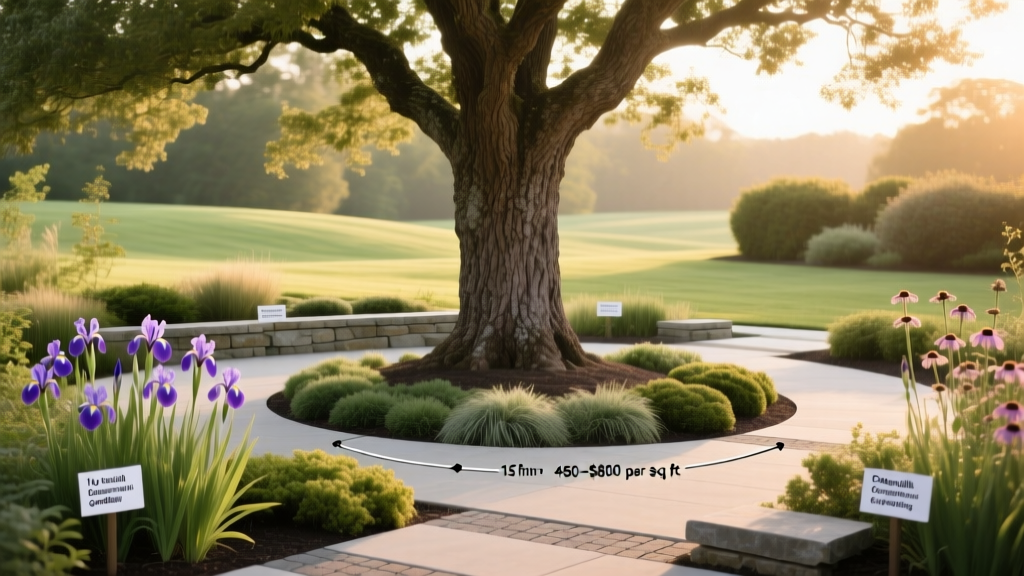
How To Landscape Around An Old Oak Tree Safely
Respect the Root Zone: Understanding the Critical Radius
Old oak trees—particularly Quercus alba (white oak) and Quercus macrocarpa (bur oak)—often live more than 150 years and have wide, shallow root systems. Most of their fine, water-absorbing roots sit in the top 12–18 inches of soil and stretch well past the drip line—usually two to three times the crown radius. For a mature oak with a 40-foot-wide canopy, that means the root zone can extend up to 60 feet from the trunk. Digging, compacting, or paving inside this area makes it harder for the tree to take in oxygen and water, and can weaken its stability. The American Society of Landscape Architects (ASLA) puts it plainly: “soil compaction within the CRZ is the single greatest threat to mature tree health during landscape renovation” (ASLA, 2021).
Test the soil before any work begins. A certified arborist can run penetrometer readings and check bulk density; values above 1.4 g/cm³ mean the soil is too compacted and needs attention. At the University of California, Davis Arboretum, oaks lost after construction showed a 37% mortality rate when more than 15% of their root mass was disturbed.
Plant Selection: Shade-Tolerant, Low-Competition Species
Pick plants that grow well under oak shade without pulling too much water or nutrients from the soil. Skip aggressive spreaders or thirsty species. Stick with native, drought-tolerant perennials and groundcovers that have fibrous, non-invasive roots.
Native Perennials for Dappled Shade
- Heuchera americana (American alumroot): Grows 12–18 inches tall; handles dry shade; space 1–2 sq ft per plant; costs $8.50–$12.00 per quart pot
- Polygonatum biflorum (Solomon’s seal): Spreads slowly into colonies; height 24–36 inches; space 18 inches apart; $9.25–$14.50 per division
- Chasmanthium latifolium (Inland sea oats): Clumping grass; height 2–4 feet; spreads little; $7.00–$10.50 per 1-gallon container
Hardscaping Strategies That Protect Soil Integrity
Standard patios and walkways usually need deep digging and heavy pavers—both bad for oak roots. Try elevated, permeable, or floating hardscape options instead, anchored outside the CRZ.
A 12-foot-diameter circular gravel path with a 4-inch decomposed granite base and 2-inch river rock surface costs about $420–$680 for 113 sq ft. It must sit fully outside the 30-foot buffer around the trunk. At the Brooklyn Botanic Garden’s Oak Meadow renovation (2019), designers used a suspended boardwalk held up by galvanized steel micropiles driven 18 inches into undisturbed subsoil—keeping all construction clear of roots while supporting 1,200 lb/ft² live loads.
For seating areas, try modular concrete pavers on a 3-inch sand bed over geotextile fabric—but only where root mapping shows few roots. Each 24" × 24" paver covers 4 sq ft; figure $12–$18 per unit, plus $3.50/sq ft for sand and fabric.
Soil Management and Mulching Best Practices
Mulch depth and type matter for air flow and moisture. Use no more than 2–4 inches of coarse, shredded hardwood mulch—and keep it flat, not piled high against the trunk. A 3-inch layer over 500 sq ft takes about 4.6 cubic yards. At the Missouri Botanical Garden, researchers saw 22% more fine root growth under properly applied mulch than in bare soil after two growing seasons.
Avoid dyed mulches, rubber mulch, or thick compost layers (>1 inch), which cut off air and encourage fungi like Armillaria mellea. Go for locally sourced, aged wood chips sized between ⅜" and 1". Top them off once a year to keep the depth steady without smothering roots.
Design Layouts by Square Footage and Budget Tier
Oak-centered landscapes work best when scaled to your space and budget. Here are three practical tiers:
| Scope | Max Area (sq ft) | Key Elements | Estimated Cost Range | Timeline |
|---|---|---|---|---|
| Minimal Intervention | 250 | Mulch ring (6-ft radius), 3 native groundcover species, 2 ornamental grasses | $320–$510 | 1 day |
| Enhanced Buffer Zone | 850 | Permeable gravel path (113 sq ft), raised planter boxes (120 sq ft total), drip irrigation | $2,100–$3,400 | 3–4 days |
| Integrated Canopy Space | 2,200 | Suspended walkway (300 sq ft), native understory shrub matrix (Viburnum prunifolium, Cephalanthus occidentalis), rain garden (180 sq ft) | $14,800–$22,500 | 10–14 days |
Each tier includes a one-time arborist consultation ($225–$450) and permits if needed. Labor runs $65–$95/hour for licensed landscape contractors with ASLA accreditation, depending on location.
When working near oaks, start with structural needs—then add design. ASLA’s Guidelines for Sustainable Site Design says: “Mature tree preservation shall take precedence over hardscape alignment, grading continuity, or planting density targets” (ASLA, 2022). At the Arnold Arboretum of Harvard University, new paths within 50 feet of old oaks get scanned for roots first, then adjusted on-site using GPS-guided stakes.
Bury drip irrigation lines 6 inches deep—not in open trenches, but with a vibratory plow that pushes soil aside gently. Run lines parallel to the drip line, not in circles around the trunk. Place emitters every 18 inches; each delivers 0.5–1.0 gallons per hour. For a 400-sq-ft planting ring, use 22–30 emitters and budget $185–$290 for tubing, fittings, and pressure regulators.
Prune only dead branches, and only during dormancy (November–February). Topping, lopping, or removing more than 15% of live canopy in one year stresses the tree. USDA Forest Service studies on Quercus rubra back that limit (2020).
Check soil moisture every two weeks during the first year with a 6-inch probe. Oak roots do best when soil holds 12–18% water by volume. Below 10% means drought stress; above 22% points to poor drainage or too much watering.
Pick companion shrubs with taproots or deep lateral roots so they don’t compete near the surface. Ilex verticillata (winterberry holly) and Amelanchier laevis (Allegheny serviceberry) both fit the bill and add seasonal color without crowding the oak.
Only install root barriers if nothing else works—and go vertical, not horizontal. Use rigid HDPE sheeting buried 30 inches deep and sticking up 6 inches above grade. Horizontal barriers block water and push roots upward, causing problems later. Place barriers at least 10 feet outside the CRZ edge so roots aren’t forced toward construction zones.
Record every change with before-and-after drone orthomosaics and root mapping reports. These help track long-term health and guide future care. The Chicago Botanic Garden saves this data for all heritage trees in its Living Collections database, helping predict root growth over 25 years.
“The most successful oak-centered landscapes don’t fight the tree—they interpret its presence. Every stone, plant, and pathway becomes a dialogue with decades of growth, not an imposition upon it.” — Dr. Elena Ruiz, Senior Arborist, University of Florida IFAS Extension (2023)
Finally, inspect the site once a year: check mulch depth, look at the trunk flare for girdling roots or grade changes, and test irrigation emitters. Skipping even one season can start a decline that takes years to fix—if it ever does.

