Tree Care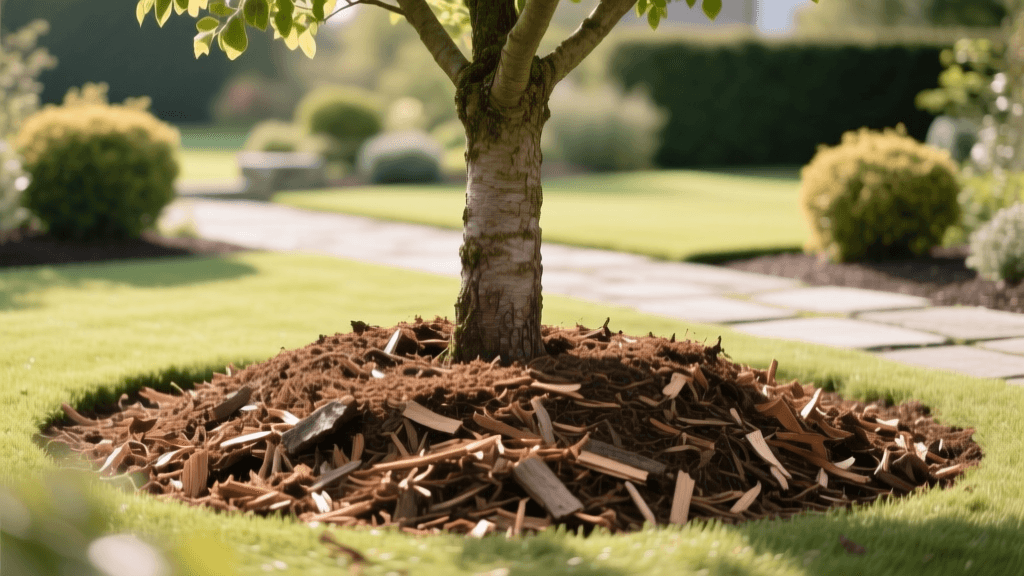
How to Properly Mulch Trees and Avoid Volcano Mulching
Introduction to Tree Mulching
Mulching is one of the most beneficial practices you can implement for the health and longevity of your landscape trees. When applied correctly, a layer of organic mulch mimics the natural forest floor, providing a stable environment for root growth and soil biology. However, despite its widespread use in both residential and commercial landscaping, mulching is frequently done incorrectly. The most common and damaging error is known as "volcano mulching," a practice that can slowly kill an otherwise healthy tree. In this comprehensive how-to guide, we will explore the science behind tree mulching, detail the severe risks of improper application, and provide a step-by-step actionable guide to mulching your trees correctly.
The Science and Benefits of Tree Mulching
Before grabbing a wheelbarrow and a bag of wood chips, it is essential to understand why mulch is so vital to tree health. Trees in urban and suburban environments face immense stress compared to their forest-dwelling counterparts. They battle compacted soils, extreme temperature fluctuations, and competition from turfgrass. Proper mulching addresses these issues through several key mechanisms:
- Moisture Retention: A proper mulch layer reduces soil water evaporation by up to 70 percent, ensuring that the critical feeder roots remain hydrated during dry summer months.
- Temperature Moderation: Mulch acts as an insulating blanket. In the summer, it keeps the root zone significantly cooler than bare soil. In the winter, it prevents the ground from freezing and thawing rapidly, which can cause frost heaving and damage shallow roots.
- Weed Suppression: A thick layer of mulch blocks sunlight from reaching weed and grass seeds, eliminating competition for water and essential soil nutrients.
- Soil Structure and Biology: As organic mulches decompose, they add vital organic matter to the soil. This feeds mycorrhizal fungi and beneficial bacteria, which in turn help tree roots absorb nutrients like phosphorus and nitrogen more efficiently.
The Fatal Flaw: Understanding Volcano Mulching
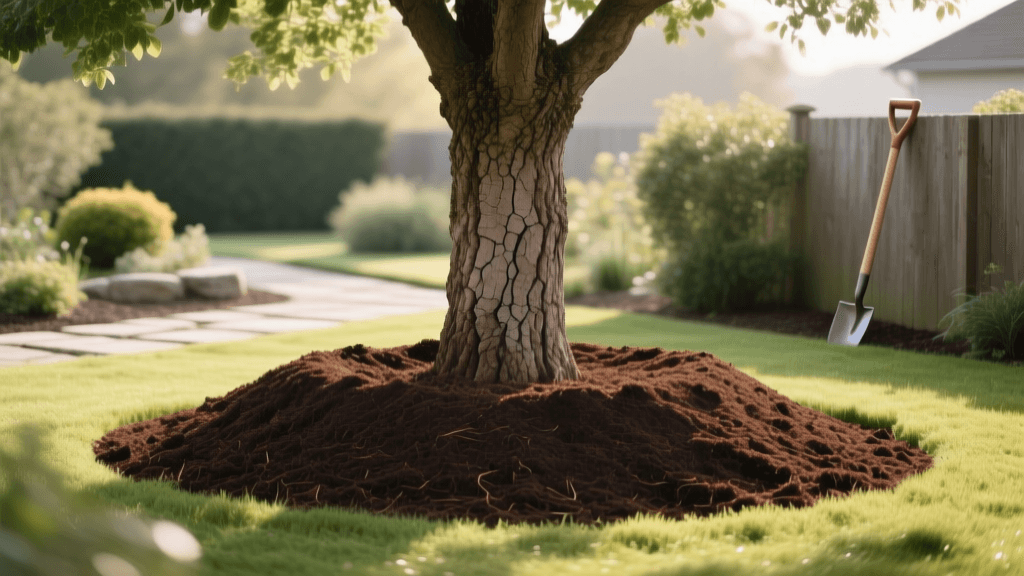
Volcano mulching refers to the practice of piling mulch high against the trunk of a tree, creating a cone or "volcano" shape. While this might look neat and intentional to an untrained eye, arborists consider it a fatal landscaping mistake. The trunk of a tree is not designed to be buried in moisture-retaining material. The bark tissue requires exposure to air to remain healthy and functional.
When mulch is piled against the trunk, several devastating issues arise:
- Bark Decay and Fungal Cankers: Constant moisture against the trunk softens the bark, creating an ideal environment for fungal pathogens and wood-decaying organisms to invade the tree’s vascular system.
- Girdling Roots: Roots naturally seek out the oxygen, moisture, and warmth provided by the mulch pile. They will begin to grow upward and wrap around the trunk. Over time, these girdling roots strangle the tree’s main vascular tissues, effectively cutting off the flow of water and nutrients.
- Pest Harbor: Thick piles of mulch against the bark provide a perfect hiding and breeding ground for rodents, such as voles and mice, which will chew on the tender inner bark (phloem) during the winter, potentially girdling and killing the tree.
Step-by-Step Guide to Proper Tree Mulching
To ensure your trees thrive, follow this practical, actionable guide to applying mulch correctly. You will need a measuring tape, a garden rake, a wheelbarrow, and your chosen organic mulch.
Step 1: Locate the Root Flare and Define the Ring
First, identify the root flare—the area at the base of the trunk where it widens and transitions into the root system. If your tree is currently buried in soil or old mulch, carefully excavate this area using a hand trowel or an air spade until the flare is fully exposed. Next, measure a radius for your mulch ring. The absolute minimum radius should be 3 feet (36 inches) from the trunk. However, for optimal health, the mulch ring should extend all the way to the tree’s drip line (the outer edge of the canopy).
Step 2: Clear Competing Vegetation
Remove all grass, weeds, and debris from within the defined mulch ring. Turfgrass is highly aggressive and will outcompete young tree roots for water. You can remove the sod manually with a spade or use a targeted, glyphosate-based herbicide, taking extreme care not to let the chemical drift onto the tree’s trunk or leaves. Allow the soil to settle for a few days if you used an herbicide.
Step 3: Apply the Mulch at the Correct Depth
Using your wheelbarrow and a garden rake, spread your organic mulch evenly across the cleared ring. The golden rule of mulch depth is 2 to 4 inches. Never exceed 4 inches, as excessively deep mulch restricts oxygen exchange to the soil, leading to root hypoxia (suffocation). If you are refreshing an existing mulch bed, rake the old mulch to break up any hydrophobic crusts, and only add enough new mulch to maintain the 2-to-4-inch total depth.
Step 4: Create the "Donut" Shape
This is the most critical step. Pull the mulch away from the base of the trunk, creating a donut shape. You must leave a 2-to-3-inch gap of bare soil between the mulch and the tree trunk. The root flare must remain completely visible and exposed to the air. Remember the arborist’s mantra: "Donut mulch, don’t volcano mulch."
Mulch Material Comparison Chart
Not all mulches are created equal. Choosing the right material impacts soil pH, decomposition rates, and overall tree health. Below is a comparison chart of common mulching materials to help you make an informed purchasing decision.
| Material Type | Pros | Cons | Best Use Case | Est. Cost per Cu. Yard |
|---|---|---|---|---|
| Shredded Hardwood | Stays in place well, breaks down steadily, improves soil structure. | Can mat if applied too thickly; may temporarily tie up surface nitrogen. | Most shade trees, general landscape beds. | $30 - $45 |
| Pine Bark Nuggets | Long-lasting, resists compaction, attractive aesthetic. | Washes away easily on slopes; breaks down very slowly. | Flat landscape beds, acid-loving trees (e.g., Pin Oaks). | $40 - $55 |
| Arborist Wood Chips | Excellent moisture retention, often free from local tree services, great for soil biology. | Aesthetics are rustic and uneven; may contain weed seeds if not composted. | Large properties, rural tree lines, naturalized areas. | $15 - $25 (Often Free) |
| Cocoa Bean Hulls | Pleasant chocolate scent, fine texture, rich in nutrients. | Toxic to dogs if ingested; can develop a harmless but unsightly surface mold. | Small ornamental trees in pet-free urban gardens. | $60 - $80 |
| Rubber Mulch | Does not decompose, no weed seeds, long lifespan. | Adds zero nutritional value to soil; can leach heavy metals; absorbs intense heat. | Not recommended for tree health; use only in playgrounds. | $70 - $90 |
Seasonal Mulching Maintenance Schedule
Mulch is not a "set it and forget it" application. Organic mulches decompose and shift over time. Follow this seasonal maintenance schedule to keep your tree’s root zone optimized year-round.
Spring (March - May)
Spring is the ideal time to refresh your mulch rings. Rake the existing mulch to loosen any compacted layers that formed over the winter. Check the depth with a ruler; if it is less than 2 inches, top it off with fresh organic mulch. Ensure the donut shape around the trunk is still intact and that the root flare is visible.
Summer (June - August)
During peak heat, monitor soil moisture beneath the mulch. While mulch retains water, it can also shed light rainfall if it becomes completely dry and hydrophobic. When watering your trees, use a slow trickle hose to ensure the water penetrates through the mulch and reaches the top 12 inches of the soil profile where the feeder roots reside.
Fall (September - November)
Fallen autumn leaves can be shredded with a lawnmower and added to the mulch ring as an excellent, free source of organic matter. However, do not pile whole, unshredded leaves against the trunk, as they will mat together and block oxygen. Inspect the base of the tree for signs of vole activity and consider installing a wire mesh guard if rodents are a known issue in your area.
Winter (December - February)
When shoveling snow, avoid piling snow from salted driveways or roads onto your mulch rings. The salt-laden snow will melt into the root zone, causing severe sodium toxicity and root burn. Keep snow piles and de-icing runoff directed away from your tree’s critical root zone.
Expert Insights and Authoritative Citations
The guidelines outlined in this article are backed by extensive research from leading arboricultural institutions. The International Society of Arboriculture (ISA) strongly advocates for the donut mulching technique, noting that proper mulching can increase tree growth rates and significantly reduce mortality in newly planted specimens.
"Mulch should be applied to a depth of 2 to 4 inches, and it should never be piled against the trunk of the tree. The root flare must remain visible. Piling mulch against the trunk, a practice often called volcano mulching, leads to bark decay, girdling roots, and increased susceptibility to pests and diseases."
— Purdue University Extension, Department of Forestry and Natural Resources
Furthermore, research from the Cornell University Urban Horticulture Institute highlights that wide mulch rings (extending to the drip line) are vastly superior to narrow rings, as they eliminate turf competition and protect the trunk from mechanical damage caused by string trimmers and lawnmowers—a leading cause of urban tree decline known as "string trimmer blight."
Conclusion
Proper tree mulching is a simple, cost-effective, and highly rewarding practice that pays dividends in the form of vibrant, resilient, and long-lived trees. By avoiding the fatal mistake of volcano mulching, selecting the appropriate organic material, and adhering to the 2-to-4-inch depth rule with a trunk-clearing donut shape, you provide your trees with the optimal environment they need to thrive. Grab your rake, measure your rings, and give your trees the foundation they deserve today.