Tree Care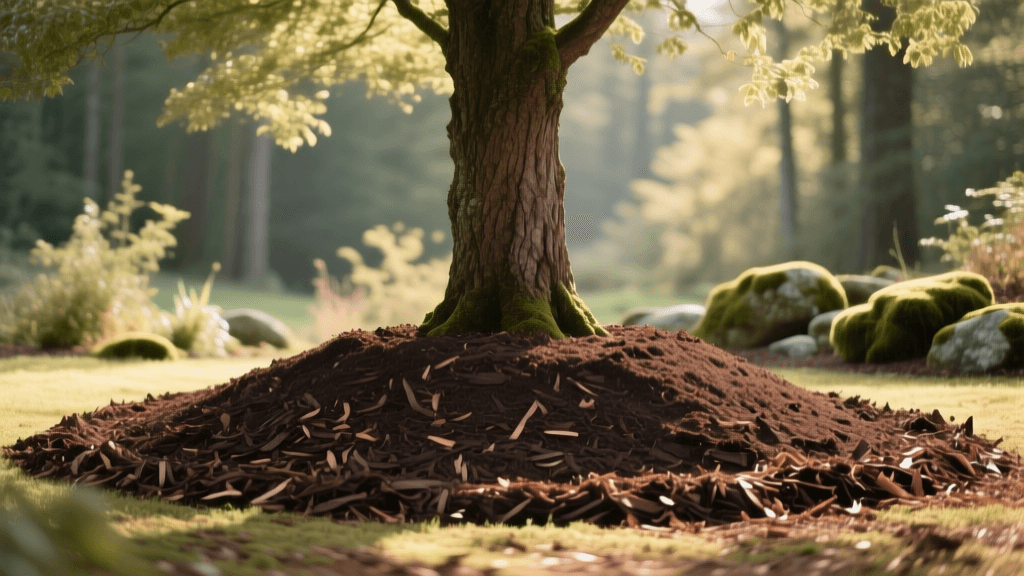
How to Mulch Trees Correctly and Avoid Volcano Mulching
The Foundation of Tree Health: Proper Mulching Techniques
Applying mulch around the base of your trees is one of the most highly recommended practices in arboriculture and landscape management. In a natural forest environment, trees are surrounded by a deep, nutrient-rich layer of decomposing leaves, twigs, and organic matter. This forest floor regulates soil temperature, retains moisture, and prevents competing weeds from stealing vital nutrients. Mulching your landscape trees mimics this natural environment, providing a buffer against extreme weather and mechanical damage from string trimmers.
However, improper mulching can be just as detrimental as leaving the soil bare and exposed. Many homeowners and even well-meaning landscaping crews inadvertently apply mulch in a way that suffocates roots, invites fungal diseases, and drastically shortens a tree's lifespan. This practical guide will walk you through the exact measurements, material choices, and application techniques required to mulch your trees correctly, ensuring they thrive for decades.
The Dangers of "Volcano Mulching"
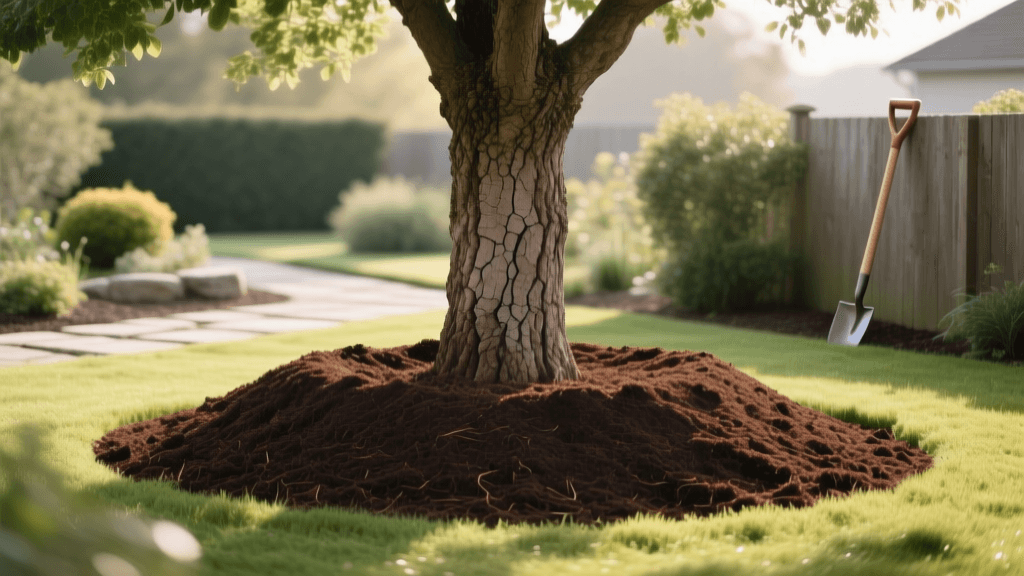
Before learning the correct technique, it is crucial to understand what not to do. "Volcano mulching" is the widespread, incorrect practice of piling mulch high against the trunk of a tree, resembling a volcano. While it may look neat and intentional to the untrained eye, it is a primary cause of premature tree decline in urban and suburban landscapes.
Why Volcano Mulching Kills Trees
- Bark Decay and Fungal Infections: Tree trunks are designed to be exposed to air and sunlight. When mulch is piled against the bark, it traps constant moisture. This creates an ideal breeding ground for wood-decaying fungi, cankers, and bacterial infections that will eventually rot the trunk from the outside in.
- Girdling Roots: When the trunk is buried in mulch, the tree may sprout secondary adventitious roots into the mulch mound to seek oxygen. As these roots grow, they circle the trunk and eventually strangle (girdle) the primary structural roots and the trunk itself, cutting off the flow of water and nutrients.
- Rodent and Insect Habitats: A thick mound of mulch against the trunk provides a perfect winter hiding spot for voles and mice. These rodents will chew through the bark to reach the sweet cambium layer underneath, effectively girdling and killing the tree.
- Oxygen Deprivation: Tree roots require oxygen to survive. A massive, compacted mound of mulch prevents gas exchange between the soil and the atmosphere, suffocating the fine feeder roots located just below the soil surface.
Step-by-Step Guide: How to Apply the "Donut" Method
The correct way to mulch a tree is often referred to as the "donut" method. Follow these actionable steps to prepare the site and apply the mulch properly.
Step 1: Clear the Competing Vegetation
Grass and weeds compete aggressively with young trees for water and nutrients. Using a sharp spade, cut a circular edge around the tree. For newly planted trees, this circle should be at least 3 feet in diameter. For mature trees, extend the mulch ring out to the tree's dripline (the outer edge of the canopy) if space permits. Remove the grass and weeds within this circle. Avoid using harsh chemical herbicides near young trees; instead, smother the grass with a layer of plain cardboard before mulching.
Step 2: Locate the Root Flare
The root flare (or trunk flare) is the area at the base of the trunk where the roots begin to spread outward into the soil. This flare must be 100% visible and exposed to the air. If your tree was planted too deeply or has existing mulch piled against it, use a hand trowel to carefully excavate the soil and mulch away from the trunk until the flare is exposed.
Step 3: Measure and Apply the Mulch
Once the base is clear, apply your chosen organic mulch evenly across the prepared circle. Follow these strict measurements:
- Depth: Apply mulch to a depth of 2 to 4 inches. Do not exceed 4 inches, as deeper layers will restrict water penetration and oxygen flow.
- Trunk Clearance: Keep the mulch at least 2 to 4 inches away from the actual trunk of the tree. The mulch should never touch the bark.
- Shape: Taper the mulch so it is deepest at the outer edge of the ring and slopes gently down to the bare soil near the trunk, creating a donut shape.
Organic Mulch Comparison Chart
Not all mulches are created equal. Inorganic mulches like rubber or river rock do not improve soil biology and can reflect excess heat. Always choose organic mulches for trees. Below is a comparison of the most common organic options available at landscape supply yards and garden centers.
| Mulch Type | Decomposition Rate | Weed Suppression | Est. Cost (per Cu. Yd.) | Best Use Case & Notes |
|---|---|---|---|---|
| Shredded Hardwood | Moderate (1-2 years) | Excellent | $30 - $45 | All-purpose shade trees. Interlocks well to prevent washing away on slopes. |
| Pine Bark Nuggets | Slow (2-3 years) | Good | $40 - $55 | Acid-loving trees (e.g., Dogwoods, Magnolias). Can float away in heavy rain. |
| Arborist Wood Chips | Fast (6-12 months) | Moderate | Free - $20 | Large estates, rural areas. Excellent for soil biology but requires frequent topping off. |
| Composted Leaf Mold | Fast (6-12 months) | Poor | $25 - $40 | Best used as a soil amendment rather than a top-dressing weed barrier. |
| Cocoa Bean Hulls | Fast (6-12 months) | Excellent | $60 - $80 | Ornamental beds. WARNING: Highly toxic to dogs if ingested. Avoid in pet-friendly yards. |
How to Calculate Mulch Volume and Costs
To avoid overspending or under-buying, use this standard landscaping formula to determine exactly how much mulch you need:
Formula: (Square Footage × Desired Depth in Inches) ÷ 324 = Cubic Yards Needed
Practical Example: You want to mulch a circular area with a 5-foot radius around a mature oak tree. The area is roughly 78.5 square feet. You want a 3-inch depth.
- (78.5 sq ft × 3 inches) ÷ 324 = 0.72 Cubic Yards
Cost Breakdown: Bulk shredded hardwood mulch typically costs between $30 and $45 per cubic yard when delivered. Bagged mulch (usually 2 cubic feet per bag) costs about $4 to $6 per bag at big-box hardware stores. It takes 13.5 bags to equal one cubic yard, meaning bagged mulch can cost upwards of $60 to $80 per cubic yard. For multiple trees, buying in bulk or picking up a truckload from a local landscape supply yard will save you significant money.
Seasonal Timing: When to Mulch
The timing of your mulch application impacts how well your tree utilizes the benefits. Mid-to-late spring is generally the best time to apply mulch. This allows the soil to warm up fully after the winter freeze, encouraging root growth before the mulch insulates the soil. Applying mulch too early in the spring can trap winter cold in the soil and delay root emergence.
For newly planted trees, mulch immediately after planting and watering, regardless of the season, to retain crucial moisture. In the fall, you can top off existing mulch layers to provide a blanket of insulation that protects shallow roots from severe freeze-thaw cycles, which can heave young trees out of the ground.
Authoritative Guidance on Tree Mulching
The consensus among certified arborists and university researchers is clear: less is more when it comes to mulch depth, and trunk clearance is non-negotiable.
"Mulch should never be piled against the trunk of a tree. The root flare must be visible, and mulch should be applied in a donut shape to prevent bark decay, girdling roots, and rodent damage. A 2 to 4-inch layer is sufficient to conserve moisture and moderate soil temperatures."
— Source: University of Massachusetts Amherst Extension, Landscape, Nursery, and Urban Forestry Program.
Frequently Asked Questions
Do I need to lay down landscape fabric under the mulch?
No. Landscape fabric (weed barrier) is highly discouraged for trees. While it may stop weeds temporarily, it blocks the vital exchange of oxygen and water between the soil and the atmosphere. Over time, soil health degrades, and weeds will simply grow on top of the fabric in the decomposing mulch layer.
Can I use fresh wood chips from a recently cut tree?
Fresh arborist wood chips are excellent for mature trees and large spaces, but they should be aged for a few months before being placed directly against the root zone of very young or stressed trees. The decomposition process of fresh wood temporarily ties up nitrogen in the top layer of soil. Keep fresh chips on the surface as a top-dressing and do not till them into the soil.
How often should I replace the mulch?
You do not need to remove old mulch. As the bottom layers decompose, they add valuable organic matter and humus to the soil. Simply rake the existing mulch to break up any compacted, hydrophobic crusts, and add a fresh 1-inch layer on top once a year to maintain the ideal 3-inch total depth. Always check that the root flare remains exposed before adding more.