Tree Care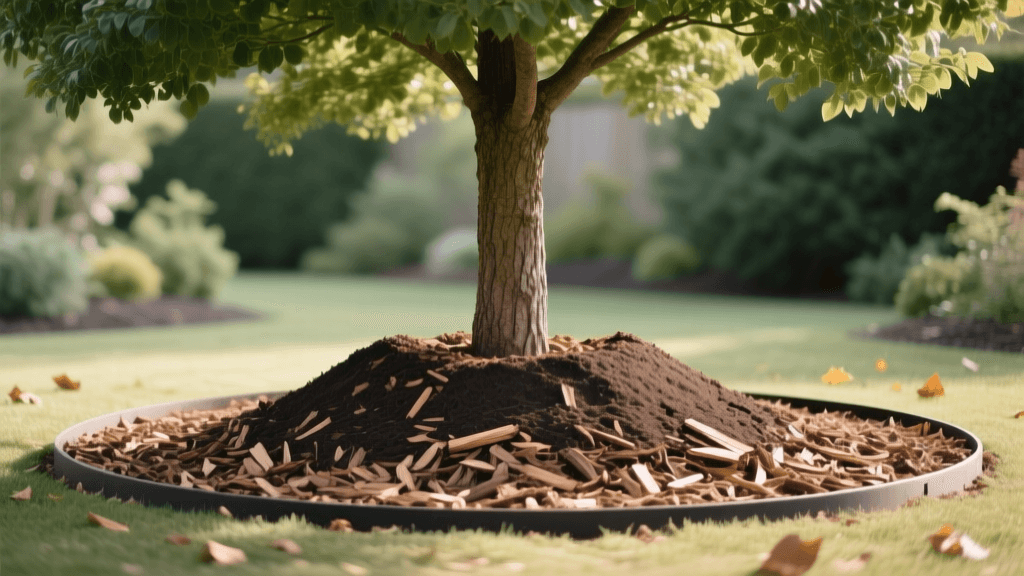
How to Mulch Trees Properly: Avoid Volcano Mulching
The Foundation of Tree Health: Proper Mulching Techniques
Applying mulch around your landscape trees is one of the most highly recommended practices in modern arboriculture. When applied correctly, a mulch ring mimics the natural forest floor, providing a wealth of benefits that promote vigorous growth and long-term vitality. Mulch helps retain vital soil moisture, regulates extreme temperature fluctuations, suppresses competitive weeds, and prevents mechanical damage from lawnmowers and string trimmers. However, despite its widespread popularity, improper mulching techniques are responsible for the premature decline and death of millions of landscape trees every single year.
In this comprehensive, practical guide, we will walk you through the exact steps required to mulch your trees correctly. We will cover the specific measurements you need to follow, the best materials to purchase, the true costs involved, and how to avoid the most common and lethal landscaping mistake known as 'volcano mulching.' Whether you are planting a brand-new sapling or maintaining a mature shade tree, these actionable steps will ensure your trees thrive for decades to come.
The Lethal Trend of Volcano Mulching
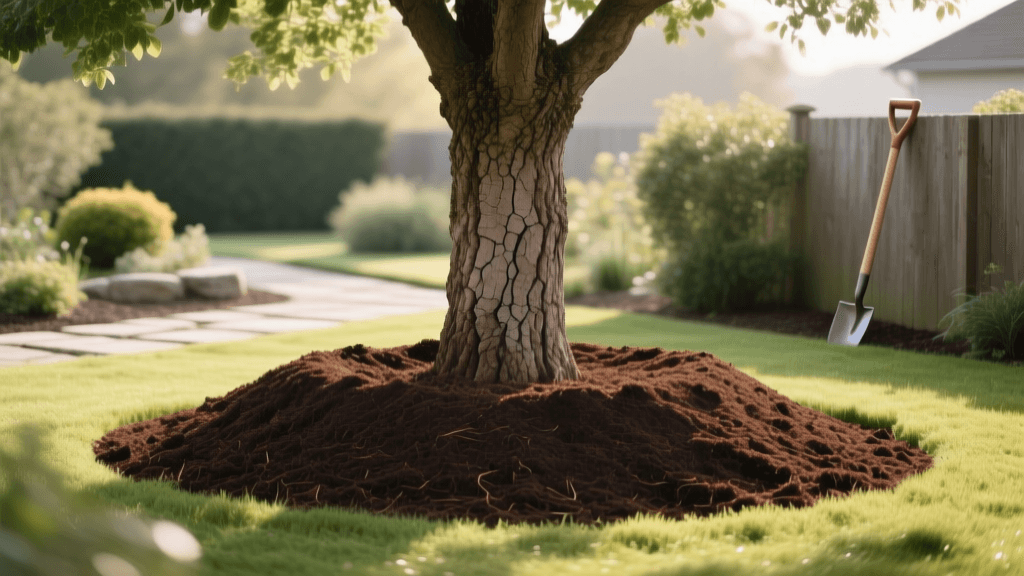
Before diving into the correct methodology, it is crucial to understand what not to do. 'Volcano mulching' refers to the practice of piling mulch high up against the trunk of a tree, creating a cone or volcano shape. This is often done by well-meaning homeowners or careless landscaping crews who believe that more mulch equals better protection. In reality, this practice is incredibly destructive.
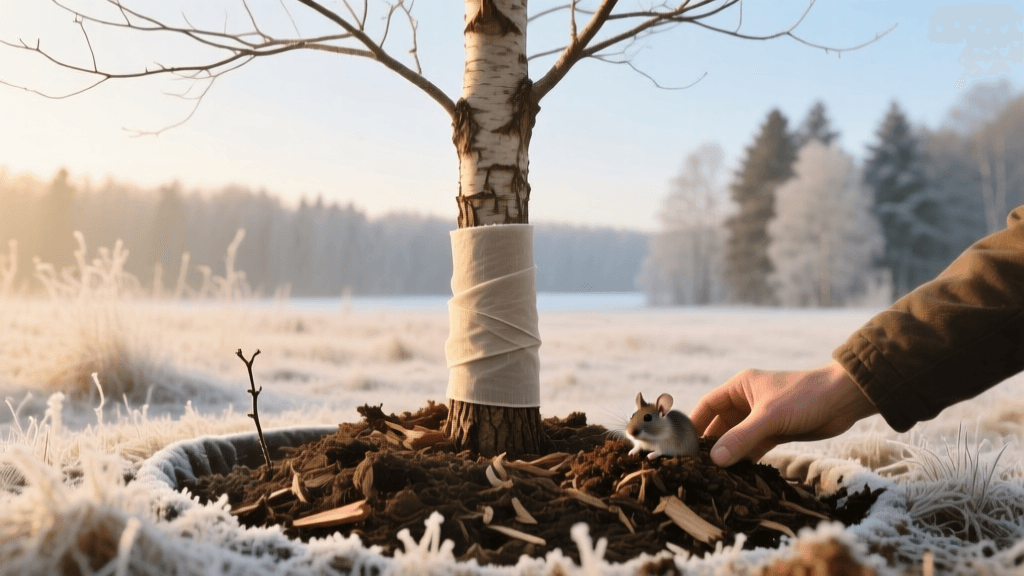
Tree bark is designed to protect the trunk from the elements, but it is not meant to be buried in constant moisture. When mulch is piled against the trunk, it traps moisture against the bark, leading to fungal infections, bark decay, and the eventual rotting of the vital phloem and cambium layers. Furthermore, volcano mulching encourages the growth of 'girdling roots'—secondary roots that grow into the mulch pile and eventually wrap around the main trunk, strangling the tree's primary vascular system. Finally, a thick pile of mulch against the trunk creates an ideal, warm habitat for rodents like voles and mice, which will chew through the bark in the winter, effectively girdling and killing the tree.
Step-by-Step Guide: How to Mulch a Tree Properly
To achieve the ideal mulch application, follow these precise, actionable steps. The goal is to create a 'donut' shape, not a volcano.
Step 1: Locate and Expose the Root Flare
The root flare (or trunk flare) is the area at the base of the tree where the trunk widens and transitions into the root system. This area must always be visible and exposed to the air. If your tree is currently buried in soil or old mulch, use a hand trowel or a specialized tool like an AirSpade to carefully excavate the soil around the base until the root flare is fully visible. Planting or mulching over the root flare is a primary cause of tree stress.
Step 2: Clear Competing Turf and Weeds
Grass and trees are fierce competitors for water and nutrients. Using a sharp, flat-edged spade, cut and remove the sod in a circular area around the tree. For a newly planted tree, this circle should be at least 3 feet in diameter (1.5 feet from the trunk in all directions). For mature trees, the mulch ring should ideally extend out to the tree's 'drip line' (the outer edge of the tree's canopy). If removing sod manually is too labor-intensive, you can use a targeted application of a glyphosate-based herbicide to kill the grass, waiting two weeks before applying mulch.
Step 3: Measure and Apply the Mulch
Once the area is cleared, apply your chosen organic mulch evenly across the exposed soil. The depth of the mulch layer is critical. Aim for a uniform depth of 2 to 4 inches. If the soil is poorly drained or heavy in clay, stick to the 2-inch minimum to prevent waterlogging. If the soil is sandy and drains rapidly, you can push closer to the 4-inch maximum to maximize moisture retention.
Step 4: Maintain the Donut Shape
As you spread the mulch, pull it back 1 to 2 inches away from the actual trunk of the tree. The root flare and the immediate base of the trunk should be completely bare and exposed to the air. The resulting mulch ring should look like a flat donut, with the trunk sitting in the empty center hole. Rake the outer edge of the mulch ring to create a slight berm; this will help capture rainwater and direct it down into the root zone rather than letting it run off into the surrounding lawn.
Calculating Your Mulch Requirements
Buying too little or too much mulch can disrupt your landscaping budget. Mulch is sold either by the bag (usually 2 cubic feet) or in bulk by the cubic yard (27 cubic feet). Use the following formula to calculate exactly how much bulk mulch you need to order:
Formula: (Area in square feet × Desired Depth in inches) ÷ 324 = Cubic Yards Needed.
Example: If you are creating a mulch ring with a 6-foot radius (Area = 113 sq ft) and you want a 3-inch depth, the math is: (113 × 3) ÷ 324 = 1.04 cubic yards. In this scenario, ordering 1.5 cubic yards from a local landscape supplier would be the most cost-effective choice.
Comparison of Mulch Materials
Not all mulches are created equal. Organic mulches are always preferred over inorganic options because they break down over time, adding valuable organic matter and nutrients to the soil. Below is a comparison chart of the most common mulch materials used in tree care.
| Mulch Type | Pros | Cons | Estimated Cost |
|---|---|---|---|
| Shredded Hardwood Bark | Excellent moisture retention, breaks down slowly, stays in place well on slopes. | Can mat down if applied too thickly, may temporarily tie up surface nitrogen. | $30 - $45 / cubic yard |
| Pine Needles (Straw) | Highly permeable, excellent for acid-loving trees, lightweight and easy to spread. | Blows away easily in high winds, highly flammable when completely dry. | $4 - $6 / bale |
| Aged Wood Chips | Often free from local arborists, great for large areas and mature trees. | Must be aged for at least 6 months; fresh chips can rob soil of nitrogen and harbor fungi. | Free - $20 / cubic yard |
| Cocoa Bean Hulls | Rich color, pleasant chocolate scent, fine texture. | Highly toxic to dogs if ingested, expensive, can mold in heavy shade. | $5 - $7 / bag (2 cu ft) |
| Rubber Mulch | Does not decompose, no weed seeds. | Does not improve soil, leaches heavy metals, traps excessive heat, toxic to soil biology. | $8 - $12 / bag (2 cu ft) |
Timing, Costs, and Maintenance Schedules
When to Mulch: The optimal time to apply or refresh mulch is in mid-to-late spring, after the soil has had a chance to warm up from the winter. Applying mulch too early in the spring can trap cold soil temperatures and delay root growth. A secondary, lighter application can be done in late fall to insulate the roots against freeze-thaw cycles, which can cause frost heaving in young trees.
Cost Breakdown: For an average suburban yard with five medium-sized trees, purchasing bagged hardwood mulch from a big-box store will cost approximately $75 to $100 and require significant physical labor to transport and spread. Ordering 3 cubic yards of bulk mulch from a local landscape supply yard, plus a $50 delivery fee, will cost around $150 to $180 total, saving you time and money while providing superior material.
Maintenance: Mulch decomposes over time. You should inspect your mulch rings annually. If the layer has decomposed to less than 2 inches, apply a 1-inch 'top dressing' of fresh mulch. Never simply add new mulch on top of old, compacted mulch year after year, as this will eventually create the dreaded volcano effect and suffocate the roots.
Expert Insights and Authoritative Guidelines
The guidelines outlined in this article are heavily supported by leading arboricultural organizations. The International Society of Arboriculture (ISA) and various university extension programs consistently warn against improper mulching.
'Mulch should be applied in a ring around the tree, resembling a donut rather than a volcano. The mulch should be 2 to 4 inches deep and should not touch the trunk of the tree. Keep mulch at least 1 to 2 inches away from the base of the trunk to prevent moisture accumulation and bark decay.'
— International Society of Arboriculture (ISA), Best Management Practices: Tree Planting and Mulching
Furthermore, researchers at the Cornell University Department of Horticulture emphasize that extending the mulch ring to the drip line of the tree is the single most effective way to reduce competition from turfgrass and mimic the tree's natural woodland environment.
Common Mulching Mistakes to Avoid
Even with the best intentions, homeowners often make critical errors. Review this structured checklist to ensure your tree care regimen is flawless:
- Using Landscape Fabric: Avoid placing synthetic weed barriers or landscape fabric under organic mulch. Over time, the fabric becomes clogged with soil and organic debris, preventing water, air, and nutrients from reaching the root zone. It also makes future weeding and planting incredibly difficult.
- Using Fresh, Uncomposted Wood Chips: Freshly chipped wood from a tree removal service is high in carbon. As soil microbes break it down, they consume massive amounts of nitrogen from the soil, depriving your tree of this essential nutrient. Always compost wood chips for at least 6 to 12 months before using them around established trees.
- Ignoring the Root Flare: If you cannot see the root flare after mulching, you have applied too much material or buried the tree too deeply. Expose it immediately.
- Using 'Sour' Mulch: If your bulk mulch smells like vinegar, ammonia, or sulfur, it has undergone anaerobic decomposition due to improper storage at the supplier. This 'sour' mulch is highly acidic and toxic to trees. Return it immediately and do not apply it to your landscape.
Conclusion
Proper tree mulching is a simple, cost-effective, and highly rewarding practice when executed with precision. By avoiding the destructive volcano method, carefully measuring your mulch depth, keeping the root flare exposed, and selecting high-quality organic materials, you are setting your trees up for a lifetime of health and structural stability. Take the time this weekend to measure your tree rings, clear the competing turf, and apply the perfect mulch donut. Your landscape will thank you for years to come.