Lawn Care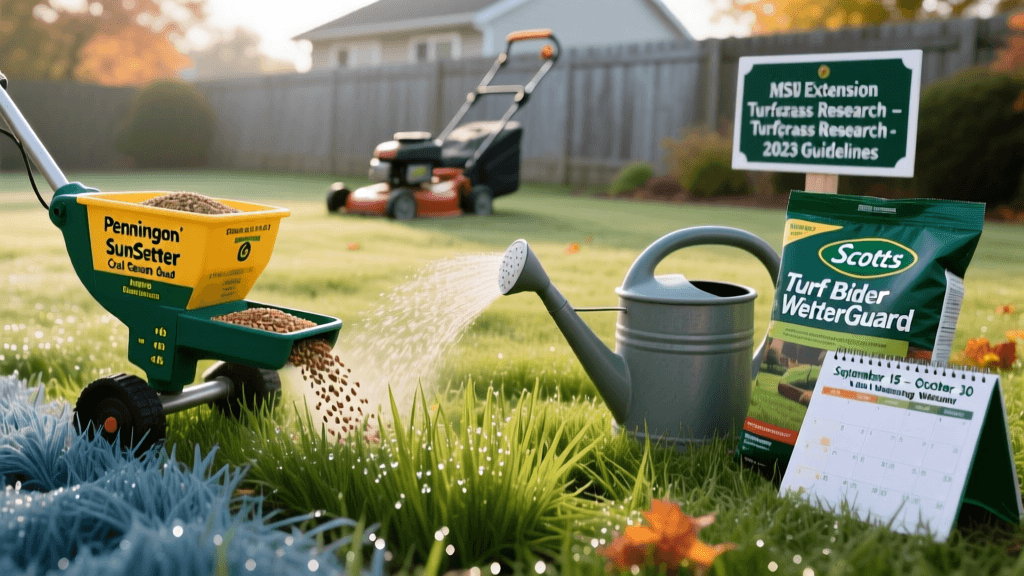
How To Overseed A Thin Lawn In Fall
Fall Is the Best Window for Overseeding Cool-Season Lawns
A thin, patchy lawn heading into winter isn’t just an eyesore — it gives weeds a clear path to take over bare soil in spring. Overseeding in fall gives cool-season grasses like tall fescue, Kentucky bluegrass, and perennial ryegrass the right conditions to sprout quickly, grow roots before the ground freezes, and come back strong in spring as thick, healthy turf. Soil temperatures between 50°F and 65°F help seeds sprout fast, while cooler air keeps young grass from drying out. In most of the transition zone and northern United States, that window runs from late August through mid-October.
Timing is key. The University of Kentucky College of Agriculture, Food and Environment recommends finishing overseeding at least 45 days before the first expected frost. That gives seedlings time to build enough root structure to survive winter dormancy. Wait too long, and a hard freeze can wipe out the whole batch before the grass has a chance to tiller.
Assessing Your Lawn Before You Seed
Walk your lawn and take a close look. Mark areas where grass covers less than about half the ground — those spots need overseeding most. Thin turf can happen for lots of reasons: summer drought, compacted soil, growing shade, grub damage, or just age in older Kentucky bluegrass lawns. Each cause may call for a different fix alongside seeding.
Get a soil test before buying seed or fertilizer. Your local cooperative extension office — like Penn State Extension or NC State Extension — can process a sample for $15 to $20 and send results back within a week. The report will show soil pH, phosphorus, potassium, and organic matter levels. Most cool-season grasses do best when soil pH is between 6.0 and 7.0. If your pH falls below 5.8, apply pelletized limestone at the rate listed on the report — usually 50 to 100 lb per 1,000 sq ft — before seeding.
Identifying the Right Grass Species for Your Region
Pick a grass that fits your site. Tall fescue (Festuca arundinacea) works well across the transition zone — it handles heat, drought, and light shade better than Kentucky bluegrass. Newer turf-type tall fescue varieties like 'Titan Rex', 'Houndog 5', and 'Rebel Sentry' have finer blades and better disease resistance than older pasture types. The National Turfgrass Evaluation Program (NTEP), which has run standardized variety trials since 1980, posts performance data on hundreds of cultivars across many locations — their reports are free and worth checking first.
Kentucky bluegrass (Poa pratensis) suits northern lawns with full sun and regular water. It spreads by rhizomes, so it gradually fills in bare patches, but it’s slow to sprout — usually 14 to 21 days — and needs more patience than ryegrass. Perennial ryegrass (Lolium perenne) sprouts in as few as 5 to 7 days and is often mixed with bluegrass to give quick cover while the slower grass gets established. A common blend for northern lawns is 80 percent Kentucky bluegrass and 20 percent perennial ryegrass by weight.
Reading a Seed Label
Every bag of grass seed sold in the U.S. must carry a label regulated under the Federal Seed Act. Before buying, check four numbers: germination percentage (aim for 85 percent or higher), pure seed percentage (should be over 95 percent for named varieties), weed seed percentage (must be 0.00 percent for reputable products), and crop seed percentage (also should be 0.00 percent — crop seed often means annual ryegrass, which dies in winter and leaves gaps). Scotts, Pennington, and Jonathan Green all offer labeled products that meet these standards in their premium lines, but store-brand seed from discount retailers often falls short.
Preparing the Seedbed
Good seed-to-soil contact is the biggest mechanical factor in getting seeds to sprout. Grass seed sitting on top of thatch or dry debris will dry out before the root can reach real soil. Doing prep work before seeding makes a real difference.
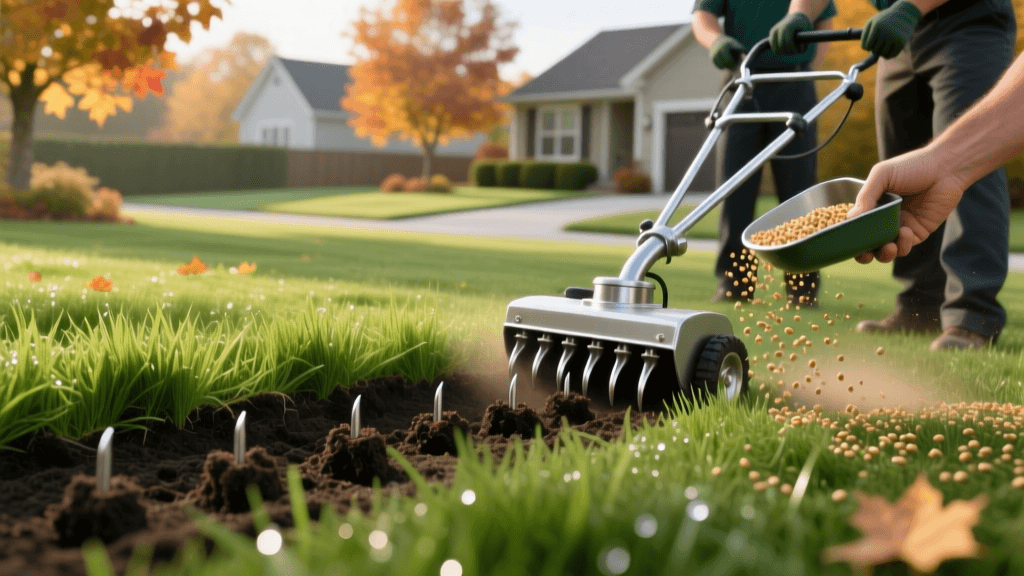
Cut the existing lawn short — down to about 1.5 to 2 inches — and bag the clippings. This cuts down competition from mature grass and helps seed land on the soil surface. If thatch is thicker than 0.5 inches, run a vertical mower (also called a dethatcher or power rake) set to cut into the thatch layer. For compacted soils, core aeration works better: a core aerator pulls plugs 2 to 3 inches deep and 0.5 to 0.75 inches wide, spaced about 3 inches apart. Leave the plugs on the lawn — they break down in a few weeks and add organic matter back into the soil. Virginia Tech’s turfgrass program found that overseeding into aeration holes boosts seedling establishment by 30 to 40 percent compared to spreading seed on unaerated turf.
Addressing Bare Spots Separately
For bare spots larger than about 6 inches across, a light topdressing after seeding helps. Use a 50/50 mix of compost and coarse sand, and apply no more than 0.25 inches — just enough to partly cover the seed without burying it. Most cool-season grasses do best when seed sits no deeper than 0.125 to 0.25 inches. Planting deeper delays sprouting and leads to thinner stands.
Seeding Rates and Application Methods
Use the right amount of seed. Too little gives you a sparse lawn; too much crowds seedlings, raising disease risk and causing die-off. The table below shows recommended overseeding rates for common cool-season species.
| Grass Species | Overseeding Rate (lb/1,000 sq ft) | Germination Time (days) | Preferred Soil Temp (°F) |
|---|---|---|---|
| Tall Fescue | 4–6 | 7–12 | 50–65 |
| Kentucky Bluegrass | 1–2 | 14–21 | 50–65 |
| Perennial Ryegrass | 3–5 | 5–7 | 50–65 |
| Fine Fescue (blend) | 3–4 | 7–14 | 50–60 |
Use a rotary spreader for large areas or a drop spreader near edges and beds. Split the total seed amount in half and make two passes — one north-south, one east-west. This gives more even coverage than a single pass. Calibrate your spreader before starting: most manufacturers list settings for their seed, but those are rough guides. Run a catch test on a tarp to see how much seed you’re actually spreading.
Fertilizing at Seeding and Through Establishment
New seedlings need phosphorus for roots and nitrogen for shoots, but the balance matters. At seeding, use a starter fertilizer like 18-24-12 or 12-12-12 at the rate on the bag — usually 3 to 4 lb of product per 1,000 sq ft. Starter fertilizers have more phosphorus to support early root growth. Scotts Turf Builder Starter Food for New Grass and Espoma Organic Lawn Starter are widely available options; both have performed consistently in university trial plots.
Avoid high-nitrogen quick-release fertilizers at seeding. Too much nitrogen before seedlings are settled pushes leaf growth instead of roots and can burn tender grass. Wait until the seedlings have been mowed at least twice — usually four to six weeks after germination — before adding more nitrogen. Then use a balanced fall fertilizer. Rutgers New Jersey Agricultural Experiment Station suggests a late-fall application of slow-release nitrogen at 0.5 to 1.0 lb of actual nitrogen per 1,000 sq ft, applied after the lawn stops growing but before the ground freezes — typically November in the mid-Atlantic region. This “dormant feeding” feeds roots and builds energy stores for spring, without pushing top growth into winter.
- Apply starter fertilizer at seeding: 18-24-12 analysis at 3–4 lb per 1,000 sq ft
- Wait 4–6 weeks before applying any additional nitrogen
- Use slow-release nitrogen sources (polymer-coated urea, IBDU, or organic meals) for fall applications
- Do not exceed 1.0 lb of actual nitrogen per 1,000 sq ft in a single fall application
- Keep records of all applications — most state extension services recommend a lawn fertilization log to avoid over-application
Watering Newly Seeded Areas
Keeping newly seeded areas moist is where many homeowners run into trouble. The top 0.5 inch of soil needs to stay damp — not soggy — from seeding until germination finishes. In practice, that means watering lightly two to three times a day for 5 to 10 minutes per zone during dry weather. The goal is to keep the seed from drying out, not to soak deep into the soil. Overwatering creates wet, low-oxygen conditions that favor damping-off fungi like Pythium and Rhizoctonia.
Once seedlings hit 1 inch tall, switch to less frequent but deeper watering — every other day for 15 to 20 minutes, or enough to wet the soil to 4 inches deep. This encourages roots to grow downward instead of staying near the surface. By the time the lawn has been mowed twice, move to a mature schedule: 1 inch of water per week, delivered in one or two deep sessions rather than daily sprinkles.
"Irrigation frequency during germination is more important than total water volume. A seed that dries out even once during the critical 48-hour germination window will not recover. Consistent moisture is the non-negotiable requirement." — Turfgrass Science Extension, Penn State University, 2022
If fall rains are steady where you live — like in the Pacific Northwest or New England — you may need little or no extra watering. In drier areas like the mid-Atlantic or upper Midwest, plan to water actively for the first three to four weeks after seeding.
Mowing and Traffic Management During Establishment
Hold off on mowing until new seedlings reach 3 to 3.5 inches. When you do mow, never cut off more than one-third of the blade height at once. For tall fescue, that means setting the mower at 2.5 inches once seedlings hit 3.5 inches. Use a sharp blade — dull blades tear seedlings instead of cutting cleanly, and can pull up young plants that haven’t anchored yet.
Keep people and pets off newly seeded areas for at least four weeks. Seedling crowns are fragile, and foot traffic or equipment can compact the soil and kill young grass before it has a chance to tiller. Temporary fencing or orange construction netting staked around the perimeter is a cheap way to protect the area if you have kids or pets.
- Mow existing lawn to 1.5–2 inches and bag clippings before seeding
- Core aerate or verticut to improve seed-to-soil contact
- Apply seed at species-appropriate rate using a calibrated spreader in two perpendicular passes
- Apply starter fertilizer immediately after seeding
- Lightly topdress bare spots with compost-sand mix to no more than 0.25 inches depth
- Water lightly 2–3 times daily until germination is complete
- Reduce watering frequency but increase depth once seedlings reach 1 inch
- Mow for the first time when seedlings reach 3–3.5 inches
- Apply slow-release nitrogen 4–6 weeks after germination
- Apply dormant fertilizer in late fall after growth stops
A thin lawn overseeded properly in fall will look noticeably fuller by the following May. Choosing the right grass, prepping the soil well, using the correct seeding rate, and sticking with good post-seeding habits leads to a dense stand that crowds out crabgrass and broadleaf weeds — often without needing much herbicide the next season. Spending time and about $150 to $300 on materials for a typical 5,000 square foot lawn usually pays off for three to five years before the next overseeding round.